The search term business travel Delhi covers much more than the capital itself: it may take you from ministries and embassies in New Delhi to technology parks in Noida, boardrooms in Gurgaon or major exhibitions at Pragati Maidan. The wider Delhi NCR works as a single business region, but it does not move like one: traffic, distance and the choice of hotel can shape your schedule as much as the meetings themselves.
This Delhi business travel guide covers what to know before you fly, how to plan your airport transfer, where to stay for business, how to get around the NCR and what local etiquette to keep in mind. It also points you towards practical places for meetings, client lunches and after-work downtime, so your business trip to Delhi feels planned rather than improvised.
Explore Tumodo's other corporate travel guides for more business destinations around the world.
Before you go
Visa and entry requirements
Delhi visa requirements should be the first item on your checklist. India does not operate as a visa-on-arrival destination for most business travellers, so do not assume you can deal with paperwork after landing. The official Indian e-Visa portal states that eligible travellers can apply for an e-Business Visa online, with applications accepted from 120 days before travel and at least four days before arrival. The standard e-Business Visa is valid for 365 days from the date the Electronic Travel Authorisation is granted, allows multiple entries and permits a continuous stay of up to 180 days per visit.
For a normal business trip to Delhi, the e-Business Visa is usually the relevant route if your nationality is eligible and your visit is for business purposes. You will need to upload the bio page of your passport, a business card and details of the Indian company you intend to work with; an invitation letter from the Indian side may also be used where applicable. Your passport should have at least six months’ validity and at least two blank pages for immigration stamps.
Always apply through the official Indian government visa website and check the latest rules before you fly. Visa categories, eligible nationalities and documentation can change.
Foreign nationals and OCI cardholders can complete and submit India’s free e-Arrival Card online within 72 hours before arrival. It records arrival information and is separate from a visa, so travellers still need the appropriate visa or other valid entry permission. Use the official Indian Visa portal, Bureau of Immigration website or Indian Visa Su-Swagatam app, and save the confirmation offline before departure.
Time zone and scheduling meetings
Delhi follows India Standard Time, UTC+5:30, throughout the year. There is no daylight saving time, so the offset is stable but the half-hour difference can still catch travellers out when arranging calls with Europe, the Gulf or North America.
The usual corporate rhythm is Monday to Friday, although some Indian companies, family-owned businesses and government-linked organisations may still work on Saturdays or keep shorter hours on certain days. For a corporate trip to Delhi, mornings are the best time for serious meetings. They give you room to absorb traffic delays, late arrivals and the inevitable overruns that happen when a conversation becomes useful.
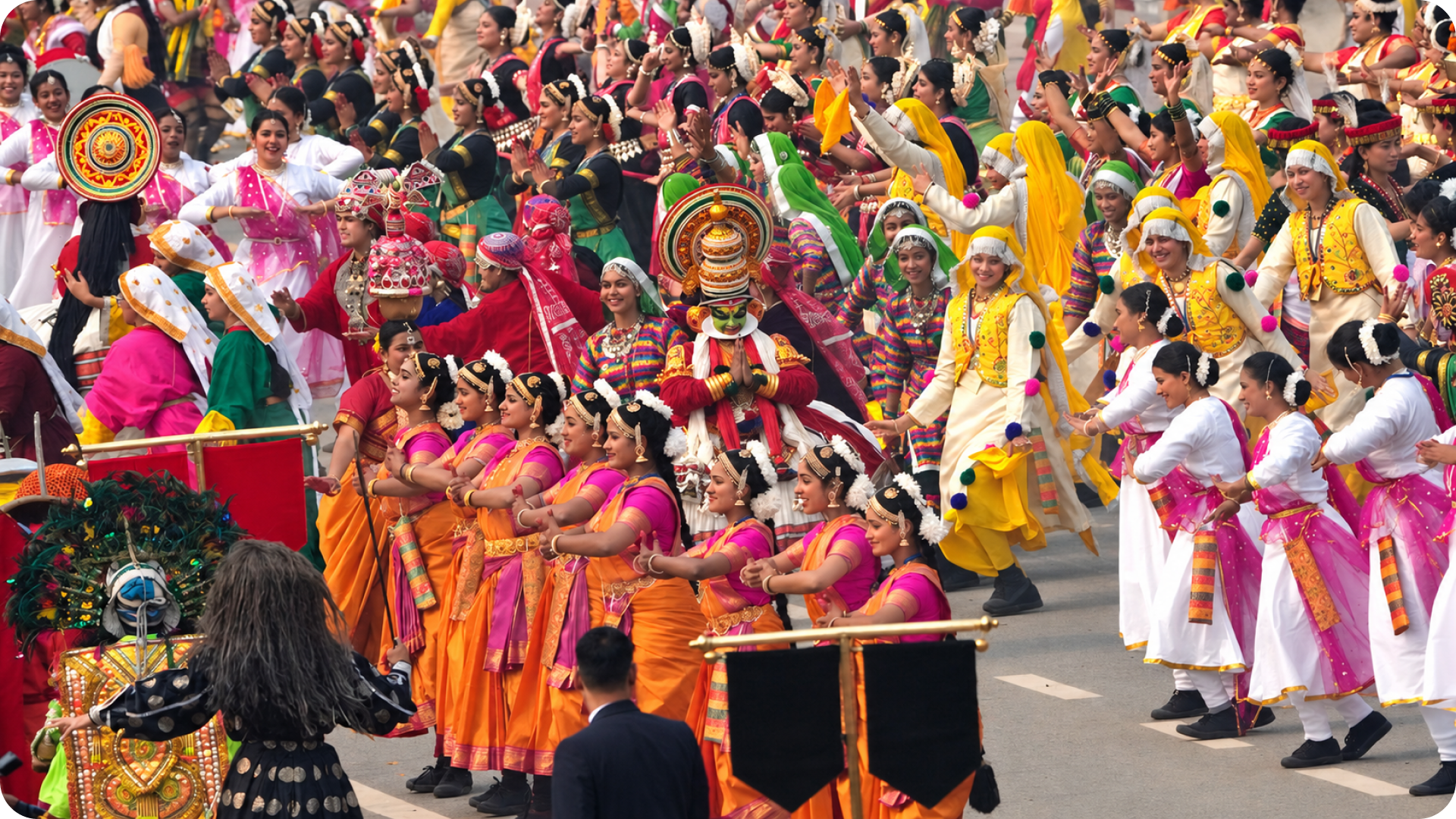
Check the festival calendar before confirming flights. National holidays such as Republic Day, Independence Day and Gandhi Jayanti affect business schedules across India, while Holi, Diwali, Dussehra, Eid and Guru Nanak Jayanti can shift office hours, travel patterns and staff availability.
Currency, payments and tipping
Currency is the Indian rupee (INR, ₹). Cards are widely accepted in hotels, modern restaurants, shopping malls, business centres and larger retailers. For smaller payments, however, India is increasingly a UPI-first country. Many cafés, shops, taxis and delivery services expect instant QR-code payments, which local residents make through apps linked to Indian bank accounts.
Foreign visitors should not assume they will be able to use local QR-code payment systems. NPCI offered its UPI One World wallet as a pilot to eligible international delegates attending the India AI Impact Summit in February 2026, with onboarding available at Delhi Airport and Bharat Mandapam. Unless current availability has been confirmed, the safest setup remains an international card and some cash. ATMs are easy to find at the airport, in hotels and in commercial districts, but it is better not to arrive entirely cashless.
Tipping is appreciated but not usually dramatic. In restaurants, 5 to 10 percent is generous if a service charge has not already been added. Small tips for porters, hotel staff and drivers are common, and rounding up a taxi fare is perfectly acceptable.
Internet, eSIMs and useful local apps
Connectivity in Delhi is generally strong in hotels, offices, airports and business venues. Airtel and Jio are the two dominant mobile networks, with Vi also present in the market. For short-term business travel to India, the easiest option is often to buy an international eSIM before departure, then switch to hotel and venue Wi-Fi where needed.
You can buy a local SIM in India, including at major airports and operator stores, but the process usually involves identity checks, passport and visa details and sometimes a local address. It is cheaper than roaming, but not always the fastest choice after an overnight flight.
A few apps make Delhi much easier to manage:
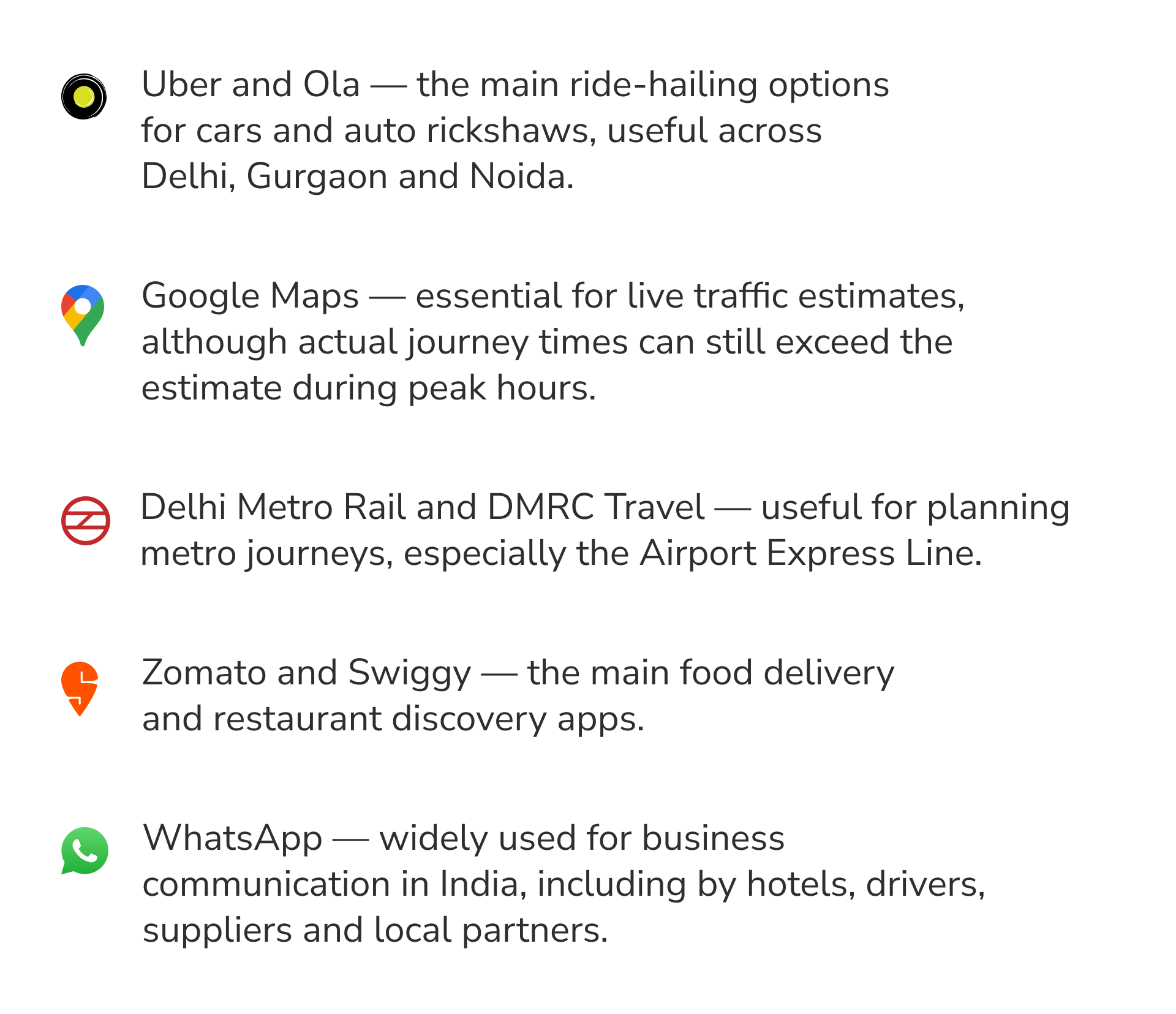
If your schedule includes several meetings in one day, save hotel addresses, office pins and venue entrances in advance. In Delhi NCR, the correct gate can matter as much as the correct building.
Weather, air quality and what to pack
Delhi has a more extreme climate than Mumbai. Summers are hot, winters can be surprisingly cold and the monsoon brings humidity, sudden rain, waterlogging and traffic disruption.
October and March often offer the most comfortable conditions for a business trip. November to February bring cooler temperatures but can also bring severe air pollution and fog, while April to June are extremely hot and the July-to-September monsoon can disrupt road travel.
Delhi’s air quality often deteriorates sharply in the colder months, and in July 2026 the city announced permanent anti-pollution measures for the winter period from 1 November to 28 February. If you are sensitive to pollution, travel with appropriate medication, consider a well-fitting mask for outdoor movement and choose hotels with good indoor air filtration.
The monsoon usually affects northern India from June to September. Pack a compact umbrella, waterproof shoes and a spare shirt if you have meetings straight after moving around the city.
Clothing should be lightweight, neat and business-appropriate. For formal sectors such as government, finance, law and consulting, a suit or jacket is still useful, especially for first meetings. For technology firms and start-ups, smart business casual is often enough. Offices, hotels and conference halls are heavily air-conditioned, so a light layer is worth carrying even in the hottest months.
Security and health
Delhi is a major global capital and most business travellers move around without difficulty, especially when using reputable hotels, recognised transport providers and known business districts. Still, it is a dense, busy city and normal precautions matter. Keep valuables secure in markets, stations and crowded event venues, avoid isolated areas late at night and use hotel cars, trusted drivers or ride-hailing apps after dark.
Tap water is not recommended for most international visitors. Drink bottled or properly filtered water, use sealed bottles where possible and be careful with ice in informal places. Maintain good hand hygiene and eat thoroughly cooked food, particularly where sanitation standards are uncertain.
For emergencies, Delhi Police lists 112 as the 24/7 emergency response number. It is worth saving this number, along with your hotel, local host, travel manager and insurance assistance line, before you arrive.
How to get to Delhi
International flights to Indira Gandhi International Airport
Most international visitors arrive through Indira Gandhi International Airport, usually known as IGI Airport or Delhi Airport. It is the main gateway to the capital region and one of South Asia’s busiest airports, with strong connections across Europe, the Gulf, North America, Africa and Asia.
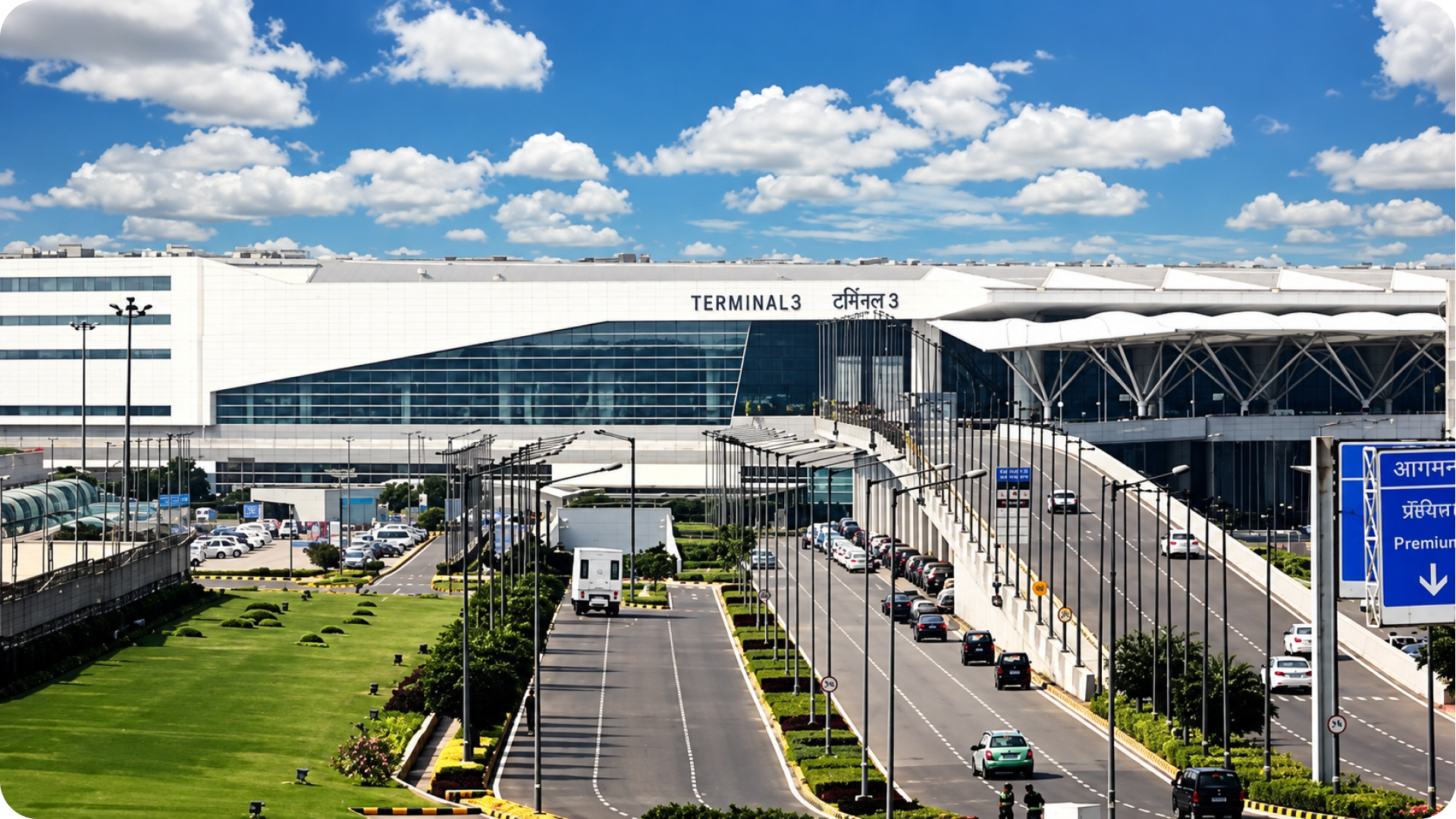
International flights usually operate from Terminal 3, which also handles selected domestic services. Delhi Airport has three passenger terminals, so always check your terminal before departure, especially if you are connecting onwards within India.
Common connecting routes for international business travellers
Many corporate travellers reach Delhi via regional hubs. From Europe and North America, common connections include Dubai, Abu Dhabi, Doha, Istanbul, Frankfurt, London and Paris. From East Asia and Australia, Singapore, Bangkok, Kuala Lumpur and Hong Kong are frequent options.
The Gulf hubs are often especially convenient, with multiple daily flights and useful arrival times into Delhi. If you book a connecting itinerary, avoid the tightest layovers. Monsoon delays, winter fog, terminal changes or rechecked baggage can quickly remove any margin.
Flying into Delhi for meetings in Gurgaon or Noida
A corporate trip to Delhi often means the wider NCR. Gurgaon and Noida are major business centres, but they sit on different sides of the capital and require different planning.
For Gurgaon business travel, IGI Airport is usually very convenient. Aerocity, Cyber City, Udyog Vihar and Golf Course Road are all on the south-western side of the region, so staying in Gurgaon can save time if most meetings are there.
For Noida business travel, transfers from IGI Airport are longer, especially during peak traffic. If your schedule is concentrated in Noida, Greater Noida or along the Noida Expressway, choose a hotel on that side of the NCR rather than commuting from central Delhi.
Noida International Airport at Jewar began commercial operations on 15 June 2026. Its initial network is focused mainly on domestic routes, so travellers should check available flights before choosing it. It is becoming useful for Greater Noida, the Yamuna Expressway and nearby industrial zones, but Indira Gandhi International Airport remains the principal gateway for most international arrivals.
When to book flights for a corporate trip
For a routine corporate trip to Delhi, booking two to four weeks in advance usually balances price, flexibility and schedule choice. Book earlier if you need a specific arrival time, premium cabin, direct flight or changeable fare.
Demand rises around major exhibitions at Pragati Maidan and Bharat Mandapam Delhi, as well as during Diwali, Holi, Republic Day and the peak business season from October to March. Winter fog can affect morning flights, while monsoon rain can disrupt transfers, so avoid scheduling a critical meeting too close to arrival.
For companies managing corporate travel in India, flexible fares are often worth the additional cost. A cheaper ticket can quickly become expensive if meetings move or the traveller needs to extend the stay.
Documents and travel checks before departure
Before flying, check that your passport is valid for at least six months from arrival and has enough blank pages. Make sure your visa has been approved, and keep digital and printed copies with your travel documents.
Carry your hotel confirmation, return or onward ticket, business invitation, local host details and the address of your first meeting. Immigration officers may ask about the purpose of your visit or where you are staying.
Foreign nationals and OCI cardholders must complete India’s free e-Arrival Card online within 72 hours before arrival. It is an immigration form rather than a visa, so travellers still need the appropriate visa or other entry permission. Save the confirmation offline before departure.
Also check your terminal, baggage allowance and domestic connection details before departure, especially if your onward flight within India leaves from a different terminal.
From Delhi airport to the city and NCR
By Airport Express Metro
The Airport Express Metro is the fastest and most predictable way to travel from Indira Gandhi International Airport into central Delhi. It links Terminal 3 with Delhi Aerocity, Shivaji Stadium and New Delhi station, avoiding the traffic that can make road journeys unpredictable.
For travellers staying near Connaught Place, Shivaji Stadium is usually the most useful stop. New Delhi station is better for onward metro or rail connections. The trip into central Delhi takes around 20 to 25 minutes, making the line a strong option if you are travelling light or arriving during peak traffic.
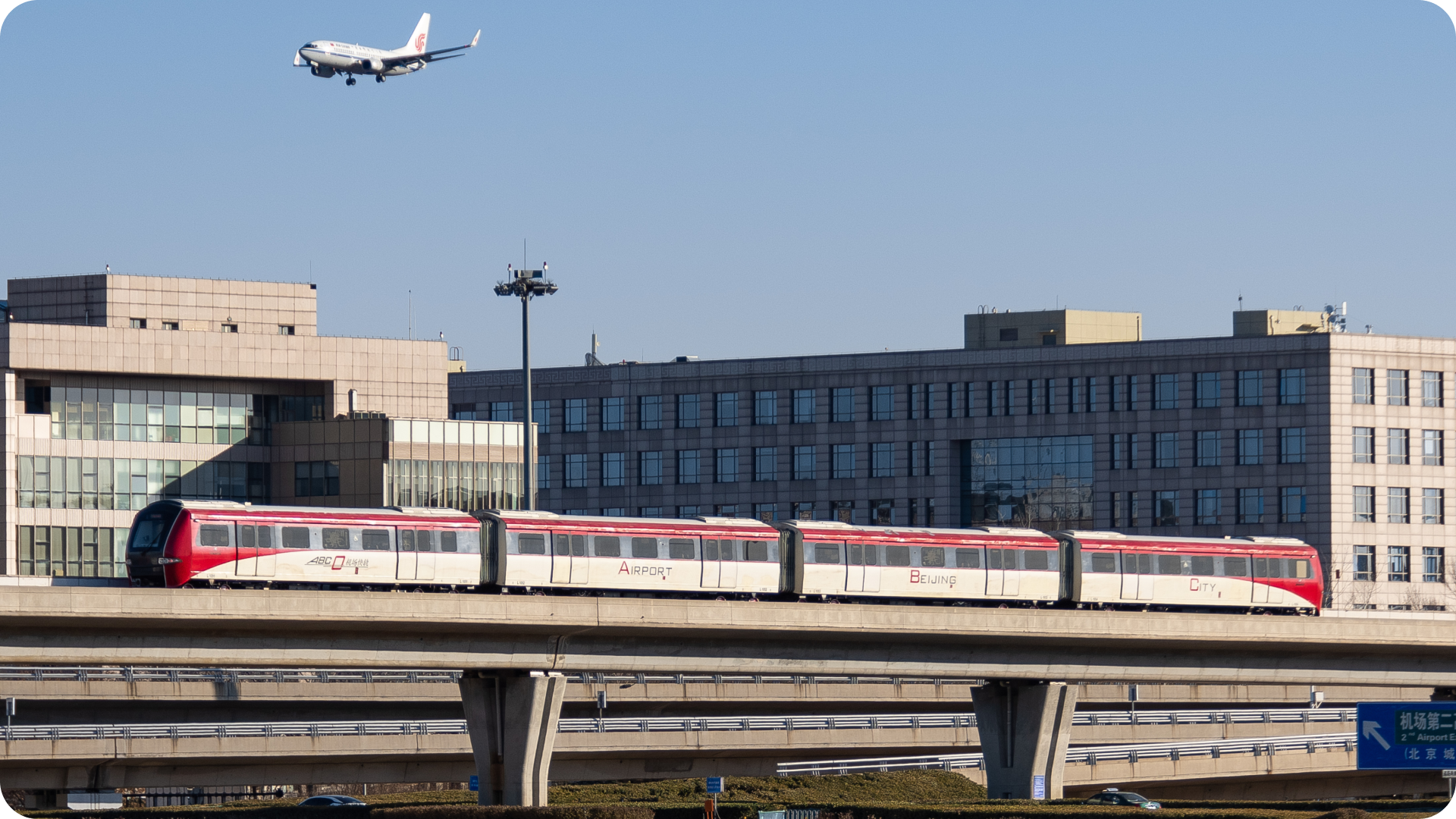
The metro is clean, air-conditioned and inexpensive, but it is less convenient with large luggage, a late-night arrival or a hotel far from the station. For Gurgaon or Noida, it may still help, but you will usually need a metro change or a car for the final stretch.
By taxi or private transfer
For most corporate travellers, a pre-booked Delhi airport transfer is the easiest way to reach Delhi, Gurgaon or Noida. It gives you a named driver, avoids queues and takes you directly to your hotel, office or meeting venue.
Official taxi services and prepaid counters are available at the airport, and hotels can usually arrange chauffeur-driven cars. A private Indira Gandhi International Airport transfer is especially useful if you are landing late, travelling with colleagues or heading straight to a meeting.
Avoid unsolicited taxi offers inside or outside the terminal. Use official counters, your hotel car, a recognised provider or a transfer arranged through your corporate travel platform.
By ride-hailing apps
Uber and Ola both operate at Delhi Airport and are widely used across Delhi NCR. They are convenient if you have mobile data, can find the app-based pickup point and do not need a formal meet-and-greet.
The main advantage is flexibility: you can compare fares, choose a car type and pay through the app. The drawback is that airport pickup areas can be busy, drivers may call to confirm your location and surge pricing can apply during peak hours, bad weather or late evenings.
For a solo traveller with a flexible schedule, ride-hailing works well. For senior travellers, client visits or delegations, a pre-booked transfer is usually smoother.
Travel time to Connaught Place, Aerocity, Gurgaon and Noida
Aerocity is only a few minutes from the terminals by car and one stop away on the Airport Express. Connaught Place usually takes around 25 to 45 minutes by road, or about 20 minutes by metro to Shivaji Stadium. Gurgaon can take around 25 to 60 minutes, while Noida is often a 60 to 90-minute cross-city transfer.
If you have meetings soon after landing, allow for immigration, baggage collection, pickup time and traffic. For a first appointment in Aerocity, central Delhi or Gurgaon, leave at least two to three hours between landing and the meeting. For Noida or Greater Noida, give yourself more room.
Getting around Delhi
Delhi Metro for predictable travel times
Delhi Metro is often the most reliable way to move around the capital when road traffic is heavy. The network is extensive, air-conditioned and useful for reaching central Delhi, South Delhi, Noida and parts of Gurgaon with more predictable timings.
For business travellers, it works best when your hotel or meeting venue is close to a station. The Airport Express Line is especially useful for travel between the airport, Aerocity and central Delhi.
The main drawback is the final stretch. Many offices, hotels and business parks are not directly beside a station, so you may still need a short taxi or ride-hailing trip at the end. During peak hours, trains can also be crowded.
Taxis and ride-hailing apps
Taxis, Uber and Ola are the easiest options for most day-to-day business travel in Delhi NCR. They are useful for door-to-door journeys between hotels, offices, restaurants and event venues, especially in areas not well served by the metro.
Fares are shown in the app, payment can usually be handled digitally and different car categories are available. At busy times, however, pickup delays and surge pricing are common. Share a clear pickup point, such as a hotel entrance or office gate, rather than relying only on the map pin.
Private transfers for delegations and multi-meeting days
For several meetings in one day, a private car with a driver is often the most efficient choice. It removes the need to book a new ride after every appointment, gives you somewhere to leave documents or luggage and helps keep the schedule under control.
This is particularly useful for senior executives, client visits, delegations and trips that cross Delhi, Gurgaon and Noida. A dedicated driver can wait between stops, adjust around traffic and take you directly to the correct office tower or exhibition gate.
Auto-rickshaws for short local trips
Auto-rickshaws work well for short journeys within one neighbourhood: from a metro station to an office, from a hotel to a nearby restaurant or between two close addresses. They are common across Delhi, Gurgaon and Noida and can often be booked through ride-hailing apps.
They are not ideal for airport transfers, formal client arrivals, long cross-city journeys or travel with luggage. If you take one from the street, agree the fare or make sure the meter is used before setting off.
Travel tips for meetings across Delhi, Gurgaon and Noida
Choose your base around your meetings. Stay in Gurgaon or Aerocity for Gurgaon-heavy itineraries, in Noida for Noida and Greater Noida appointments and in central or South Delhi for ministries, embassies and mixed city schedules.
For cross-NCR travel, allow at least 60 to 90 minutes between meetings, and more if you are moving between Gurgaon and Noida. Share exact addresses and gate numbers with your driver in advance. For high-stakes meetings, arrive in the area early, work from a nearby hotel lobby or café, then make the final short journey when the time approaches.
Business etiquette and local norms
Delhi business etiquette is shaped by hierarchy, hospitality and careful relationship-building. The city is used to international visitors, especially in government, consulting, finance, technology and diplomatic circles, but business still works best when you respect local pace and protocol.
-
Greetings, titles and professional introductions
A handshake is common in corporate settings, while a polite namaste (🙏) is also appropriate, especially in more traditional environments. Greet the most senior person first, then move through the rest of the group. Use Mr, Ms, Dr or a professional title with the person’s surname unless invited to use their first name. Business cards are still useful, particularly in formal meetings, so offer and receive them with attention rather than treating them as an afterthought. -
Meeting punctuality and traffic-related delays
Arrive on time, but do not be surprised if the meeting starts later than planned. In Delhi NCR, traffic is a genuine scheduling factor, not a casual excuse. Local counterparts may arrive late because a 20-minute journey became an hour, and the same can happen to you if you underestimate the city. Build buffers into your diary and avoid sounding impatient if the day shifts slightly. -
Communication style in Indian business culture
Business conversations often begin with small talk about your journey, the city, the weather or your previous experience in India. This is not wasted time; it helps establish trust before the discussion moves into commercial detail. Communication is usually polite and indirect, so listen carefully for nuance. A phrase such as “we will try”, “let us see” or “that may be difficult” can sometimes mean that the answer is closer to no than yes. -
Dress code for offices, conferences and formal dinners
Delhi’s business dress code depends on the sector. Government, law, finance, consulting and formal corporate environments still lean towards suits, jackets and polished business attire. Technology companies and start-ups are usually more relaxed, but neat smart casual is safer than looking underdressed. For conferences, client meetings and formal dinners, dress more conservatively on the first occasion, then adjust once you understand the room. Lightweight fabrics help in the heat, while a jacket or shawl is useful indoors because air conditioning can be strong. -
Hospitality, business meals and relationship-building
Meals are an important part of doing business in Delhi. A lunch, dinner or coffee meeting may be where trust develops, even if the formal decisions happen elsewhere. Let your host guide the choice of restaurant if you are unsure, and be mindful that many people in India are vegetarian or avoid alcohol for religious, cultural or personal reasons. Do not make assumptions about diet, and avoid pushing drinks. A small, tasteful corporate gift can be appropriate once a relationship has been established, but expensive gifts may feel excessive. -
Safety and practical behaviour in busy areas
Delhi is a large, crowded capital, so behave as you would in any major global city with heavy traffic and busy public spaces. Keep valuables secure in markets, stations, metro crowds and event venues. Use trusted transport at night, avoid poorly lit areas and share your route with a colleague if travelling alone after dark. In dense areas such as Old Delhi, railway stations or major exhibitions, expect limited personal space and keep your phone, wallet and laptop bag close.
Conferences, exhibitions and business events in Delhi
Delhi NCR is one of India’s most important MICE markets, so a corporate trip to Delhi often overlaps with a conference, exhibition, summit or industry forum.
-
Bharat Mandapam and Pragati Maidan
Bharat Mandapam, inside the Pragati Maidan Delhi complex, is the capital’s flagship venue for major exhibitions, trade fairs, government summits and international business events. Stay in central Delhi, Aerocity or South Delhi, depending on your wider meeting schedule. -
Yashobhoomi Convention Centre
Yashobhoomi in Dwarka is a large modern convention and exhibition centre near the Delhi-Gurgaon border. It is useful for large-format events, especially if your trip also includes Aerocity, Gurgaon or the airport side of the NCR. -
India Habitat Centre and India International Centre
These Lodhi Road institutions suit smaller conferences, policy discussions, academic events, cultural programmes and high-level roundtables. They work well for meetings linked to diplomacy, development, public policy, media or the arts. -
Gurgaon and Noida corporate event venues
Gurgaon and Noida rely heavily on five-star hotels, business hotels, office campuses, co-working spaces and private event venues. Gurgaon is stronger for corporate headquarters and technology-led events, while Noida and Greater Noida are practical for expos, manufacturing, IT and media-related gatherings.
How to plan accommodation around event locations
Do not book a hotel just because the event says “Delhi”. For Pragati Maidan, consider central Delhi or Aerocity. For Yashobhoomi, Aerocity, Dwarka or Gurgaon may work better. For Noida or Greater Noida events, stay on that side of the NCR unless you want long daily transfers.
Where to stay in Delhi for a business trip
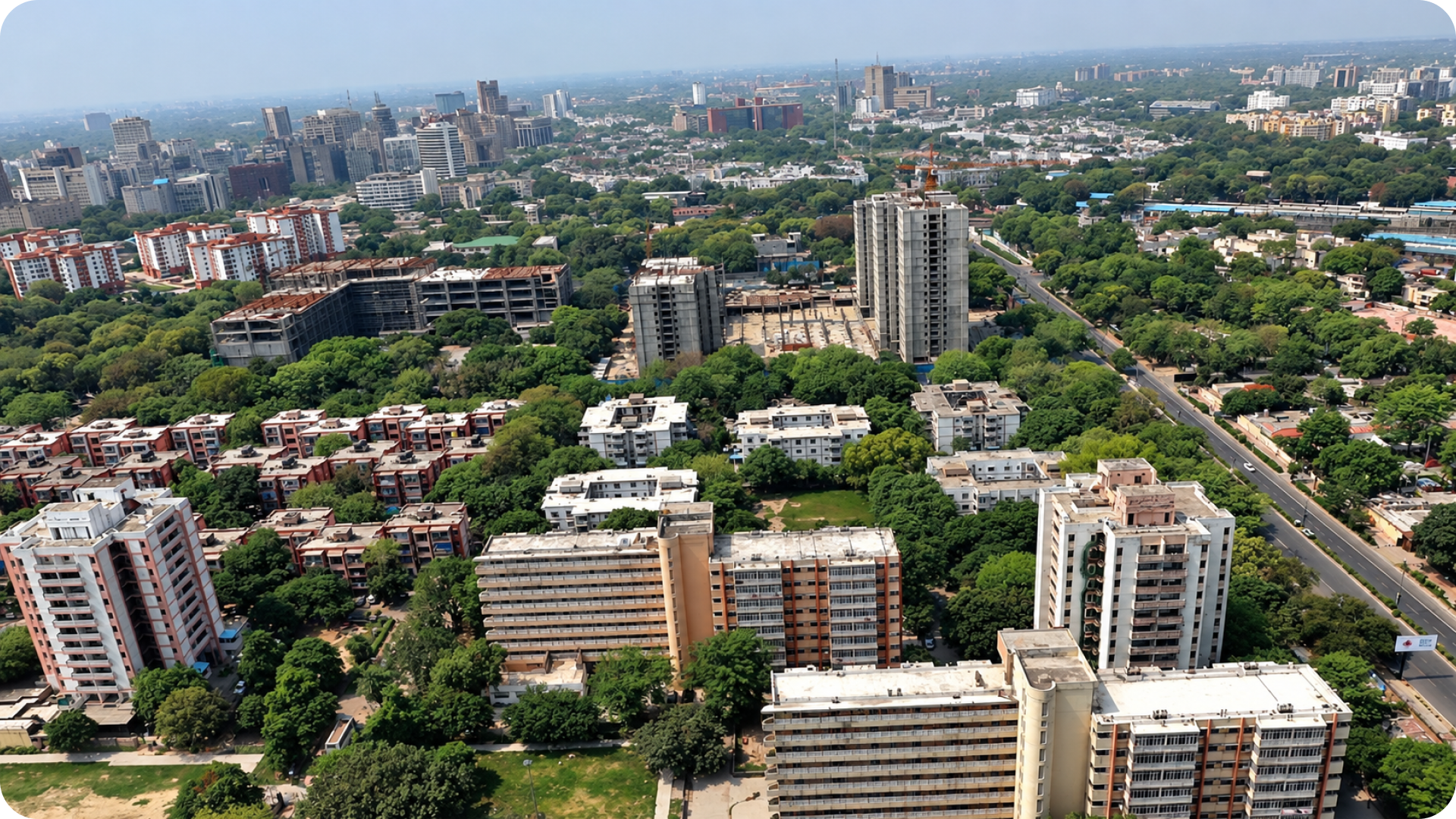
Choosing where to stay in Delhi for business should start with your meeting map, not the hotel ranking. Delhi NCR is too spread out for a “central” base to work for every itinerary.
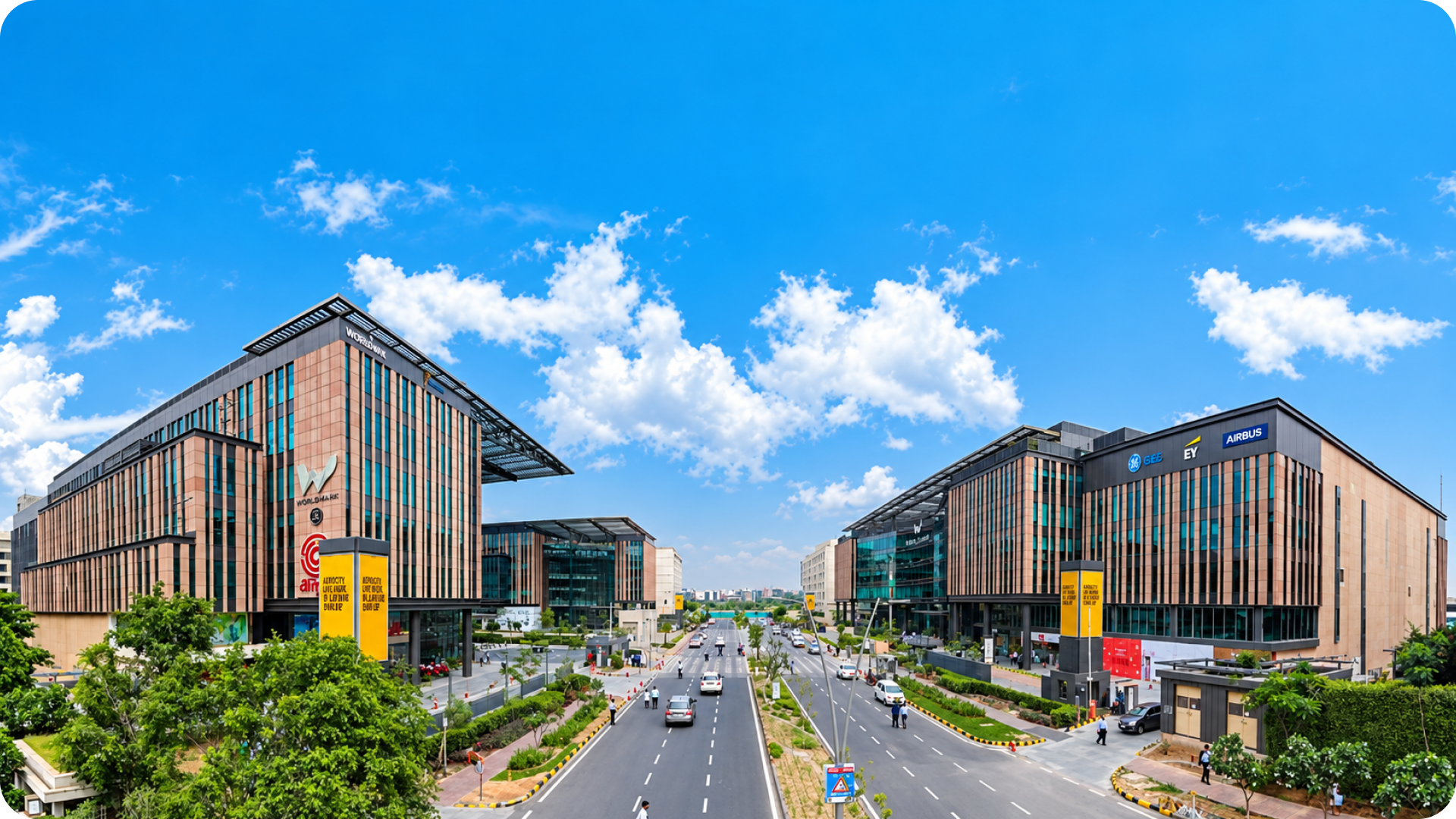
Aerocity — best for airport access and short business stays
Aerocity is the most convenient choice for quick trips, late arrivals, early departures and meetings split between the airport side of Delhi and Gurgaon. It has modern hotels, good restaurants and easy access to the Airport Express Metro.
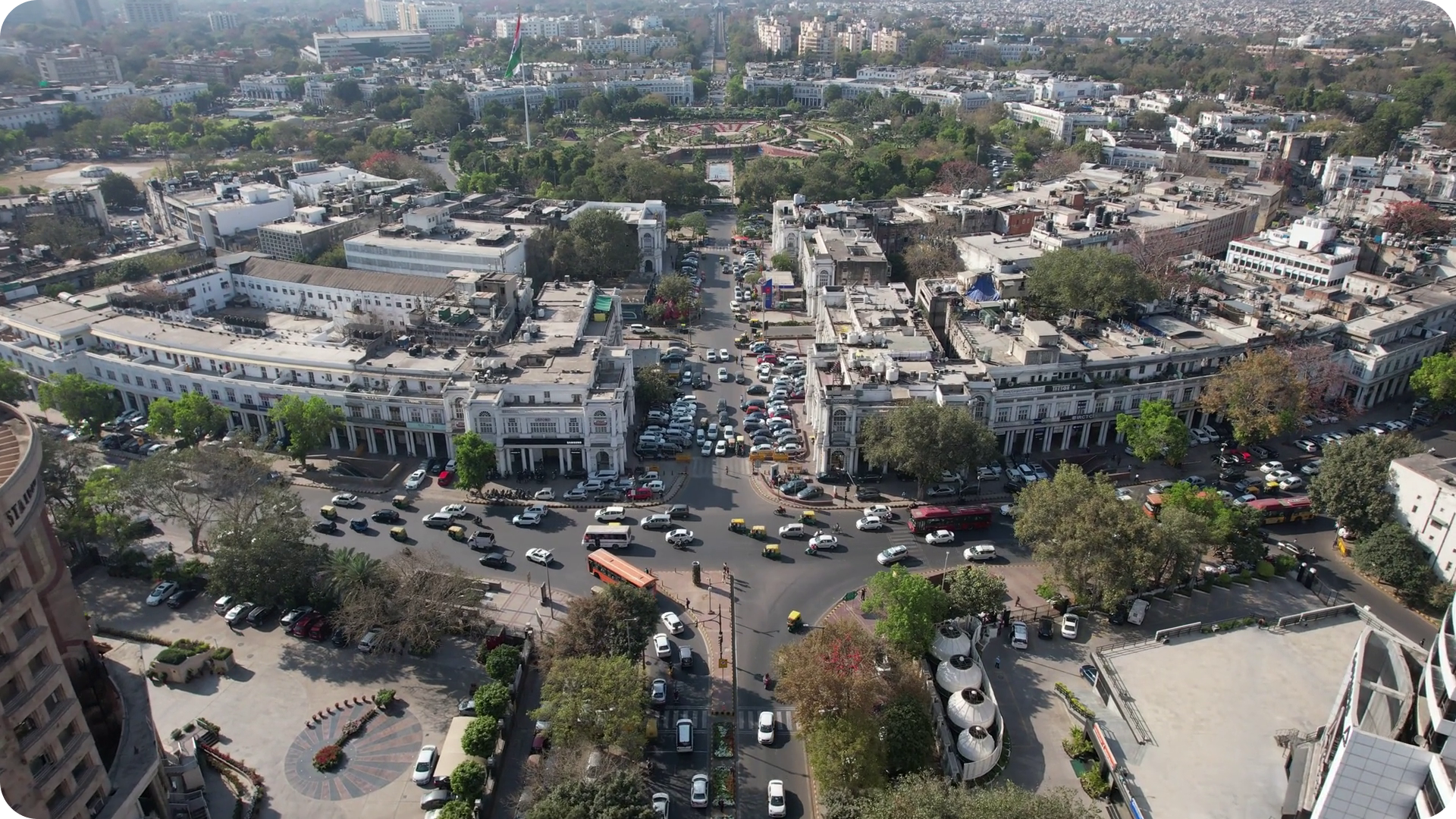
Connaught Place — best for central Delhi meetings
Connaught Place works well for meetings in central Delhi, government-adjacent offices, embassies, banks and professional services firms. It also gives easy access to New Delhi station, Pragati Maidan and many of the city’s historic areas.
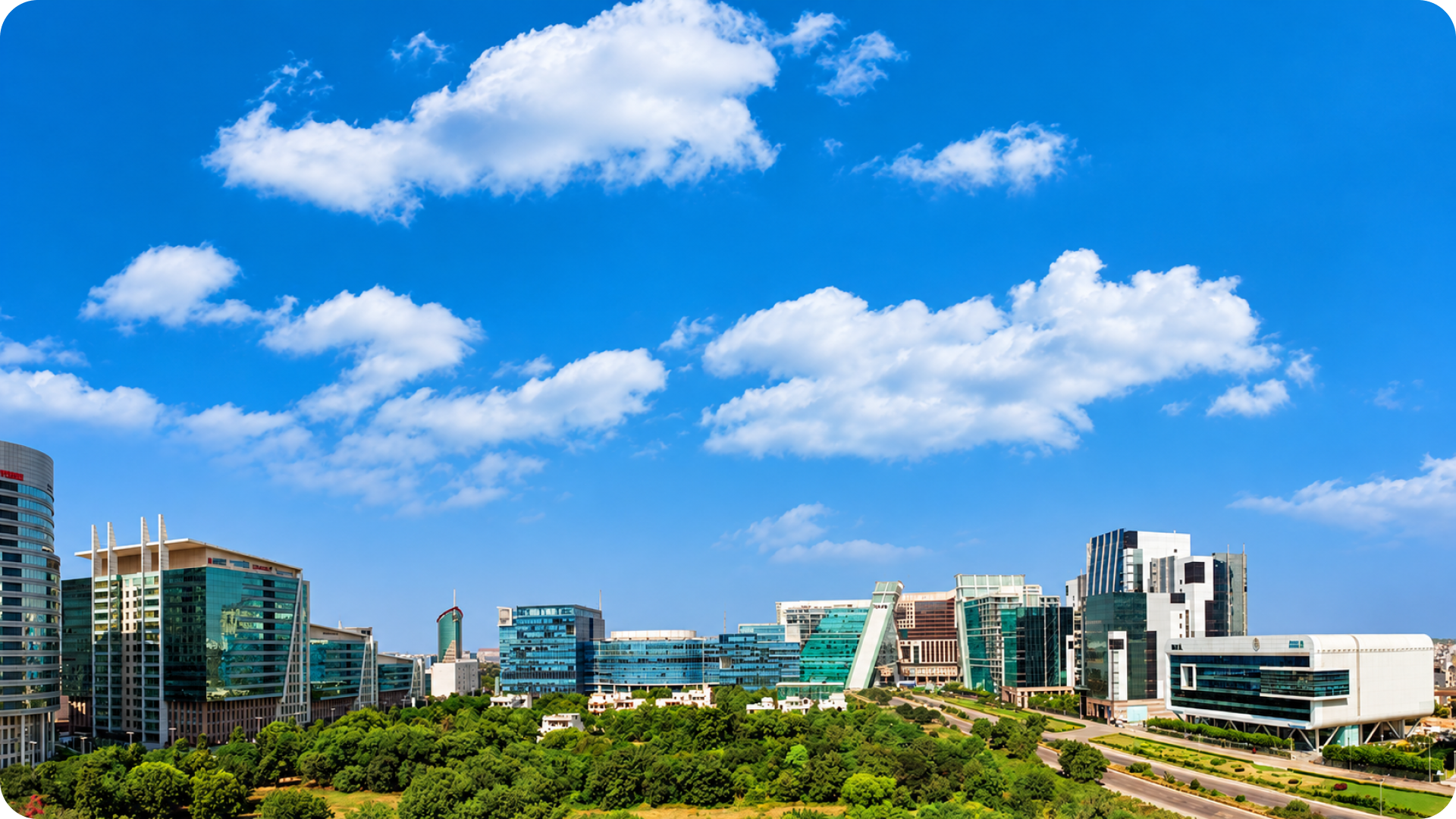
Gurgaon — best for corporate offices, Cyber City and Udyog Vihar
Gurugram, still widely known as Gurgaon, is the right base if your schedule revolves around corporate headquarters, technology companies, consulting firms, Cyber City, Golf Course Road or Udyog Vihar. It is also convenient for travellers who want to stay close to the airport without being in Delhi itself.
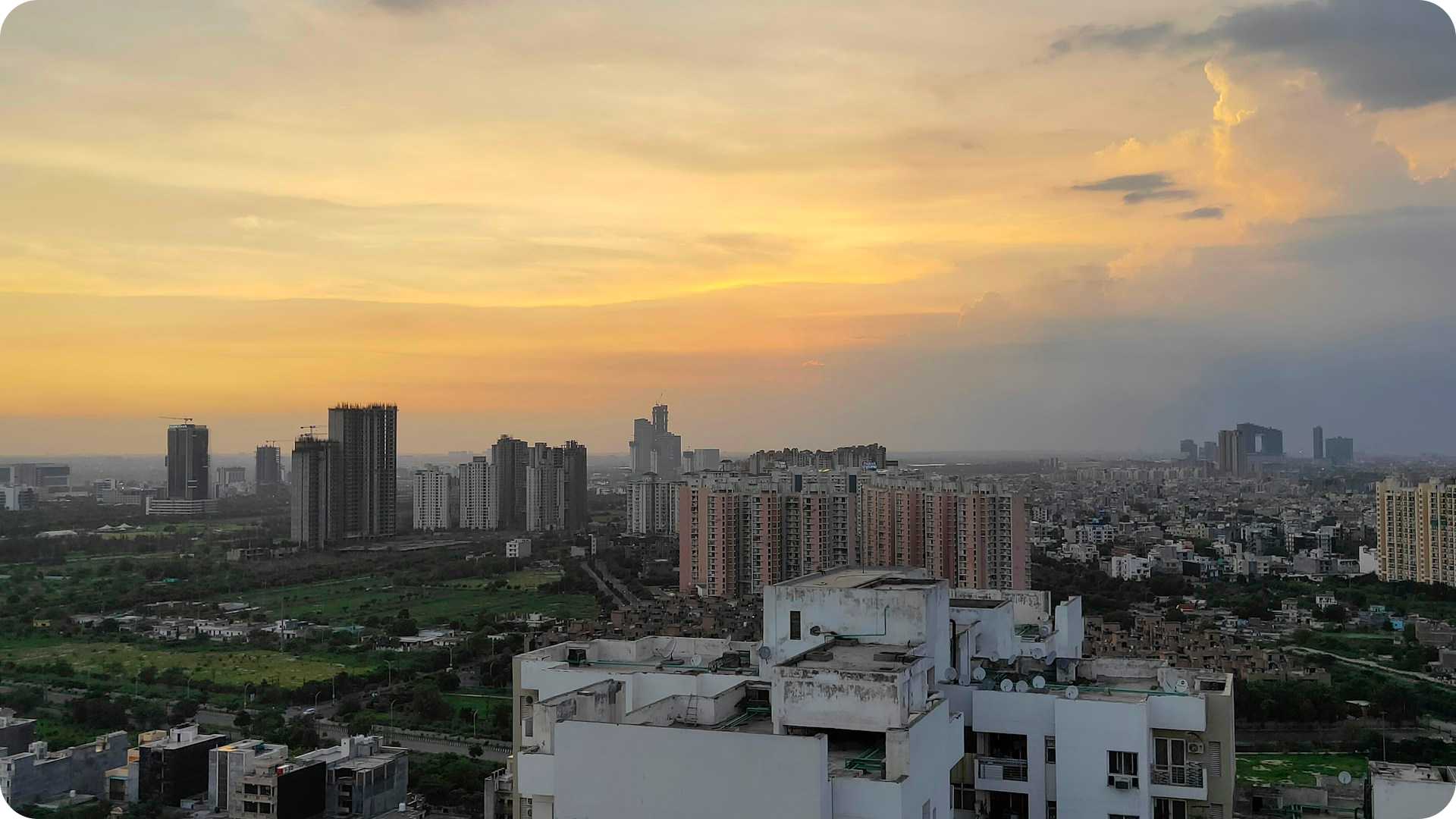
Noida — best for tech, media and outsourcing companies
Noida is practical for meetings with technology, media, outsourcing, manufacturing and back-office teams, especially around Sector 62, Film City, the Noida Expressway and Greater Noida. Staying here avoids long daily transfers from central Delhi or Gurgaon.
South Delhi — best for embassies, premium stays and quieter evenings
South Delhi suits travellers with meetings around embassies, cultural institutions, private offices, premium residential districts and boutique venues. It is calmer than central Delhi, with strong dining options and easier access to Lodhi Road, Nehru Place, Saket and Chanakyapuri.
What to look for when booking a business hotel
Before booking, check the details that affect a working stay: reliable Wi-Fi, a proper desk, early breakfast, airport transfers, early check-in, late checkout and meeting rooms or quiet lounge space. If you land in the morning and have a meeting the same day, guaranteed early check-in can matter more than an upgraded room.
Also check travel time to your first and last meetings, not just distance from the airport. A hotel that looks convenient on a map can become a poor choice if every appointment requires a cross-NCR transfer.
Business-friendly hotels in Delhi
The business hotels below cover five common Delhi NCR itineraries: executive stays in central Delhi, quick airport-side trips, meetings around Connaught Place, corporate schedules in Gurgaon and tech-focused visits to Noida.
The Imperial New Delhi: a luxury option for executive trips
Location
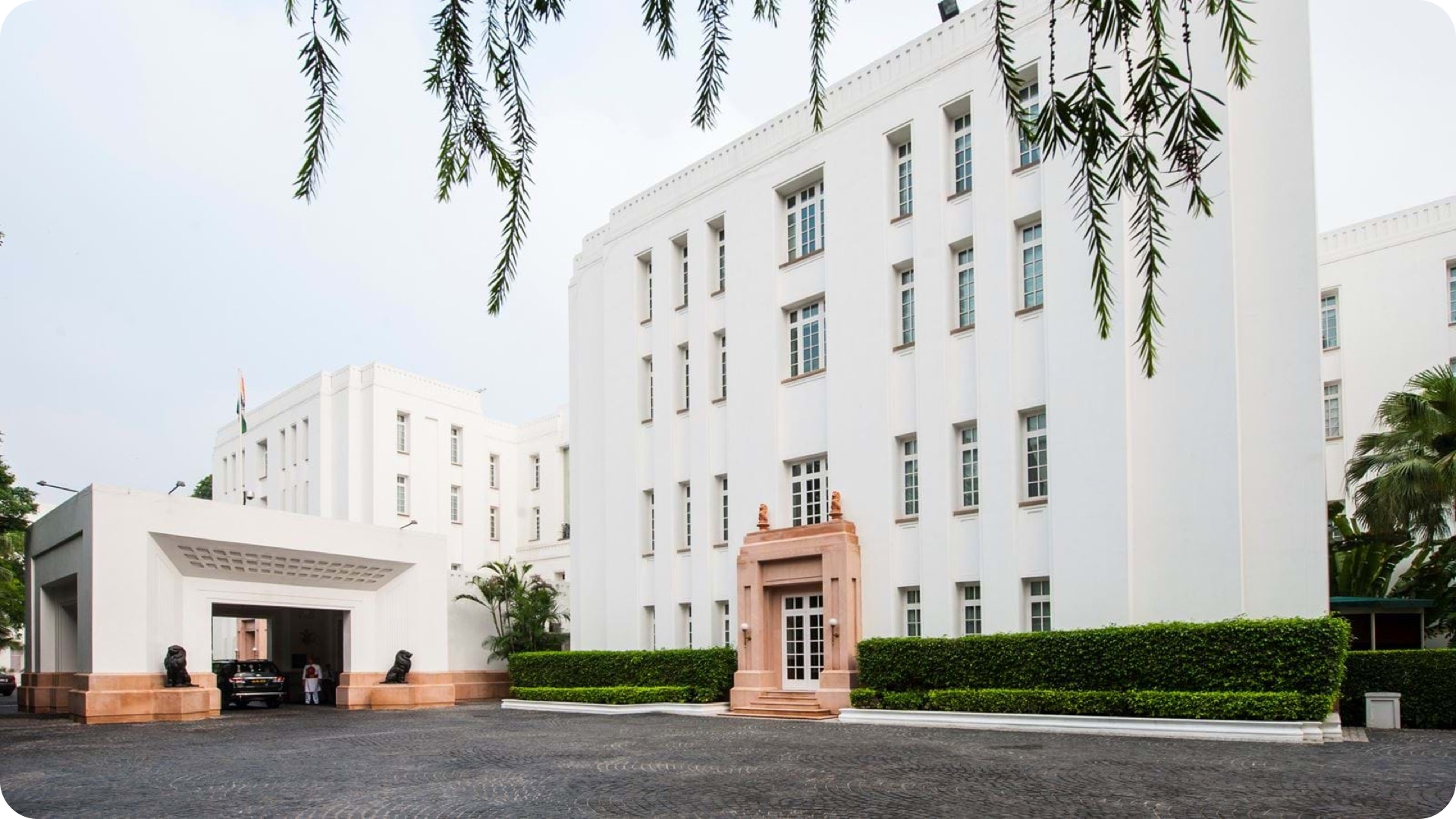
The Imperial sits on Janpath, close to Connaught Place and within easy reach of central Delhi’s government, diplomatic and commercial districts. India Gate, Lodhi Road, Pragati Maidan and major ministries are a short drive away, making it a strong choice for senior travellers whose meetings are concentrated in New Delhi rather than the outer NCR.
At the hotel
The hotel has 192 rooms and 43 suites, set inside one of Delhi’s best-known heritage properties. Rooms are formal, spacious and quietly luxurious, with garden views, period details and the kind of service expected on an executive trip.
For business travellers, The Imperial offers elegant meeting and event spaces, private dining options, banqueting facilities and modern technical support for corporate gatherings. It works best for board-level stays, confidential meetings, high-end client entertaining and trips where the address matters as much as convenience.
JW Marriott Hotel New Delhi Aerocity: a convenient option near Aerocity
Location
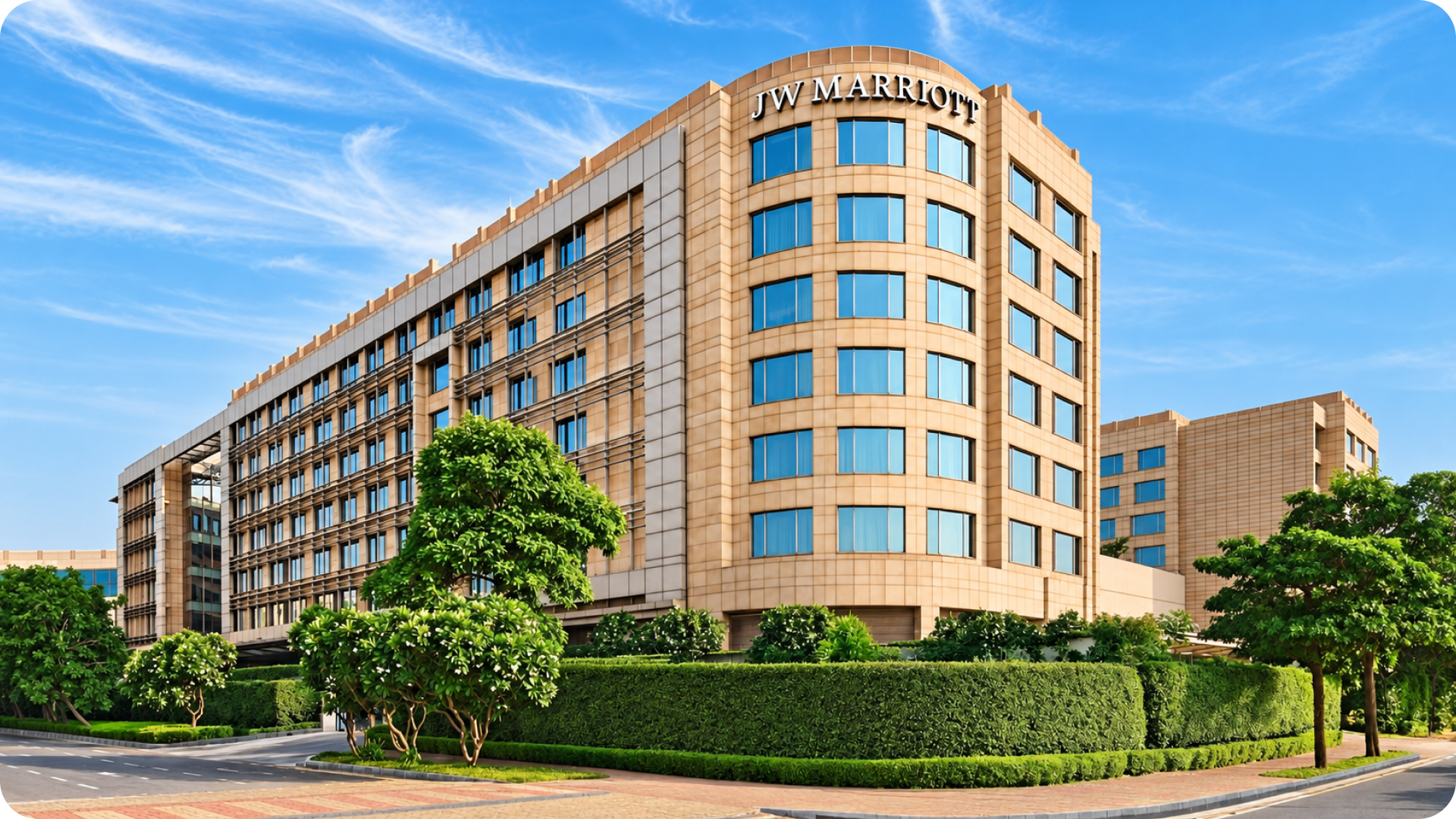
JW Marriott Hotel New Delhi Aerocity is one of the most practical choices for travellers who want to stay close to Indira Gandhi International Airport without sacrificing business facilities. Aerocity places you minutes from the terminals, close to the Airport Express Metro and well positioned for meetings in Gurgaon, Udyog Vihar and Cyber City.
At the hotel
The hotel has 511 rooms and suites, all designed for short, comfortable business stays with generous workspaces, high-speed internet and easy access to the Aerocity dining and office cluster.
Its corporate infrastructure is a major advantage: more than 30,000 square feet of flexible convention and event space, 11 meeting rooms, large ballrooms, pre-function areas and dedicated event teams. For conferences, product launches, airport-side meetings or senior arrivals after a long-haul flight, it is one of the safest picks in Delhi NCR.
The Connaught, New Delhi: a central option near Connaught Place
Location
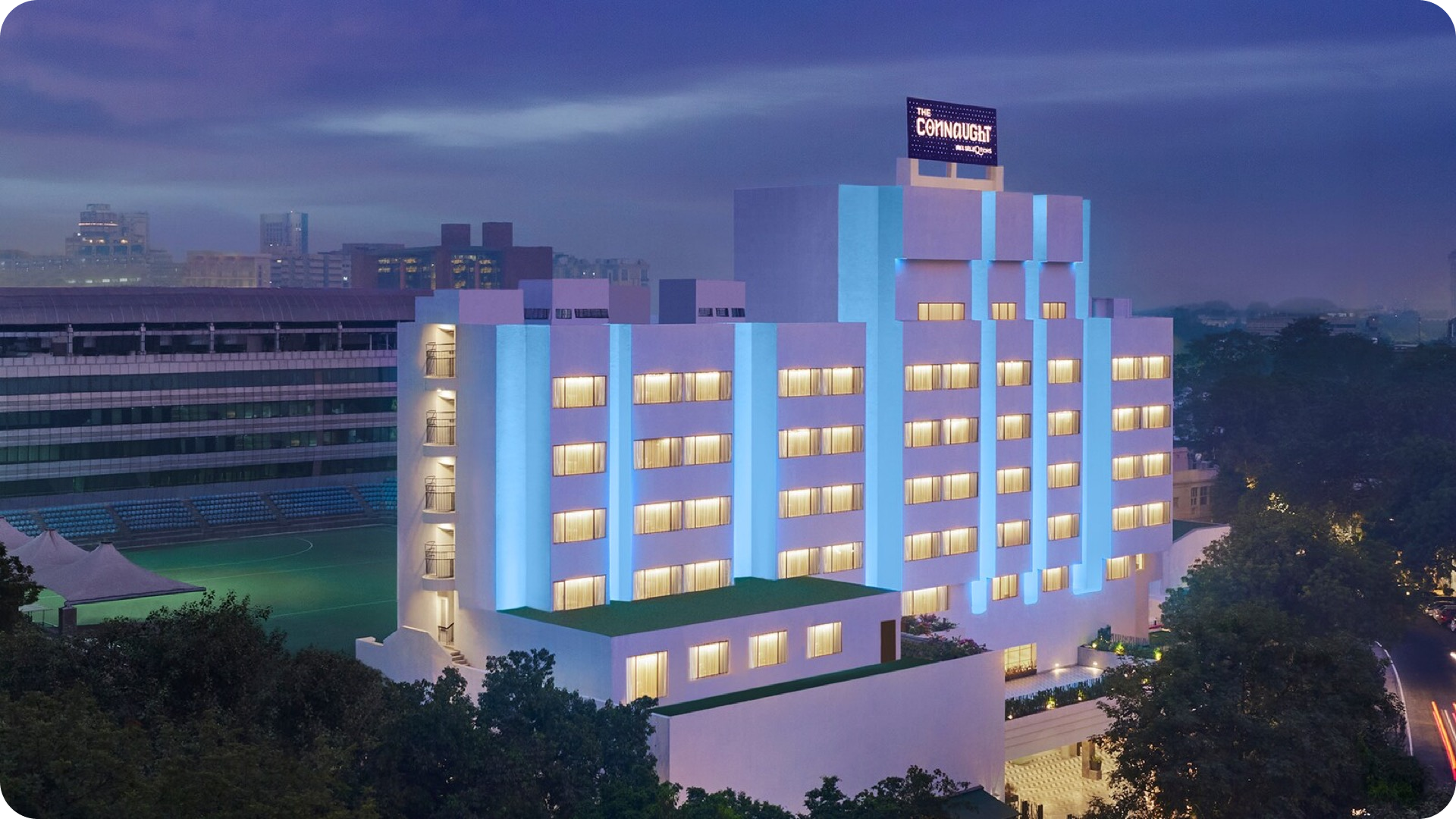
The Connaught sits beside Shivaji Stadium, just off Connaught Place and close to the Airport Express Metro. The location is particularly useful for meetings in central Delhi, government-adjacent offices, banks, consulting firms and professional services companies, with Pragati Maidan also within a manageable drive.
At the hotel
The hotel has 104 rooms and a brighter, more contemporary feel than many older central Delhi properties. Rooms are compact but polished, with Wi-Fi, comfortable work areas and enough style to suit both business and leisure time.
For small meetings, the hotel offers meeting rooms and event spaces, making it better suited to boardroom sessions, private discussions and compact corporate gatherings than large conferences. The central location is the real selling point: you can move between Connaught Place, Lodhi Road, Pragati Maidan and New Delhi station without committing to a long cross-NCR commute.
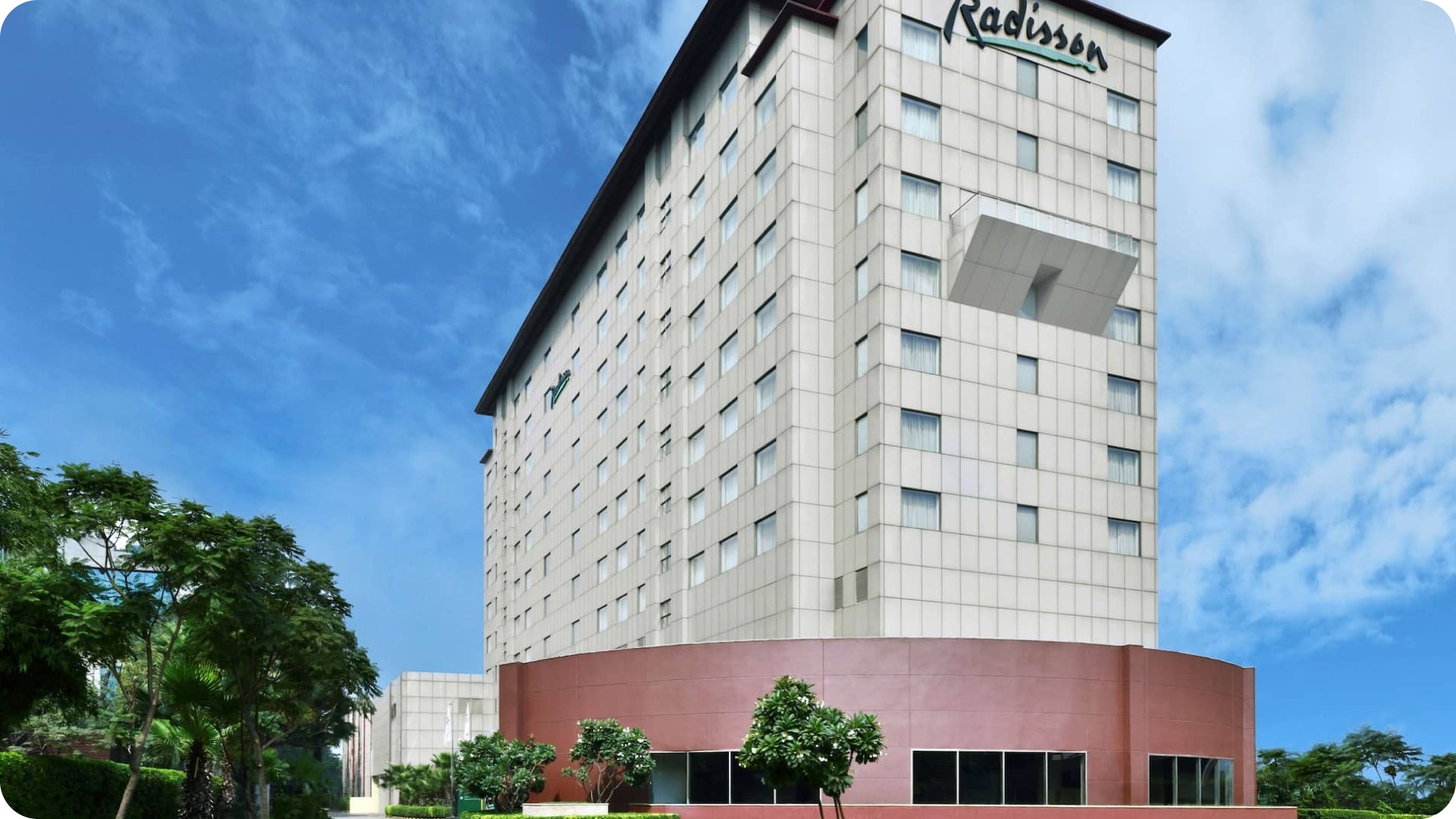
Radisson Hotel Gurugram Udyog Vihar: a Gurgaon option for corporate meetings
Location
Radisson Hotel Gurugram Udyog Vihar is a practical base for Gurgaon business travel, especially if your meetings are around Udyog Vihar, Cyber City, Ambience Mall, NH-8 or the airport side of Gurugram. It is close enough to Delhi Airport to work for short stays but better placed than central Delhi for Gurgaon-heavy schedules.
At the hotel
The hotel has 200 rooms, with straightforward business comforts, work desks, Wi-Fi and easy road access to the main corporate districts. It is not as glossy as Gurgaon’s top luxury hotels, but it is convenient, efficient and well suited to travellers who need to be near offices rather than landmarks.
Business facilities include eight meeting rooms, breakout areas, audiovisual support, catering, complimentary parking and event capacity for up to around 400 guests. For training sessions, team meetings, regional sales gatherings or client visits in Udyog Vihar, it is a sensible corporate base.
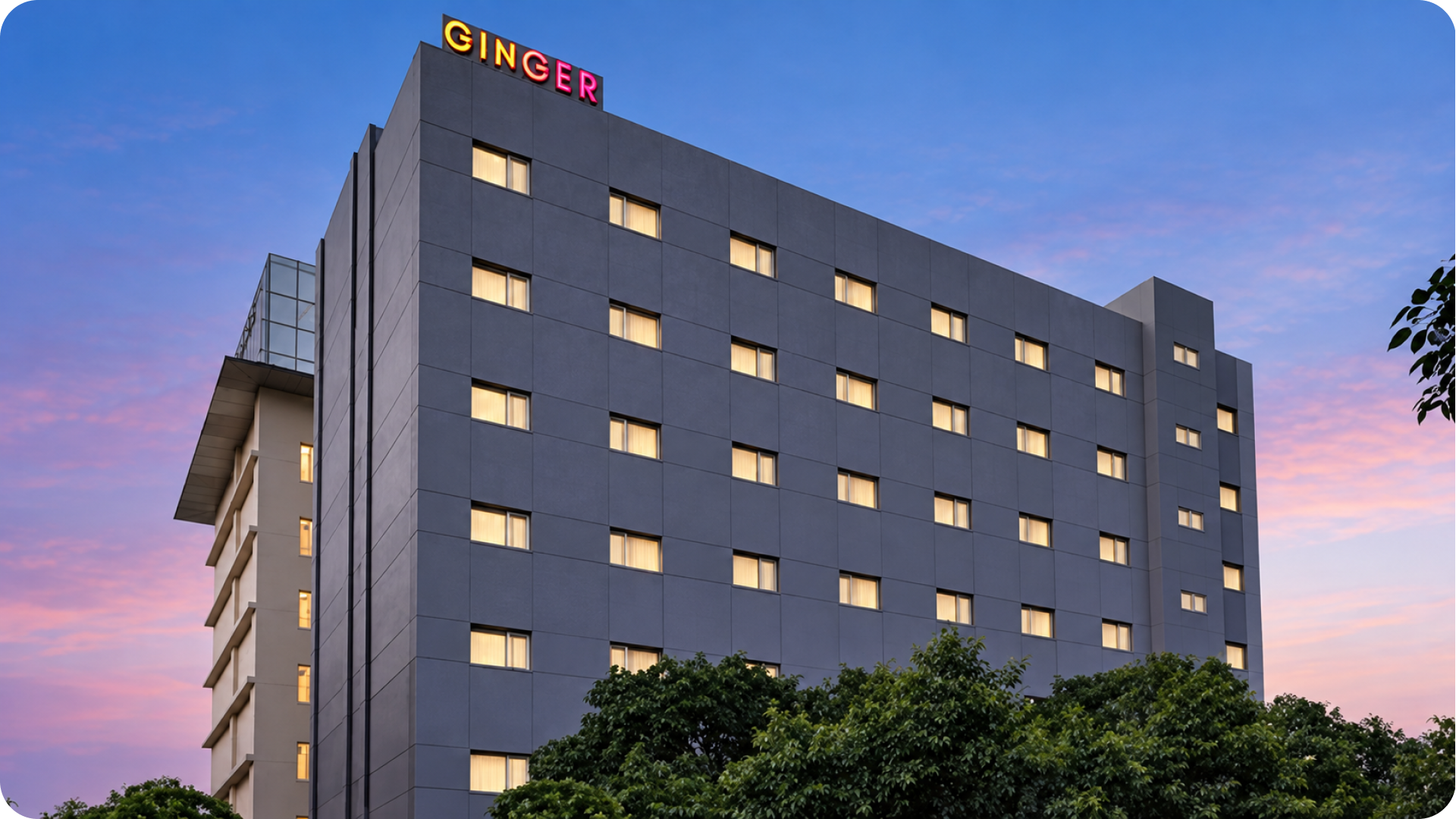
Ginger Noida City Center: a Noida option for tech and outsourcing trips
Location
Ginger Noida City Center is a budget-friendly business option for Noida-focused itineraries. It is useful for meetings around Sector 63, Corenthum Business Park, the Noida Expo Centre, outsourcing offices, tech companies and nearby commercial districts.
At the hotel
The hotel has 96 rooms, with a leaner, more functional setup than the larger Delhi and Gurgaon properties. Rooms are simple and practical, with Wi-Fi, work-friendly basics and easy access to the surrounding business hub.
Business facilities include smart meeting rooms, community spaces and on-site dining at Qmin, which makes it suitable for short work trips, project teams and travellers who need a clean, efficient base on the Noida side of the NCR. It is not the place for a major client reception, but for a focused tech or outsourcing visit, it does the job well.
A half-day route through central Delhi
Delhi is not a city you conquer on foot in one sweep. The distances are too large, the traffic too intense and the weather too unforgiving for that. The best route for a business traveller is a half-day loop through central Delhi, with a few short taxi or metro hops between the most rewarding stretches.
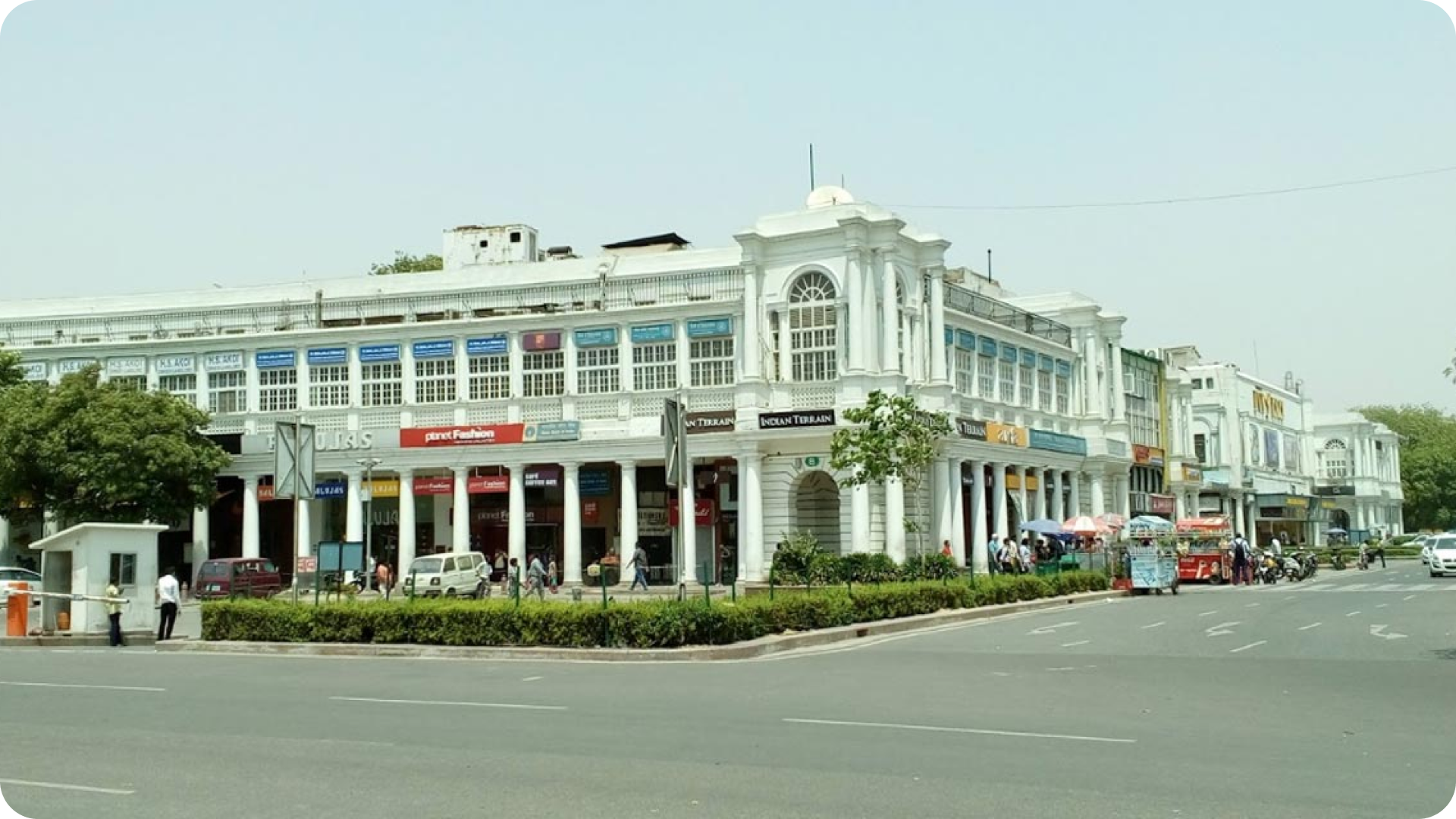
Start at Connaught Place, the colonial-era commercial circle that still anchors central Delhi. Its white colonnades, bookshops, cafés and offices make it a natural first stop, especially if you are staying nearby or finishing meetings in the area. From here, walk or take a short ride to Jantar Mantar, the 18th-century astronomical observatory built by Maharaja Jai Singh II. Its sculptural instruments make a sharp contrast with the city around it, and the visit does not take long.
Continue towards Agrasen ki Baoli, a 14th-century stepwell tucked unexpectedly between modern buildings. It is quiet, atmospheric and one of the easiest heritage stops to fit into a working day. From there, head by car towards India Gate and Kartavya Path, the grand ceremonial axis of New Delhi. This is the capital at its most formal: broad avenues, lawns, government buildings and a sense of scale that explains why Delhi remains the centre of political power.
If you have more time, continue to Lodhi Garden. This is one of the most pleasant places in the city for a proper walk, with shaded paths, tombs from the Delhi Sultanate period and enough space to breathe after a day indoors. Nearby Khan Market is a useful final stop for coffee, dinner or a quick browse through bookshops and boutiques before heading back to your hotel.
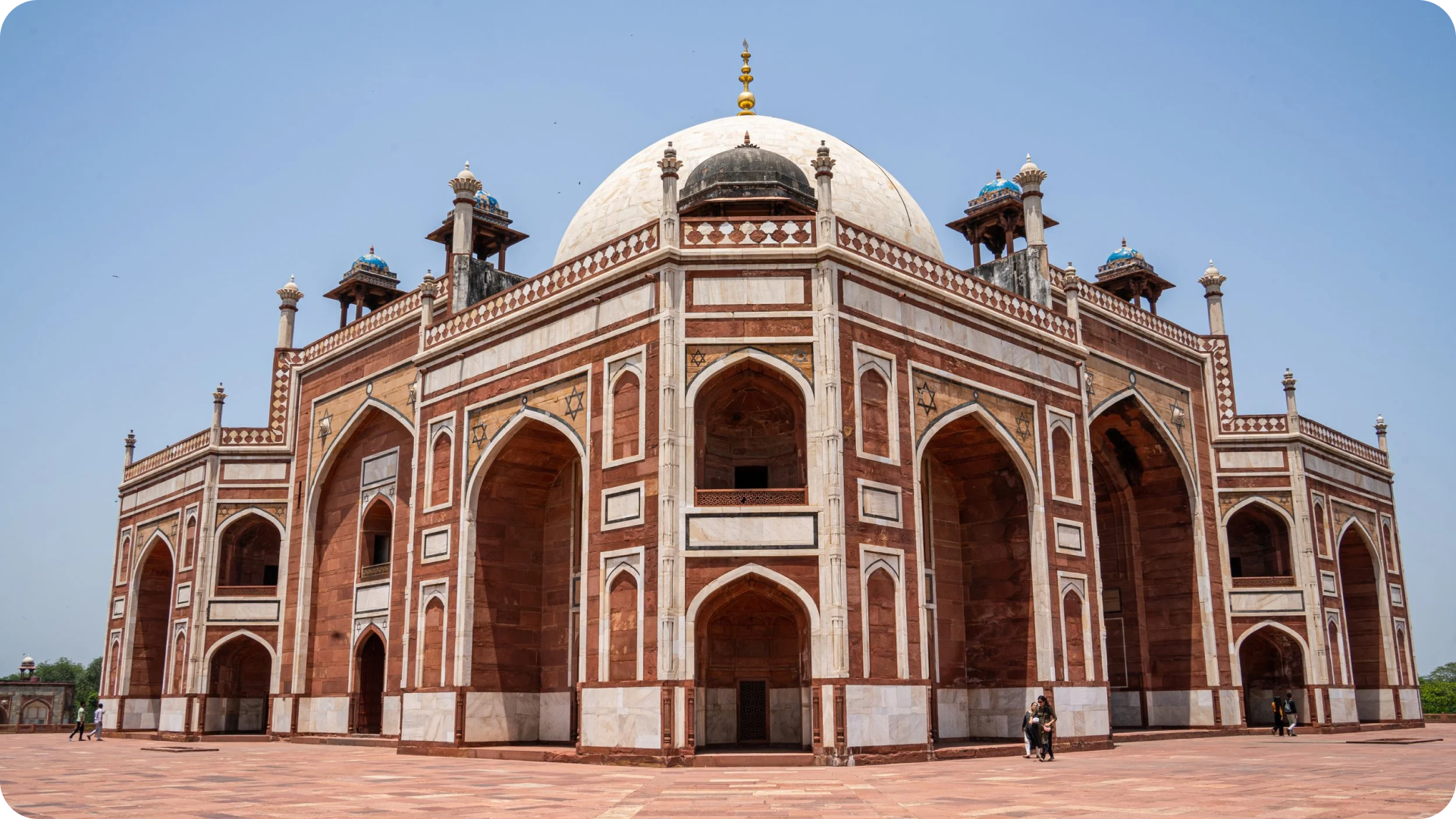
For a longer free afternoon, add Humayun’s Tomb to the route. The red sandstone mausoleum, set in formal Mughal gardens, is one of Delhi’s most beautiful monuments and a clear architectural predecessor to the Taj Mahal. Visit in the late afternoon if possible, when the light softens and the heat begins to drop.
Avoid turning this into a tight checklist. Delhi rewards slower movement: one historic site, one good walk and one strong meal will leave a better impression than racing across the city in traffic. In summer and during the monsoon, start early or go late. In winter, check air quality before planning a long outdoor route.
Business-friendly lunch spots in Delhi
Delhi is one of India’s great dining cities, and a business lunch here can do more than fill a gap between meetings. It can set the tone for a relationship, introduce a client to the capital’s food culture or give a long day in the NCR a more memorable centrepiece. Here are three dependable choices for different kinds of midday meetings.
Indian Accent
For a high-stakes client lunch, Indian Accent remains one of Delhi’s most polished choices. Set inside The Lodhi, it serves inventive modern Indian cuisine in a calm, elegant room that suits senior meetings, visiting executives and conversations that need privacy as well as theatre.
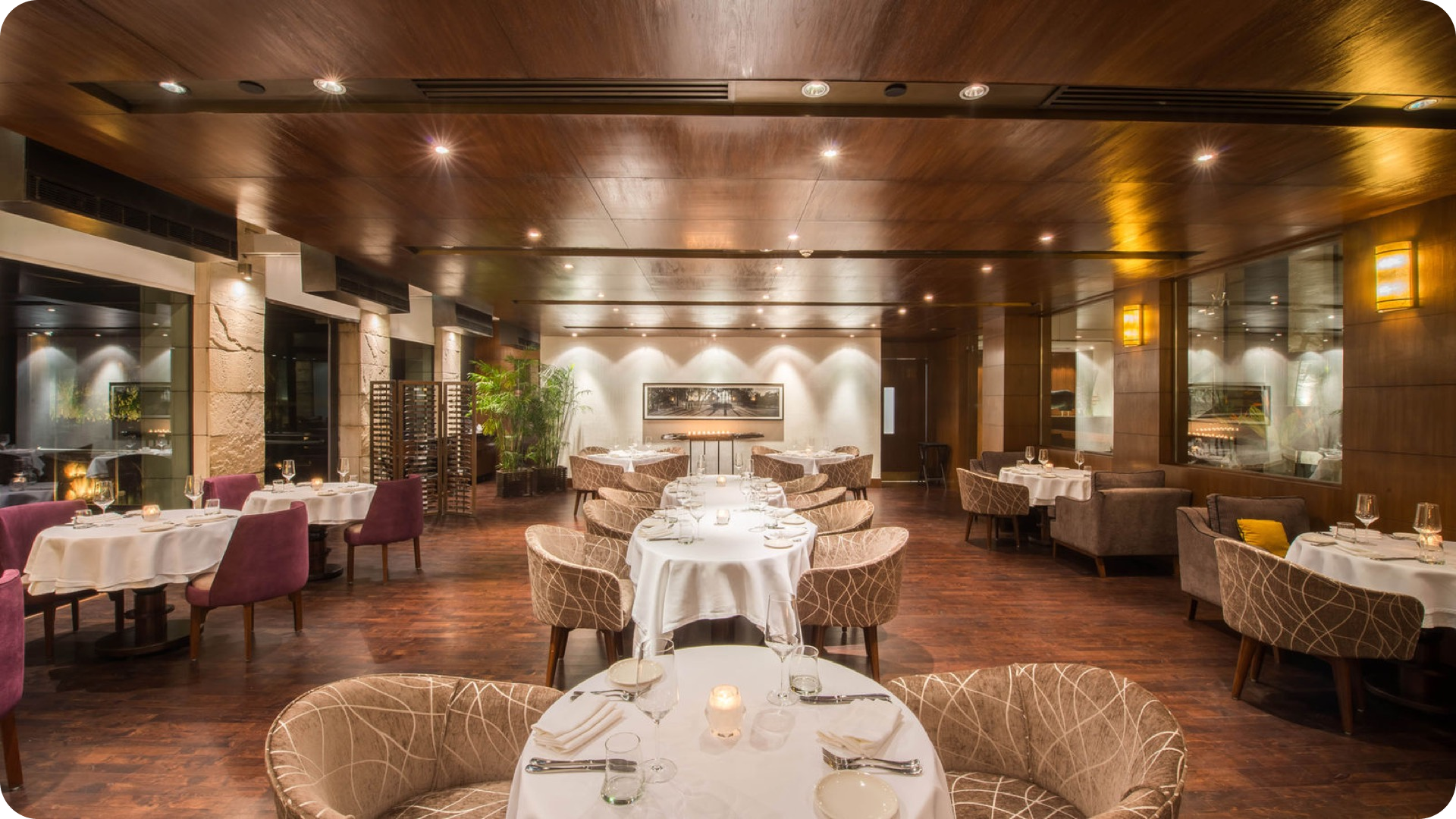
The menu reworks familiar Indian flavours with global technique, so it feels local without being predictable. Lunch is structured enough for a business schedule, service is precise and the private dining spaces make it useful for small corporate groups or discreet discussions. Book well ahead, especially for important dates.
Dress code: Smart elegant. Reservations essential.
Bukhara
For a lunch that feels unmistakably Delhi, Bukhara at ITC Maurya is the classic. The restaurant is known for North-West Frontier cooking, open-kitchen theatre and dishes built around kebabs, breads, slow-cooked lentils and the famous dal Bukhara. It is less quiet than a formal hotel dining room, but that is part of the appeal.
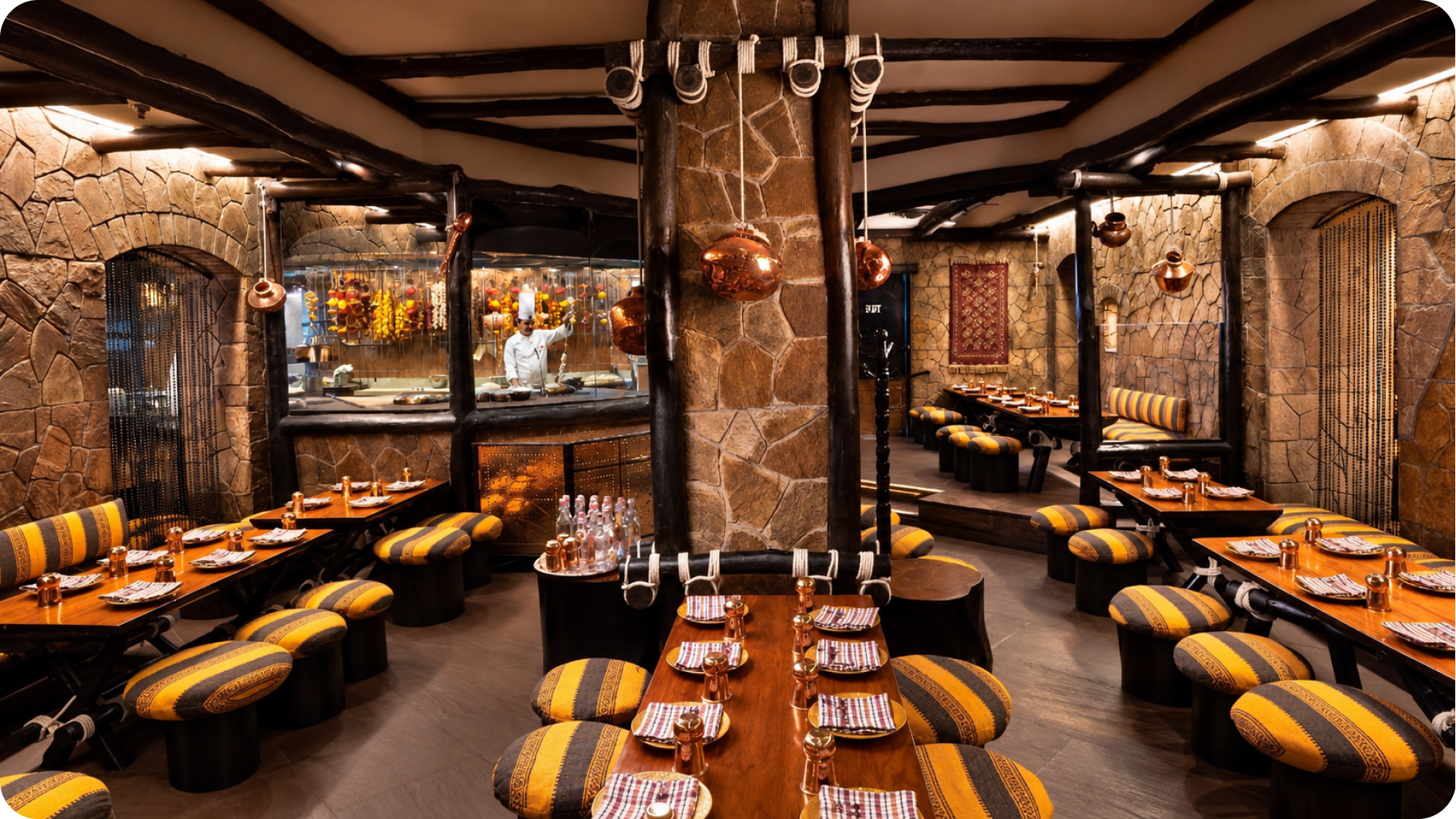
This is a strong option when hosting international clients who want a landmark Delhi experience rather than a neutral business restaurant. The setting is confident, informal and memorable, while the ITC Maurya location makes it convenient for meetings around Chanakyapuri, the diplomatic enclave, central Delhi and parts of South Delhi.
Dress code: Smart casual. Reservations strongly recommended.
Cafe Lota
When the meeting calls for something lighter and more relaxed, Cafe Lota is a good counterpoint to Delhi’s hotel dining scene. Located at the National Crafts Museum near Pragati Maidan, it is especially useful if your day includes Bharat Mandapam Delhi, central Delhi meetings or an exhibition at the Pragati Maidan complex.
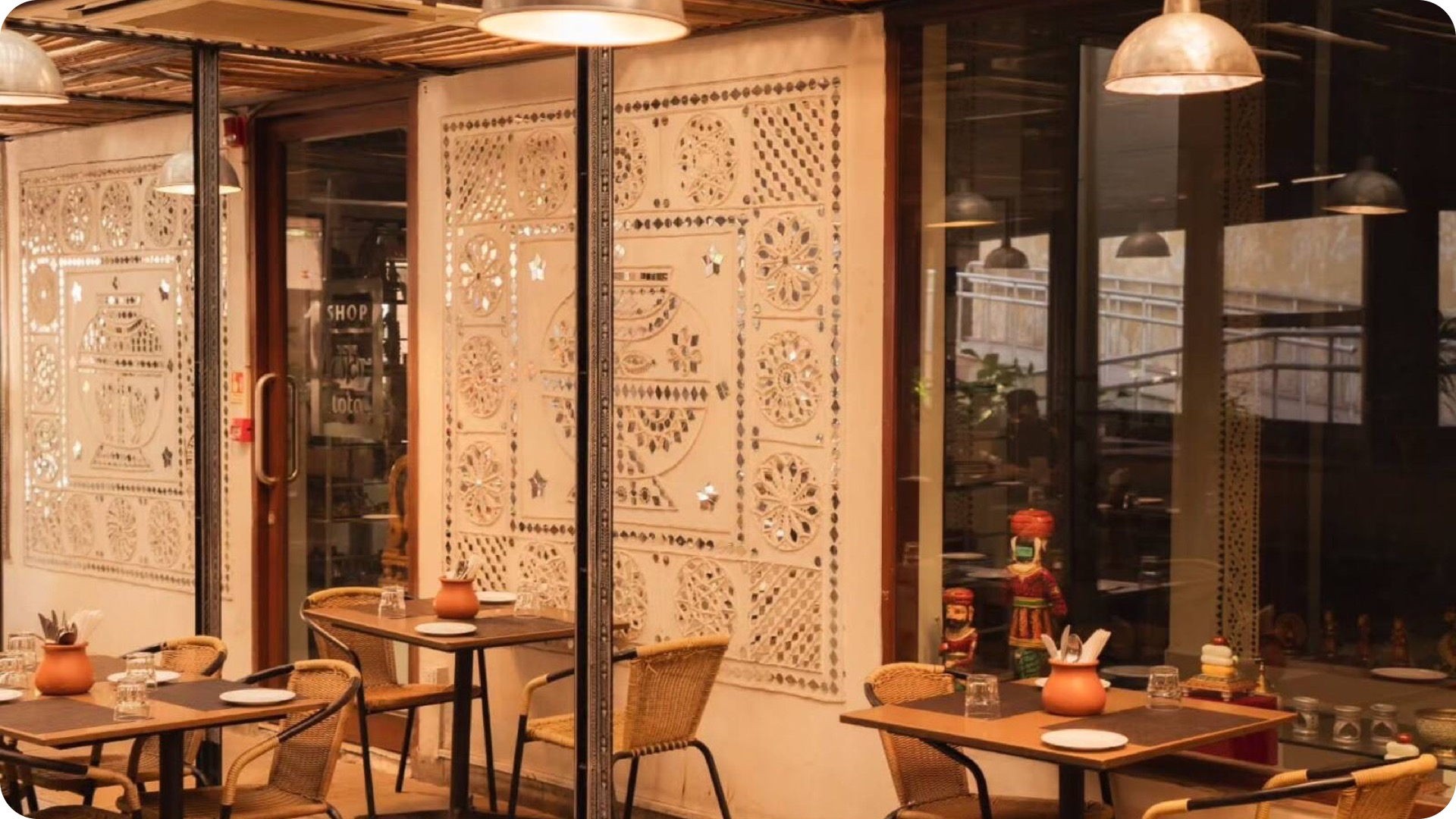
The restaurant specialises in regional Indian dishes presented in a contemporary way, with a menu that works well for mixed dietary preferences. It is not a white-tablecloth client venue, but it has character, a strong sense of place and enough informality for a productive working lunch, coffee catch-up or post-event conversation.
Dress code: Casual to smart casual. Reservations are useful at peak lunch times.
Where to relax after work
Delhi gives business travellers a choice of very different evenings: a quiet walk through Mughal-era gardens, a polished hotel bar or a lively restaurant district close to the NCR’s corporate offices. The best option depends less on the landmark list and more on where your last meeting ends.
Lodhi Garden
For a calm end to the working day, Lodhi Garden is one of the easiest escapes in central Delhi. The park combines shaded paths, lawns and 15th-century tombs, giving you a sense of the city’s history without the pressure of a formal sightseeing stop.
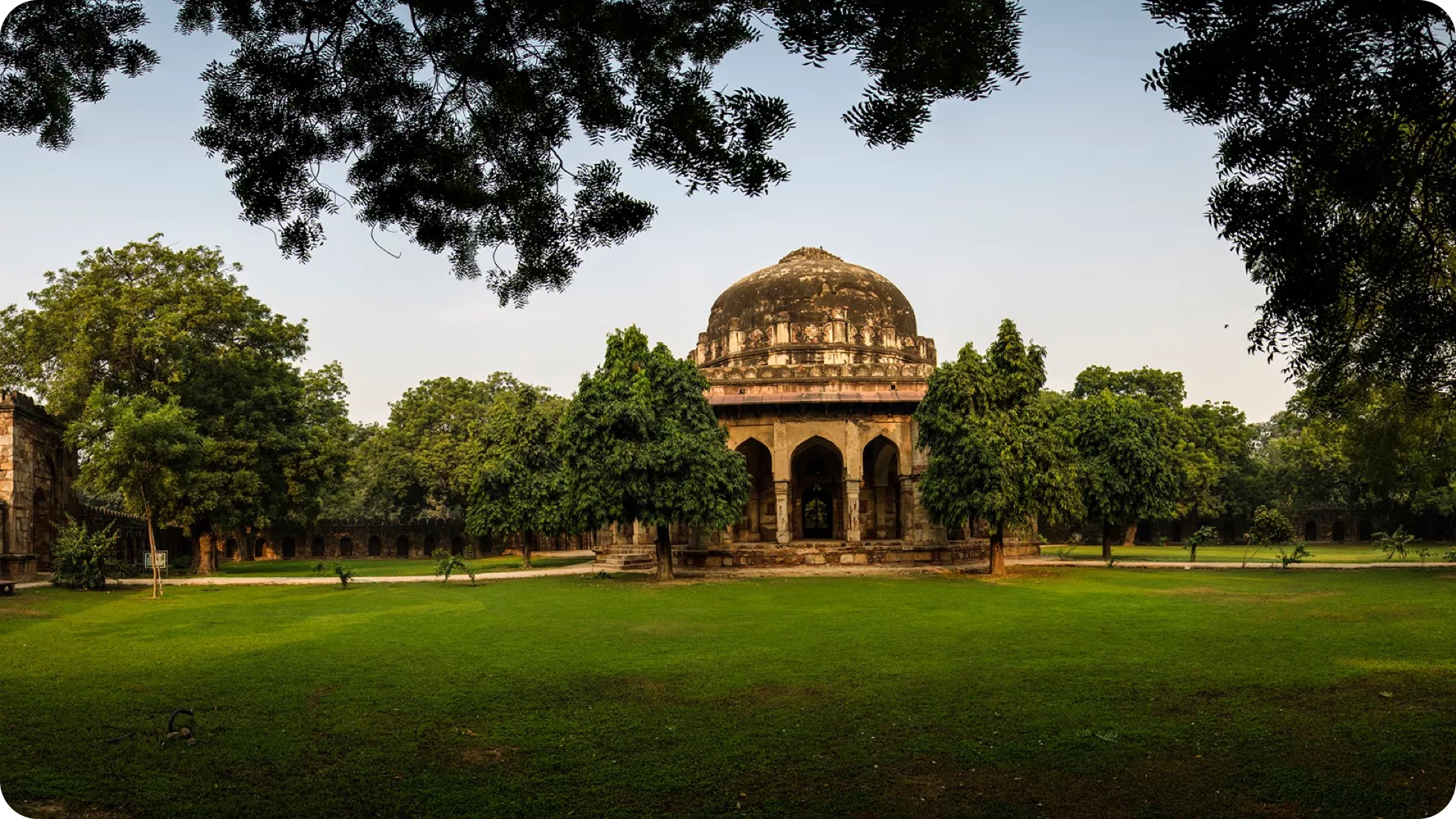
It works especially well if you are staying in South Delhi or finishing meetings around Lodhi Road, Khan Market, India Habitat Centre or the diplomatic districts. Go in the early evening, when the heat softens and locals arrive for walks, runs and quiet conversations on the grass.
Dress code: Comfortable shoes recommended.
The Library Bar
For a more refined evening, The Library Bar at The Leela Palace New Delhi is a strong choice. Set on the lobby level of one of the city’s leading luxury hotels, it is quiet enough for a post-meeting conversation but polished enough for client drinks.
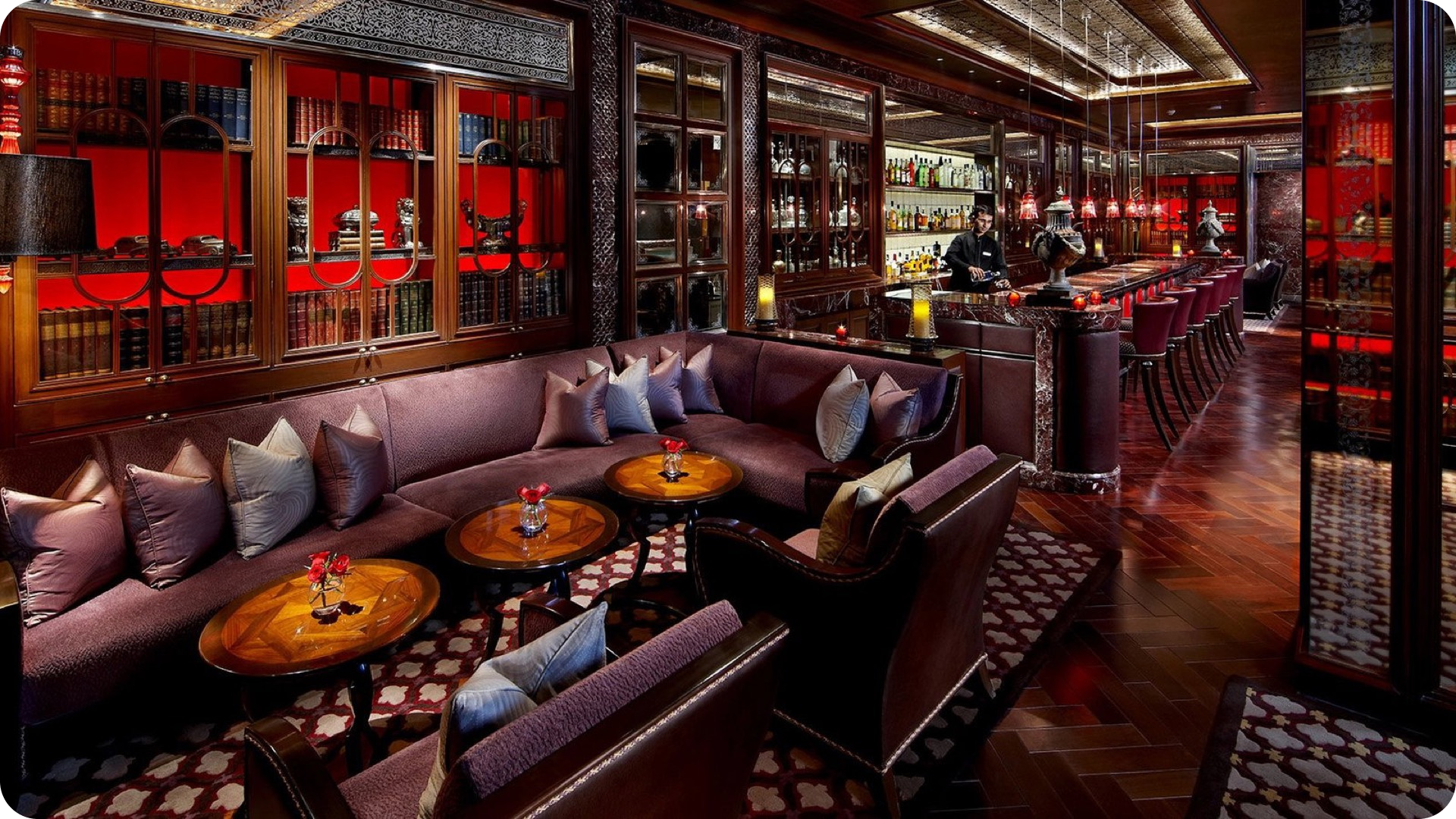
The atmosphere is classic rather than loud: dark wood, deep seating, cocktails, whiskies and a carefully managed hotel setting. It suits senior travellers, discreet catch-ups and evenings when you want to stay within a premium environment rather than move across the city.
Dress code: Smart casual. Age restrictions apply and photo ID may be requested.
DLF CyberHub
If your meetings are in Gurgaon, DLF CyberHub is the easiest after-work choice. It sits inside the Cyber City business district and is surrounded by offices, hotels and corporate campuses, so it works naturally for team dinners, informal client drinks or a relaxed evening after a long day of meetings.
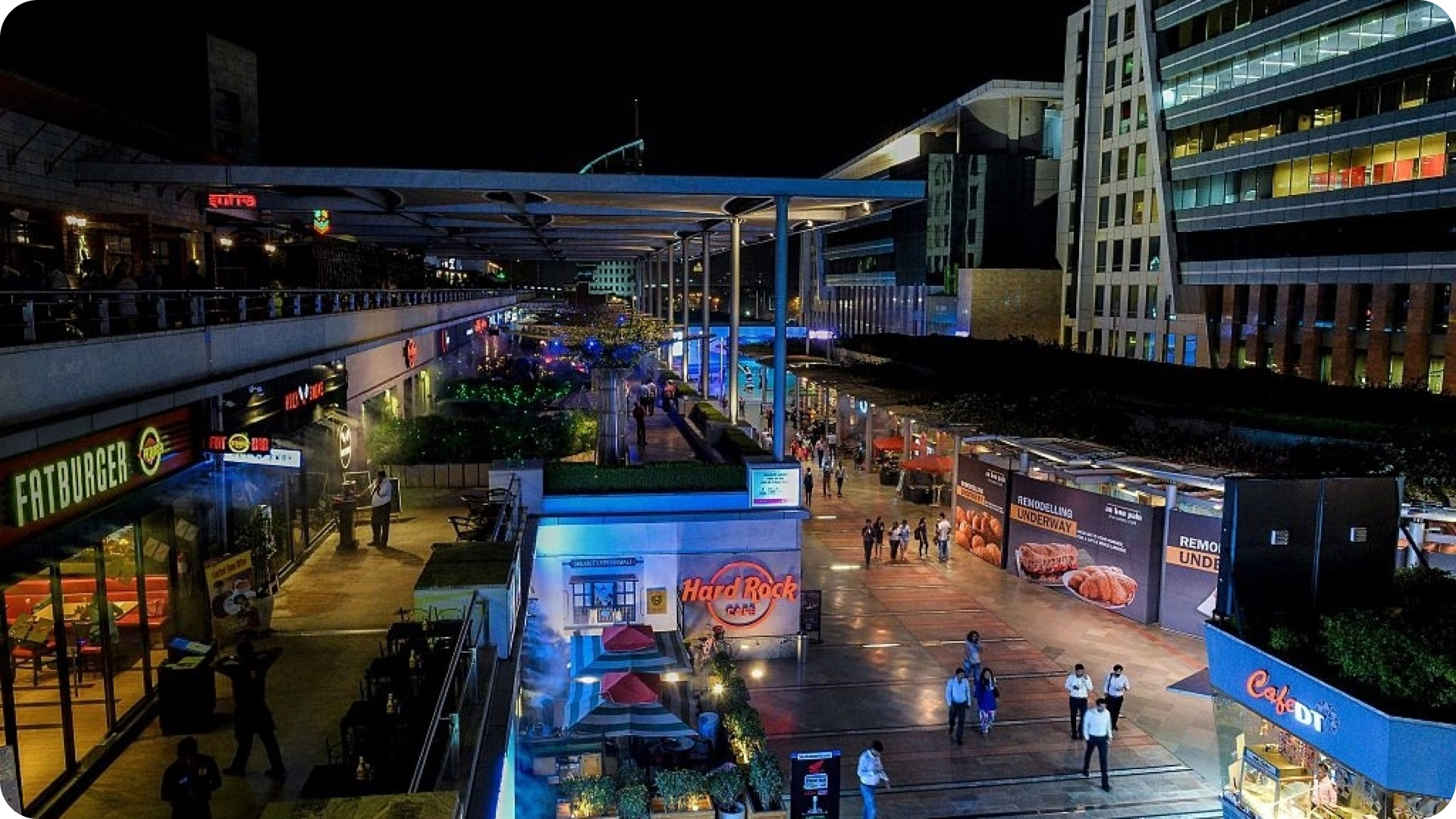
The appeal is convenience. You can move from office tower to restaurant without crossing half the NCR, and the choice runs from casual cafés and craft beer spots to polished dining rooms. It is livelier than central Delhi’s hotel bars, but still practical for business travellers who want somewhere social without making a full night of it.
Dress code: Casual to smart casual, depending on the venue.
What to bring back for colleagues
Delhi is a good city for thoughtful, easy-to-pack gifts: tea, spices, textiles, stationery and sweets all travel well and feel more personal than airport souvenirs. If you have time, shop around Khan Market, Janpath, Dilli Haat, Connaught Place or one of the city’s larger malls. For a faster option, Delhi Airport also has a decent selection of Indian food gifts and premium souvenirs.
-
Indian tea — Assam, Darjeeling and masala chai blends are safe, elegant choices for colleagues. Look for well-sealed tins or boxed selections from reputable tea shops.
-
Spices and spice blends — Delhi is a strong place to buy garam masala, cardamom, saffron, Kashmiri chilli, cumin and ready-made curry blends. Choose packaged products from reliable stores rather than loose spices if you are travelling internationally.
-
Indian sweets — boxed mithai, especially kaju katli, soan papdi or dry-fruit sweets, make a generous office gift. Check shelf life before buying, as some sweets are better eaten within a few days.
-
Textiles and scarves — lightweight cotton, silk or pashmina-style scarves are easy to carry and widely available. For better quality, avoid rushed purchases from tourist-heavy stalls and buy from established shops.
-
Handicrafts and small décor items — miniature paintings, brass objects, block-printed notebooks, coasters or handmade stationery work well as compact gifts. Dilli Haat and museum shops are good places to find items with a more local feel.
-
Ayurvedic products — soaps, oils, herbal teas and wellness products from recognised Indian brands are popular, practical and easy to pack. Avoid anything that may cause customs issues, such as medicinal products with unclear ingredients.
-
Books and coffee-table editions — Delhi’s bookshops are excellent. A well-chosen book on Indian design, architecture, food or business culture can be a refined gift for a senior colleague or partner.
Before buying food, check your destination country’s customs rules. Tea, packaged sweets and sealed spice boxes are usually easier to travel with than fresh food, seeds or unpackaged items.
Practical tips for a smooth corporate trip to Delhi
-
Plan transfers around traffic
In Delhi, journey time is rarely just about distance. Airport roads, Gurgaon expressways, Noida entry points and central Delhi corridors can slow down sharply during peak hours. Check live traffic before every transfer and avoid planning important calls or presentations immediately after a long drive. -
Prepare for heat, winter chill and air quality changes
Delhi’s weather changes more than many first-time visitors expect. Summers are hot, the monsoon can disrupt roads and winters can be cold in the morning and evening. Air quality can also deteriorate sharply in winter, so check conditions before planning outdoor time and pack accordingly: breathable clothing, a light layer, comfortable shoes and any medication you may need. -
Use corporate travel tools to manage flights, hotels, transfers and expenses
A business trip to Delhi has many moving parts: flights, airport transfers, hotel location, meeting schedules, policy compliance and receipts. Using a corporate travel platform such as Tumodo helps centralise bookings, control costs, arrange transfers, track approvals and keep expenses visible in one place. That matters in Delhi, where a poorly placed hotel or missed transfer can affect the whole working day.
FAQ
What should I know before a corporate trip to Delhi?
Plan around distance and traffic. Check your visa, stay near your main meeting area and leave generous time between appointments across Delhi, Gurgaon, Noida and Aerocity.
Do I need a visa for a business trip to Delhi?
Most foreign nationals need a visa before travelling to India. Eligible travellers may apply online for an e-Business Visa, but requirements vary by nationality, so check the official portal before booking.
What is the best area to stay in Delhi for business travel?
Choose your base around your meetings: Aerocity for airport access, Connaught Place for central Delhi, Gurgaon for corporate offices, Noida for tech hubs and South Delhi for embassies and premium stays.
Is Aerocity a good area for business travellers in Delhi?
Yes. Aerocity is ideal for short trips, early flights and meetings near the airport or Gurgaon, with modern hotels, restaurants and direct access to the Airport Express Metro.
Should I stay in Delhi, Gurgaon or Noida for a corporate trip?
Stay near most of your meetings: Delhi for ministries and central districts, Gurgaon for Cyber City and corporate headquarters, or Noida for technology, media and Greater Noida appointments.
How do I get from Delhi airport to the city centre?
The Airport Express Metro is usually fastest for central Delhi. Taxis, private transfers, Uber and Ola provide door-to-door travel, while a pre-booked transfer suits groups and tight schedules.
How do business travellers get around Delhi?
Use the Delhi Metro for predictable journey times and taxis, ride-hailing apps or a private car for door-to-door travel, luggage and multi-stop days across the NCR.
What is the business etiquette in Delhi?
Respect hierarchy, greet the most senior person first and use professional titles unless invited otherwise. Allow time for small talk and listen carefully, as communication can be indirect.
What should I wear to business meetings in Delhi?
Wear conservative business attire for government, finance, law and consulting meetings. Smart casual is often suitable for technology firms, while lightweight fabrics and an extra layer help with heat and strong air conditioning.
Is Delhi safe for solo corporate travellers?
Delhi is generally manageable with reputable hotels, trusted transport and normal precautions. Secure valuables, avoid isolated areas after dark and share travel details when travelling alone.
What are the main business districts in Delhi NCR?
Main hubs include Connaught Place, Aerocity and South Delhi; Cyber City, Udyog Vihar and Golf Course Road in Gurgaon; and Sector 62, Film City and the Noida Expressway in Noida.
What can I do in Delhi after work?
Visit Lodhi Garden, India Gate, Kartavya Path or Humayun’s Tomb, dine in Khan Market or relax at a South Delhi hotel bar. In Gurgaon, DLF CyberHub is convenient for dinner and drinks.