Berlin does business with its sleeves rolled up, but rarely without character.
Germany’s capital is not a city of glass towers clustered around one financial centre. Its business life is spread across government quarters, start-up offices, research campuses, media studios, life sciences hubs and former industrial spaces turned into modern workplaces. A corporate trip to Berlin might mean a morning meeting near the Bundestag, an afternoon at a mobility or sustainability company in Kreuzberg, a trade fair at Messe Berlin and dinner in a neighbourhood that still feels more local than corporate.
That variety is part of Berlin’s appeal. The city is political, inventive and international, with strong sectors in technology, start-ups, media, health, mobility, climate innovation and the public sector. It is also one of Germany’s most important conference and trade fair destinations, drawing visitors for exhibitions, policy forums, product launches and international business events throughout the year.
This Berlin business travel guide is designed for travellers who need more than a hotel recommendation and a taxi from the airport. It covers what to know before you go, how to plan a BER airport transfer, where to stay, how to use Berlin public transport, what to expect from Berlin business etiquette and how to make the most of the city once the working day is done. For anyone planning business travel Berlin-bound, it is a practical starting point for a trip that can be efficient without becoming forgettable.
Explore Tumodo's other corporate travel guides for more business destinations around the world.
Before you go
Visa and entry requirements
For many travellers, a corporate trip to Berlin is administratively simple. Germany is part of the Schengen Area, so citizens of the EU, EEA and Switzerland can enter freely, while many other nationalities can visit visa-free for short stays of up to 90 days in any 180-day period. That usually covers meetings, conferences, trade fairs and short business travel to Germany, provided no local employment is involved.
If your nationality is not visa-exempt, apply for a Schengen visa for business purposes before you travel. For Schengen visa business travel, expect to provide your itinerary, proof of accommodation, travel insurance, financial evidence and often an invitation from the German host company or event organiser.
ETIAS is expected to start operating in the last quarter of 2026. It is not a visa, but once launched it will become a pre-travel authorisation for visa-exempt non-EU travellers. Check the official EU site before departure rather than relying on third-party application pages.
Time zone and scheduling meetings
Berlin follows Central European Time (UTC+1) in winter and Central European Summer Time (UTC+2) in summer. The city observes daylight saving time, so the time difference with London, New York, Dubai or Singapore changes depending on the season.
The working week runs Monday to Friday, and business days tend to start early. Meetings at 9:00 am are normal, especially in corporate, public-sector and professional services environments. Fridays can be quieter in some offices, particularly in summer, so avoid leaving critical decisions to late Friday afternoon.
Berlin is not as traffic-dominated as some business capitals, but distance still matters. A meeting in Mitte, a site visit in Adlershof and an evening event near Messe Berlin should not be treated as one neat cluster. Leave room for public transport changes, security checks and the very German habit of starting on time.
Currency, payments and receipts
Germany uses the euro. Cards are widely accepted in hotels, restaurants, taxis, shops and conference venues, but Berlin has not fully abandoned cash. Smaller cafés, bakeries, markets, bars and neighbourhood restaurants may still prefer cash or set minimum card payments.
For business travellers, receipts matter. Always ask for a receipt — Quittung or Rechnung — especially after meals, taxis and local purchases. For corporate travel Germany expense reporting, itemised receipts with VAT shown are much easier to process than vague card slips.
If you are hosting a client lunch or team dinner, check payment options before the bill arrives. Some restaurants accept cards but not all international card types, and a few smaller places still surprise visitors with cash-only rules.
Internet, eSIMs and useful local apps
Staying connected in Berlin is straightforward, though the city is not quite as frictionless as some visitors expect from a major European capital. Hotel Wi-Fi is usually reliable, coworking spaces are easy to find and mobile coverage is generally strong across the city. Travellers from the EU can normally use their home mobile plan under EU roaming rules, while visitors from outside Europe may find a prepaid eSIM the simplest option for a short business stay.
For local SIM cards, Deutsche Telekom, Vodafone and O2 are the main networks. Buying one is easy enough in theory, but registration rules mean you may need to show ID and complete verification, so it is not always worth the effort for a short corporate trip to Berlin.
A few apps make the city easier to handle:
- BVG Ticket-App — for buying Berlin public transport tickets on the U-Bahn, S-Bahn, trams and buses.
- Jelbi — convenient for combining public transport with shared bikes, scooters, car-sharing and taxis.
- DB Navigator — essential if your trip includes regional trains, airport rail connections or onward travel within Germany.
- Free Now, Uber and Bolt — practical for taxis and ride-hailing, especially late in the evening or when public transport is less convenient.
- OpenTable and Quandoo — helpful for restaurant bookings, although many Berlin restaurants still manage reservations through their own websites.
WhatsApp is widely used in Berlin, but email remains the safer channel for formal business arrangements. Use messaging for quick coordination, but confirm meeting times, agendas, invoices and follow-up points in writing.
Weather, seasons and what to pack
Berlin has four distinct seasons and a talent for changing mood quickly. Spring can be bright one day and sharp the next. Summer is usually pleasant but can bring heatwaves and sudden rain. Autumn is one of the best seasons for a business trip to Berlin, with cooler air, good light and a packed events calendar. Winter is cold, dark and often damp rather than picturesque.
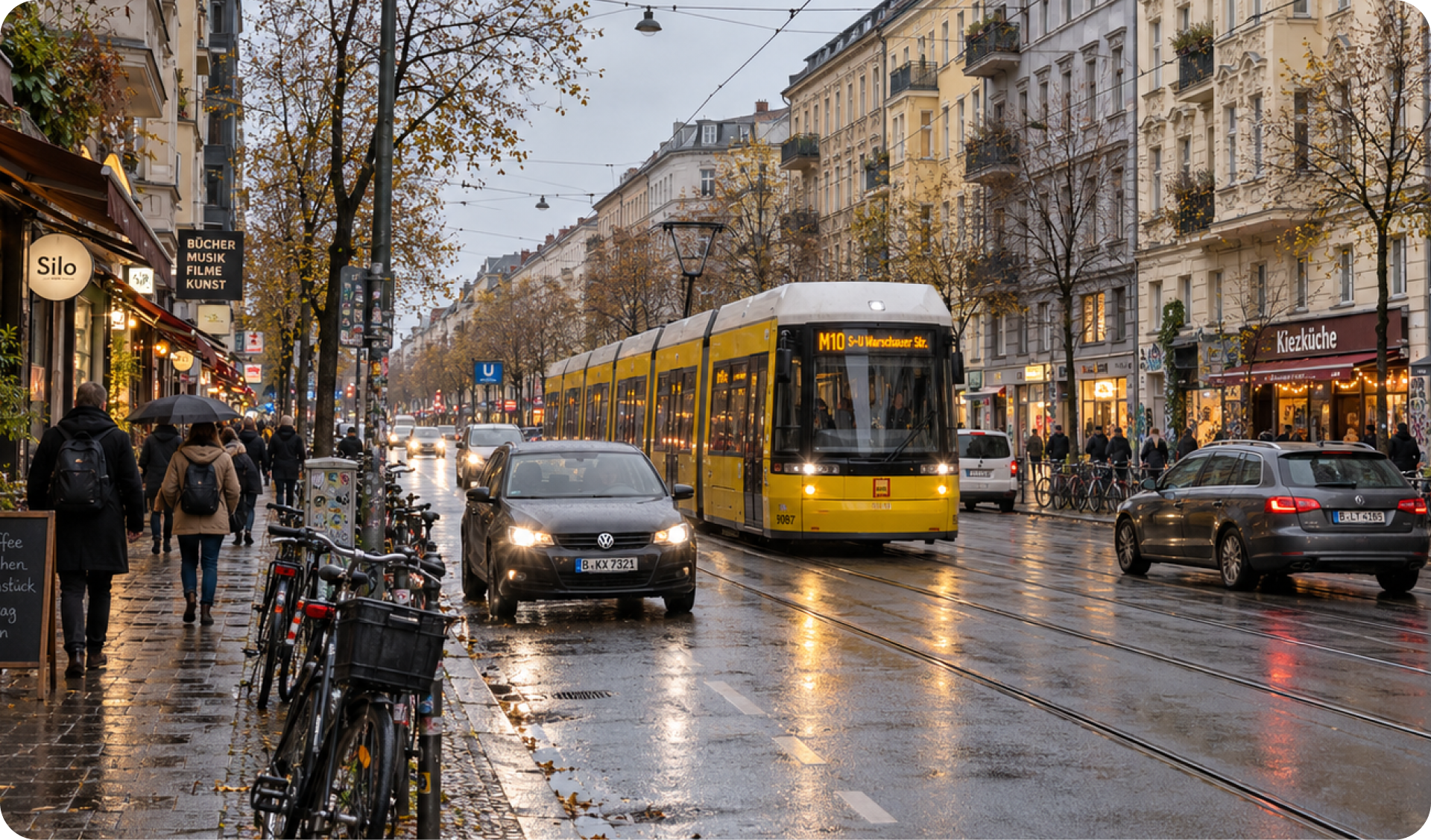
Pack for movement. Berlin is a city of stations, pavements, courtyards and long museum corridors, so comfortable shoes matter even on a polished itinerary. In summer, take breathable layers and an umbrella. In winter, bring a proper coat, scarf, gloves and shoes that can handle wet streets. Offices, hotels and conference venues are generally less aggressively air-conditioned than in the Gulf or India, but layers still help.
Business dress is practical rather than showy. A dark suit works for finance, law, government and formal dinners, while smart separates are usually enough for start-ups, creative firms and technology meetings.
Business etiquette and German communication style
If you are new to Germany business etiquette, Berlin may look relaxed, but business culture here still prizes punctuality, preparation and precision. Arrive on time, send documents when promised and do not treat a scheduled meeting as a loose suggestion. If you are running late, say so early and give a realistic arrival time.
Communication is usually direct. A German colleague may challenge an assumption, correct a detail or ask for evidence without intending to sound unfriendly. In Berlin, this can be softened by the city’s international culture, but the underlying preference remains the same: clarity beats performance.
For Berlin business etiquette, the safest approach is simple. Bring a clear agenda, know your numbers, avoid overstatement and follow up in writing. Small talk is welcome, but it is rarely the main event. If a meeting has been scheduled for 45 minutes, assume the people in the room expect those 45 minutes to be used well.
How to get to Berlin
International flights to Berlin Brandenburg Airport
Most international visitors arrive through Berlin Brandenburg Airport, known by the code BER. The airport sits south-east of the city in Schönefeld and serves as Berlin’s main gateway for business travellers, conference guests and weekend visitors adding a few extra days to their schedule.
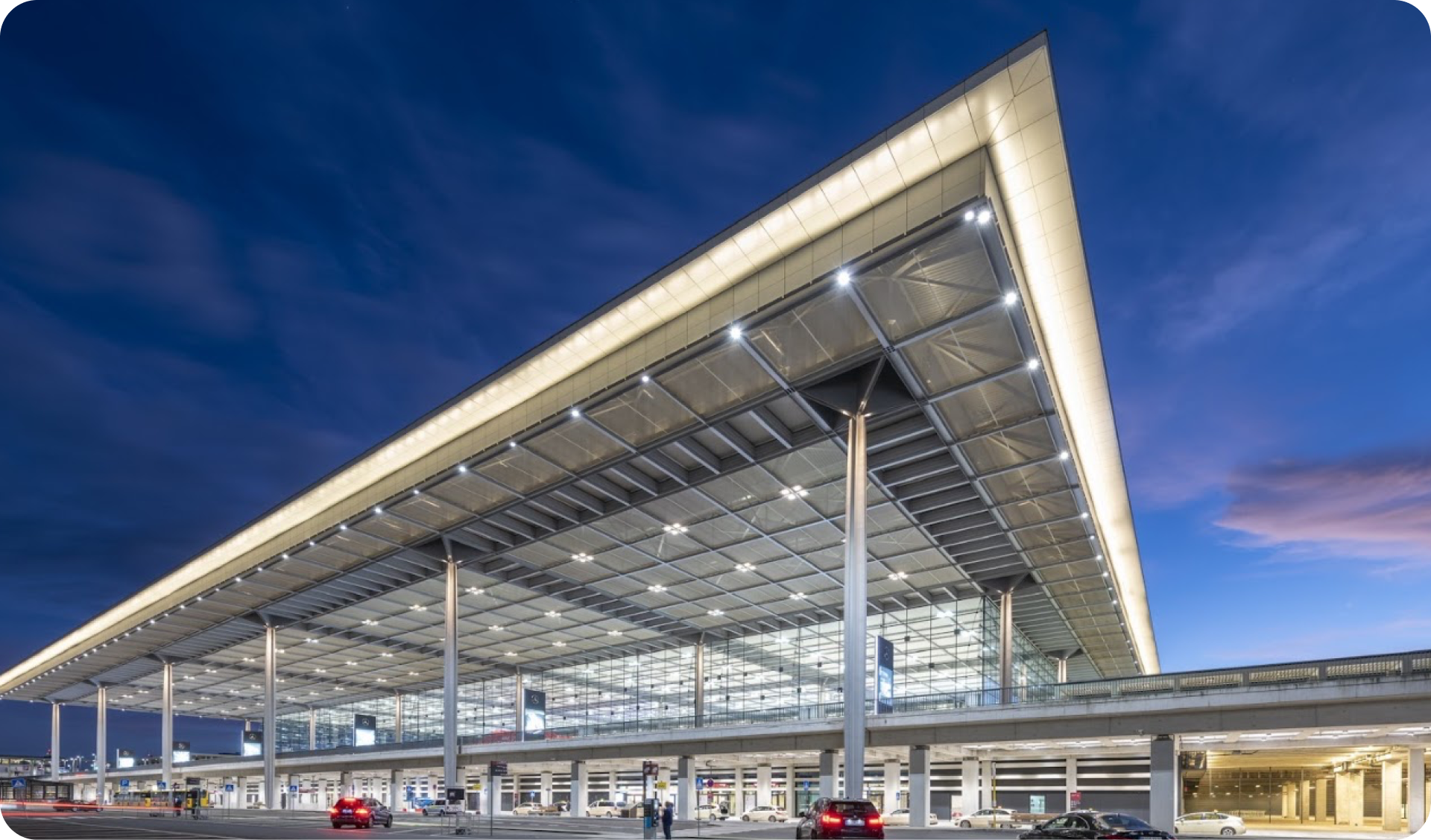
BER is not a mega-hub on the scale of Frankfurt or Munich, but it is well connected across Europe and has a useful mix of full-service, low-cost and regional carriers. For a business trip to Berlin, that means plenty of direct options from major European cities, with longer-haul travellers often connecting through another hub before landing in the capital.
Terminals 1 and 2 sit next to each other, and the airport railway station is directly below Terminal 1. That makes the onward journey relatively simple once you have cleared arrivals: trains, buses, taxis, ride-hailing pickups and private cars all leave from the same general airport complex.
Common connecting routes for international business travellers
For travellers coming from outside Europe, Berlin is often reached via a larger hub. Frankfurt and Munich are the obvious German connections, especially if your company prefers Lufthansa Group itineraries. Amsterdam, Paris, London, Zurich, Vienna, Copenhagen, Istanbul, Doha and Dubai can also work well, depending on airline policy, fare class and your starting city.
The best route is not always the shortest on paper. A slightly longer connection through a reliable hub may be better than a tight transfer that leaves no room for delays. If you need to arrive ready for a meeting the same day, choose a flight that lands before midday or build in a quiet first evening before the serious work begins.
For a BER airport transfer after a long-haul journey, think about where you are staying before choosing the flight. A late arrival followed by a cross-city trip to Charlottenburg, Mitte or Prenzlauer Berg can feel longer than expected, especially with luggage and a full diary the next morning.
Arriving by train from other German and European cities
Berlin is one of Germany’s best-connected rail cities, and arriving by train can be easier than flying if you are coming from Hamburg, Leipzig, Dresden, Hanover, Frankfurt, Cologne or Munich. Berlin Hauptbahnhof is the main long-distance station, with ICE, Intercity, regional and S-Bahn connections under one roof.
Rail is also worth considering for multi-city corporate travel Germany itineraries. If your trip combines Berlin with Frankfurt, Munich or Hamburg, the train often saves the airport transfer, security queue and waiting time that make short flights less efficient. For European routes, Berlin has direct or convenient connections with cities such as Prague, Warsaw, Vienna, Amsterdam and Zurich, though journey times vary sharply.
For business travellers, the main advantage is usable time. On a train, you can work, take calls, read documents and arrive closer to the city centre. Book a seat reservation on busy routes, especially on Fridays, Sundays and around trade fairs.
When to book flights and trains for a corporate trip
For a routine corporate trip to Berlin, booking two to four weeks ahead is usually enough to balance cost and flexibility. Book earlier if you need a direct flight, a specific arrival window, premium cabin availability or a refundable fare.
Plan further ahead around major Berlin conference venues and trade fair periods. Events at the trade fair district, large technology conferences, political summits and major cultural weekends can push up hotel rates and reduce flight and rail availability. If the trip is tied to a fixed exhibition date, book as soon as the appointment is confirmed.
For trains, early booking often brings better fares, but flexibility has value. If your meetings may overrun, choose a ticket that allows changes or build in a later return. Germany’s rail network is extensive, but delays do happen, so avoid scheduling an important call for the exact minute you are supposed to arrive.
Documents and travel checks before departure
Before leaving for Berlin, check that your passport or national ID meets the entry rules for Germany. EU, EEA and Swiss citizens can travel with valid national documentation. Many non-EU travellers can enter the Schengen Area visa-free for short stays, while others need a Schengen business visa before departure.
For Schengen visa business travel, keep your invitation letter, hotel confirmation, return or onward ticket, travel insurance and itinerary accessible. Border officers may ask about the purpose of your visit, especially if you are attending meetings, a conference or a trade fair.
If you are visa-exempt, check whether any new pre-travel authorisation rules apply at the time of your journey, as European entry systems are changing. Also confirm your baggage allowance, airport terminal, hotel address, first meeting location and transfer plan before you travel. Berlin is easy to navigate once you are prepared, but it is much less forgiving when you land tired and start improvising.
From Berlin Brandenburg Airport to the city
By Airport Express and regional trains
For most business travellers, the Airport Express and regional trains are the cleanest way into Berlin. The station at BER sits directly below Terminal 1, with Terminal 2 only a short walk away, so you can move from arrivals to the platform without leaving the airport complex.
The Airport Express, usually shown as FEX, links BER with key city stations including Südkreuz, Potsdamer Platz and Berlin Hauptbahnhof. Regional services also connect the airport with different parts of Berlin and Brandenburg. This is often the best choice if you are staying near Mitte, Potsdamer Platz, the government district or the main railway station.
You need an ABC ticket for journeys between BER and central Berlin, as the airport is in fare zone C. Buy it from a machine, the BVG app, the VBB app or the S-Bahn app, and remember to validate paper tickets before boarding.
By S-Bahn
The S-Bahn is slower than the Airport Express, but practical if your hotel or meeting area sits directly on the route. Lines such as S9 and S85 connect BER with several Berlin districts and can be practical for areas that do not require a change at Hauptbahnhof or Südkreuz.
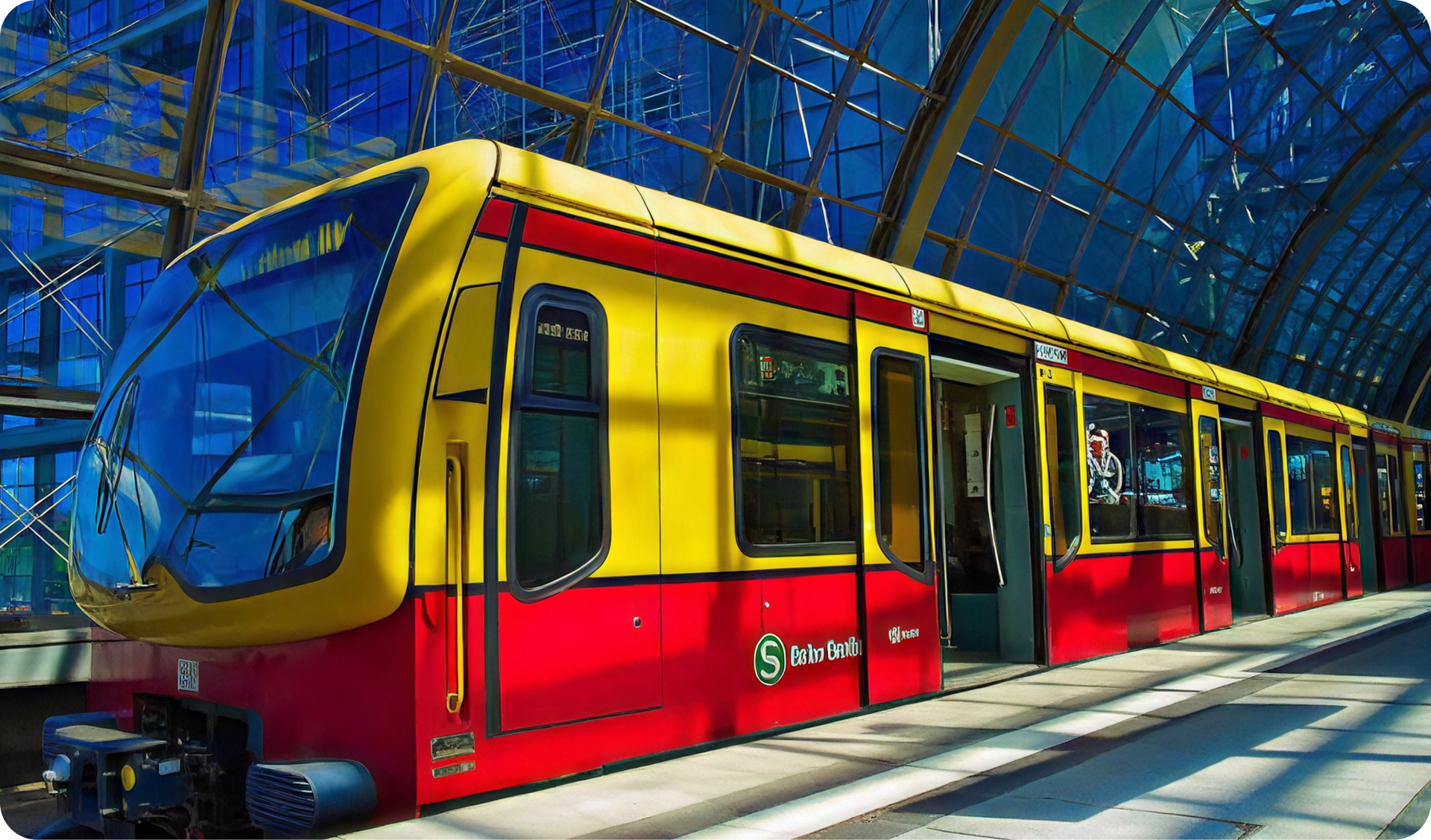
It is a good option if you are travelling light, know your route and are not landing late with a tight schedule. For a first-time BER airport transfer, the regional train or Airport Express is usually easier to understand, but the S-Bahn can be very convenient once you know where in the city you are heading.
By airport bus
Airport buses are useful mainly for specific routes rather than as the default way into Berlin. Express buses such as X7 and X71 connect BER with U Rudow and other points in the south of the city, where you can continue by U-Bahn. The BER2 bus links the airport with Potsdam and nearby towns, with a surcharge.
For most visitors staying in central Berlin, the train is faster and simpler. The bus makes more sense if your destination is close to one of the bus corridors, if your hotel advises that route or if rail services are disrupted.
By taxi, ride-hailing app or private transfer
A taxi, ride-hailing app or private car is the most comfortable option if you are arriving late, carrying heavy luggage or heading straight to a meeting. Official taxi ranks are located at the airport; avoid unofficial offers and only use clearly marked taxis from designated stands.
A taxi into central Berlin usually takes around 35 to 50 minutes, depending on traffic and destination. Ride-hailing apps such as Uber, Bolt and Free Now also operate in Berlin, although pickup points and vehicle availability can vary.
For senior travellers, delegations or anyone landing before an important meeting, a pre-booked Berlin Brandenburg Airport transfer is the safer choice. A named driver, fixed pickup point and direct route to the hotel or office remove the small frictions that tend to matter after a flight.
Getting around Berlin
U-Bahn, S-Bahn, trams and buses
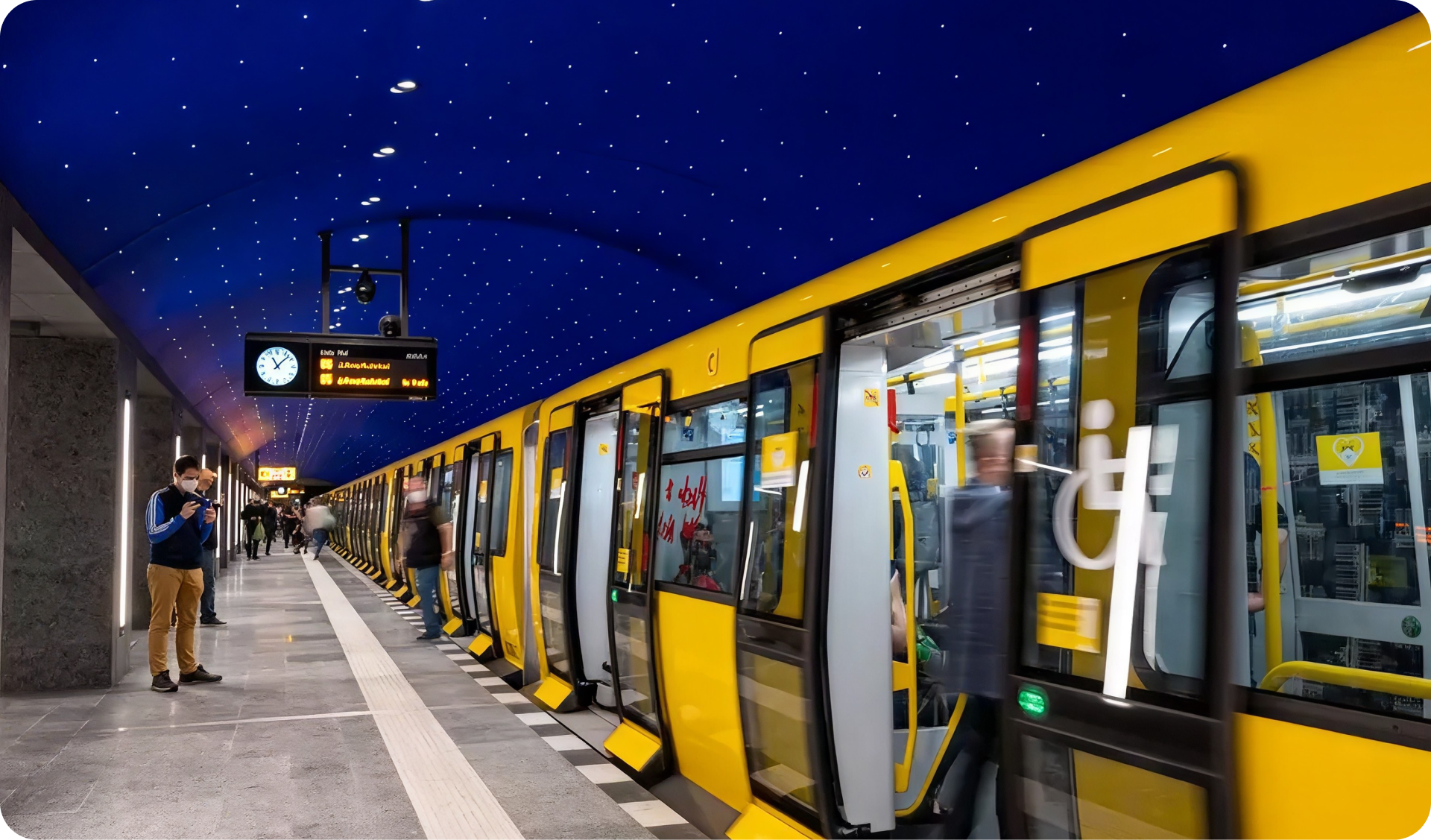
Berlin public transport is usually the easiest way to move through the city. The U-Bahn covers many central and inner-city routes, the S-Bahn is useful for longer cross-city journeys, trams are especially common in the east and buses fill the gaps between stations. Together, they make most business districts, hotels and conference areas reachable without much drama.
For a corporate trip to Berlin, the main trick is to plan by station rather than by distance. A hotel five minutes from an U-Bahn or S-Bahn stop will often be an easier option than a smarter property that requires a taxi every time you leave.
Berlin WelcomeCard and public transport tickets
Berlin’s fare system is divided into zones. AB covers the city itself, while ABC includes the surrounding area, Potsdam and Berlin Brandenburg Airport. If you are travelling between BER and central Berlin, you need an ABC ticket.
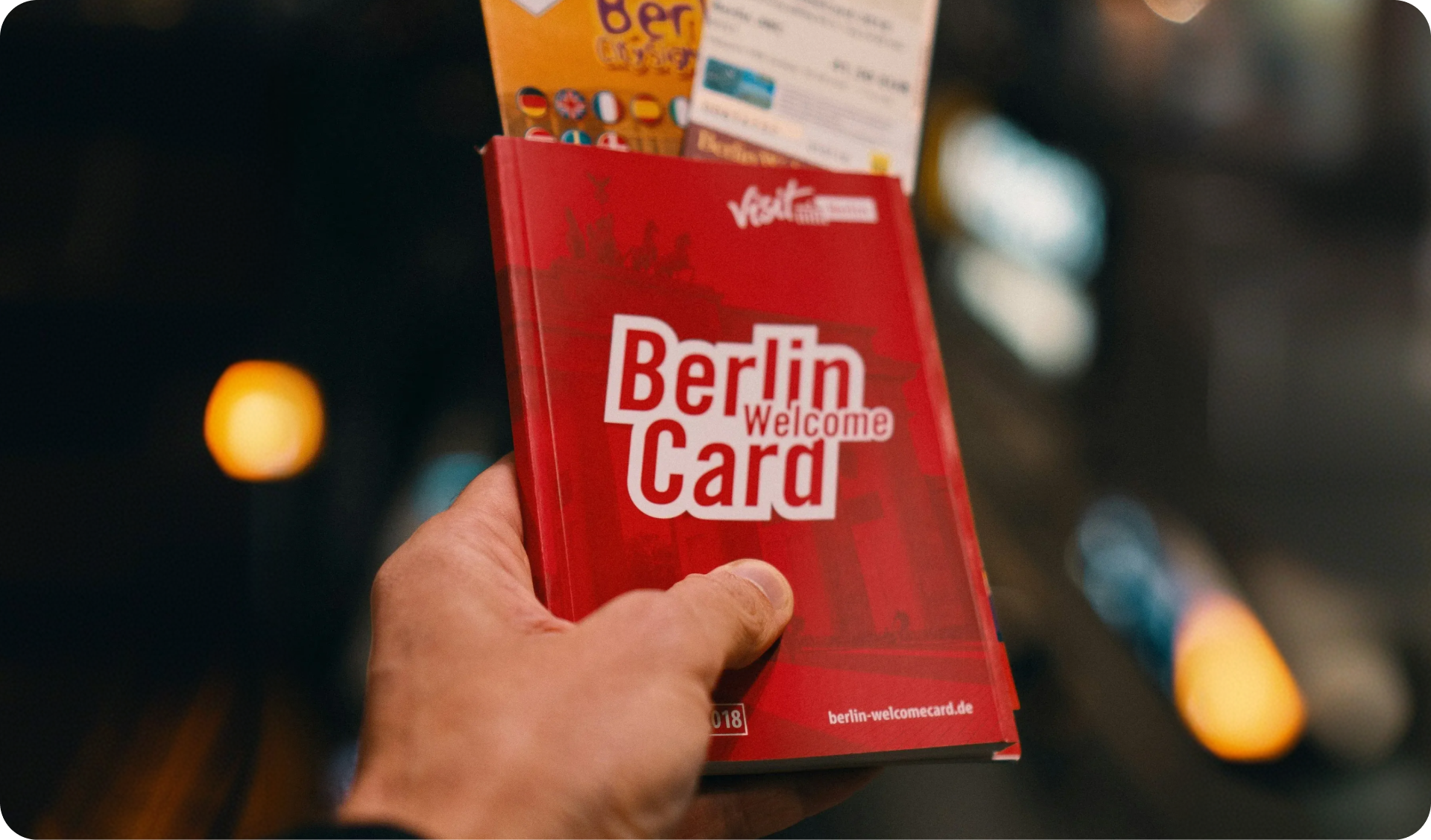
For a short business trip, single tickets or 24-hour tickets may be enough. If you plan to use public transport several times a day and add some sightseeing, the Berlin WelcomeCard can be convenient, as it combines transport with discounts at selected attractions. Buy tickets through BVG, S-Bahn Berlin or VBB apps, ticket machines or official sales points. Paper tickets must be validated before travel.
Bikes and e-scooters for short distances
Berlin is relatively bike-friendly, with cycle lanes, flat streets and many shared bike and e-scooter options. For short hops between meetings, cafés, coworking spaces or hotels, they can be quicker than waiting for a car.
Use them selectively. They are not ideal in formal business dress, bad weather, unfamiliar traffic or after client drinks. If you do use a bike or scooter, stay in designated lanes where possible and park responsibly. Berlin takes pavement space seriously.
Car rental: when it makes sense
Car rental rarely makes sense for a normal business trip to Berlin. Parking can be difficult, many central streets are better handled by public transport and the city’s environmental zone requires the right emissions sticker.
A car becomes useful if your schedule takes you outside Berlin: to industrial sites, offices in Brandenburg, client visits beyond the S-Bahn network or several suburban stops in one day. Within the city, a train, taxi or private transfer is usually simpler.
Why public transport is often the easiest choice for business travellers
Berlin rewards travellers who use the network properly. Trains are frequent, stations are well placed and many key areas — Mitte, Potsdamer Platz, Alexanderplatz, City West, Friedrichshain, Kreuzberg and Messe Berlin — are straightforward to reach by rail.
For business travellers, the value is predictability. You can avoid parking, reduce transfer costs and move between meetings without depending on traffic. The smartest setup is often a hotel near a strong transport hub, an ABC ticket when the airport is involved and taxis reserved for luggage, late nights or meetings where door-to-door travel genuinely matters.
Conferences, trade fairs and business events in Berlin
Berlin is one of Germany’s strongest event cities, with venues ranging from vast exhibition halls to start-up meetups in converted industrial spaces.
- Messe Berlin and Berlin ExpoCenter City
Messe Berlin is the city’s main trade fair address, especially for large international exhibitions, sector events and industry showcases. Berlin ExpoCenter City is best for trips built around the western side of the city, Charlottenburg and City West. - CityCube Berlin
CityCube Berlin sits beside the exhibition grounds and works well for conferences, congresses and large corporate events that need meeting rooms as well as exhibition space. Stay in City West, Charlottenburg or around Zoologischer Garten for easier access. - Estrel Congress Center
The Estrel Congress Center in Neukölln is a major choice for conferences, conventions and company events, with the advantage of a large hotel in the same complex. It is especially convenient when accommodation and event space need to be tightly connected. - Startup, tech and creative industry events
For start-up, media, tech and creative gatherings, look beyond the classic conference venues. Kreuzberg, Friedrichshain, Mitte and Prenzlauer Berg have coworking spaces, private event rooms and converted venues that suit product launches, networking evenings and smaller forums.
How to plan accommodation around major events
Do not book by city centre alone. For CityCube and the surrounding venues, look at City West and Charlottenburg. For Estrel, stay on-site or nearby in Neukölln. For start-up and creative events, Mitte, Kreuzberg or Friedrichshain will usually feel closer to the action.
Where to stay in Berlin for a business trip
If you are deciding where to stay in Berlin for business, the best area depends on the shape of your diary. Berlin is easy to cross compared with some capitals, but choosing the right base still saves time, especially if your meetings are split between conference venues, government offices and neighbourhood-based companies.
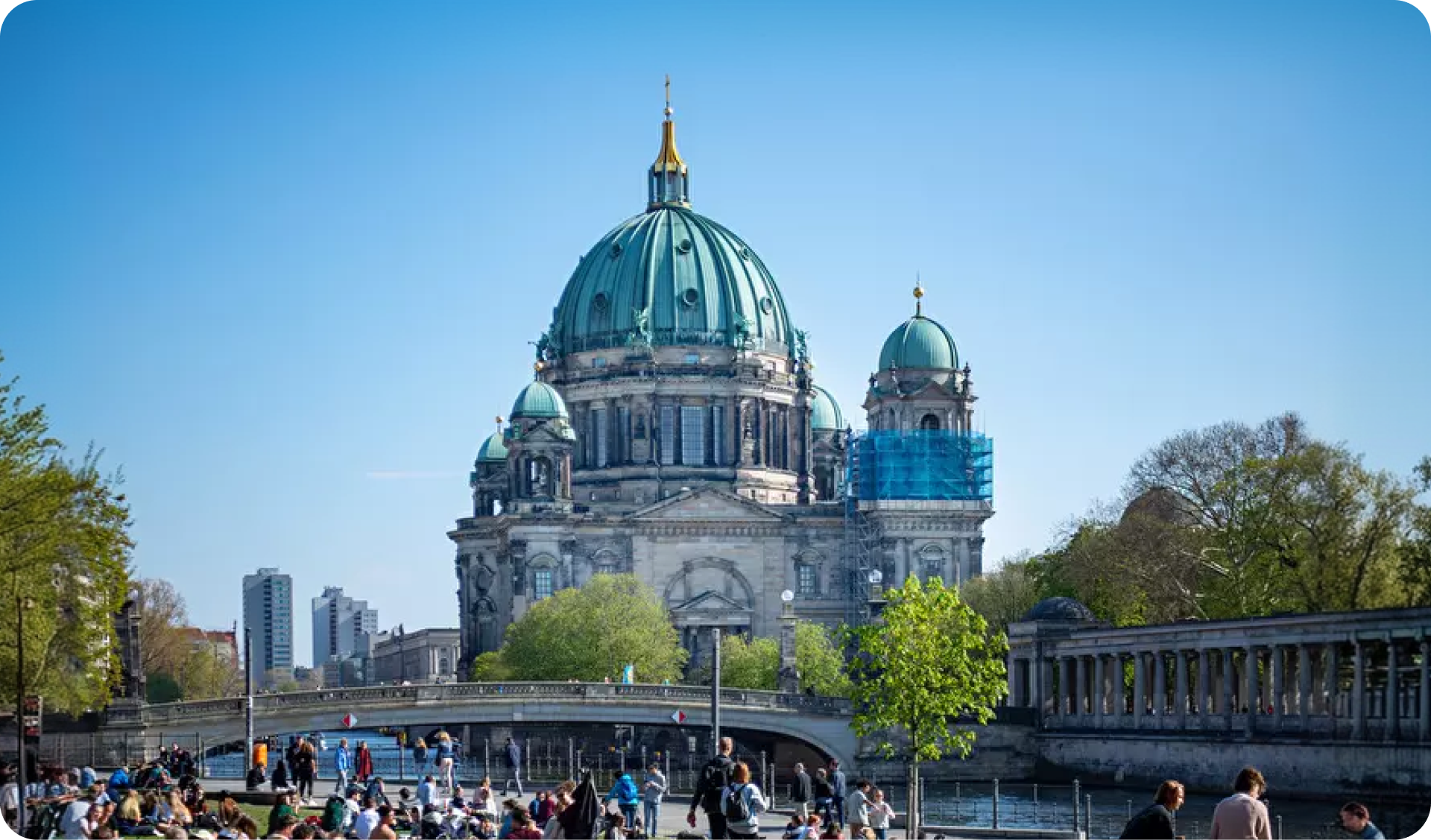
- Mitte: best for central meetings, government offices and culture
Mitte is the most natural base for first-time business travellers. It keeps you close to the government quarter, Brandenburg Gate, Unter den Linden, Museum Island, major hotels and many central offices, with good transport in every direction. - Potsdamer Platz: best for corporate stays and easy city access
Potsdamer Platz works well for polished corporate trips. It has large business hotels, strong transport links, modern offices and quick access to Mitte, Kreuzberg, the government district and Berlin Hauptbahnhof. - City West and Charlottenburg: best for Messe Berlin and classic business hotels
City West and Charlottenburg suit travellers attending the western event area or looking for traditional business hotels, smart restaurants and a calmer evening atmosphere. The area is also convenient for Kurfürstendamm, Zoologischer Garten and western Berlin offices. - Friedrichshain-Kreuzberg: best for startups, tech and creative companies
Friedrichshain-Kreuzberg is a good fit if your meetings are with start-ups, tech teams, agencies, media companies or creative businesses. It is less formal than Mitte or City West, but closer to the city’s younger business energy. - Alexanderplatz: best for transport connections and short stays
Alexanderplatz is practical rather than elegant. It offers strong U-Bahn, S-Bahn, tram and regional connections, which makes it useful for short stays, packed schedules and travellers who need to move around the city quickly.
What to check before booking: Wi-Fi, desk space, breakfast, transport links, meeting rooms and late check-in
Before booking, check the details that decide whether a hotel works for business: reliable Wi-Fi, a proper desk, early breakfast, easy public transport, meeting rooms or quiet lounge space and late check-in if your flight arrives in the evening. In Berlin, a stylish hotel in the wrong neighbourhood can cost you more time than it saves.
Business-friendly hotels and serviced apartments in Berlin
The business hotels in Berlin below cover five common corporate itineraries: executive stays near the government quarter, central meetings in Mitte, trade fair access around Messe Berlin, longer apartment-style stays and cost-conscious trips that still need proper business facilities.
Hotel Adlon Kempinski Berlin: a luxury option for executive trips
Location
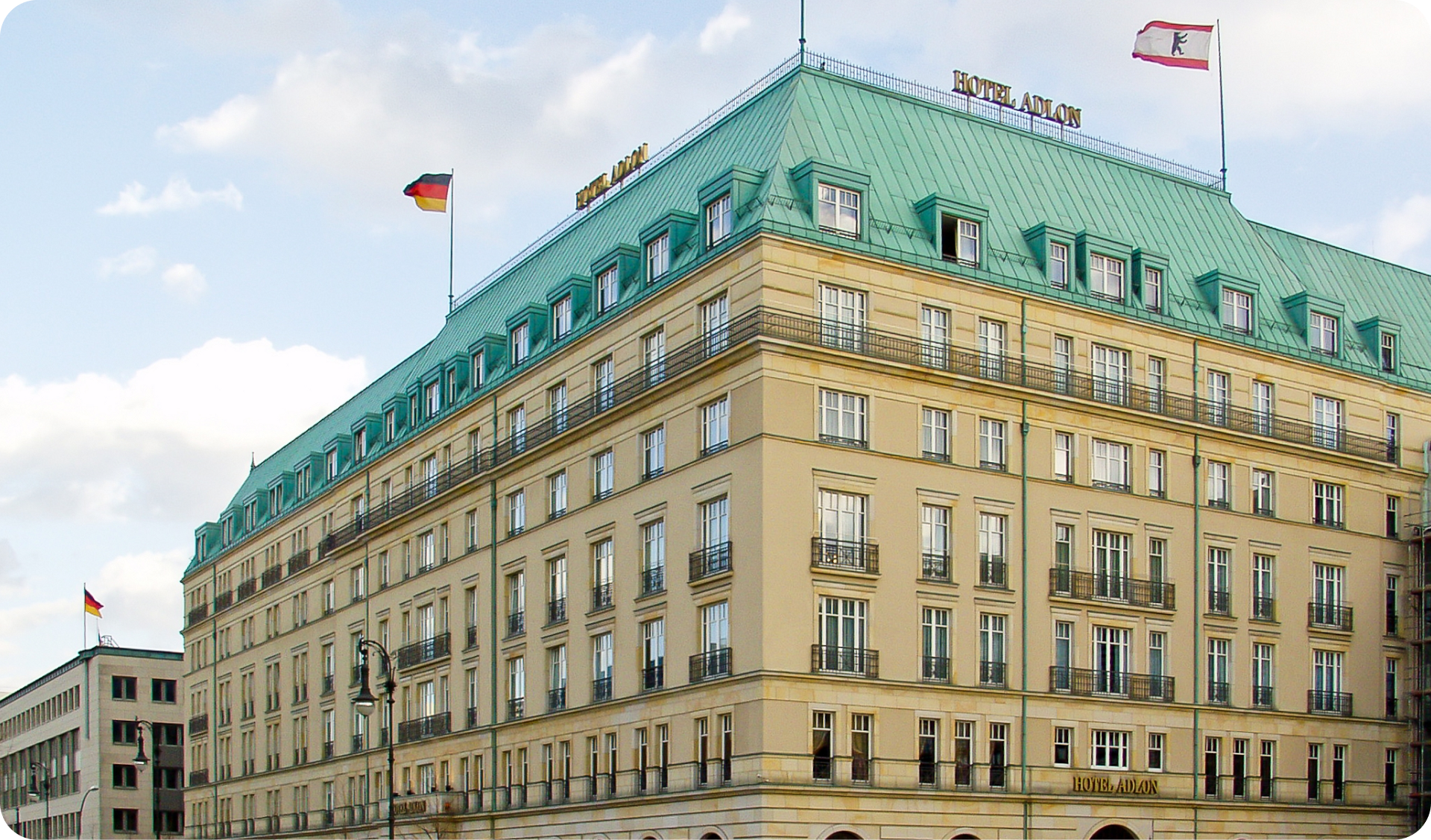
Hotel Adlon Kempinski Berlin occupies one of the city’s most recognisable addresses, directly beside the Brandenburg Gate and within easy reach of the Reichstag, Unter den Linden, embassies and central government offices. For senior travellers, board-level visits and high-profile meetings, few Berlin hotels make a stronger first impression.
At the hotel
The hotel has 307 rooms and 78 suites, combining grand-hotel tradition with the practical comforts expected on an executive trip. Many stays here are less about convenience alone and more about discretion, service and the ability to host important guests without leaving the property.
Business facilities include a broad range of meeting rooms and function spaces for private boardroom sessions, formal receptions, conferences and executive events. The hotel also has several restaurants, a lobby lounge, spa facilities and polished private dining options for client entertaining.
Hotel Palace Berlin: an option near Messe Berlin
Location
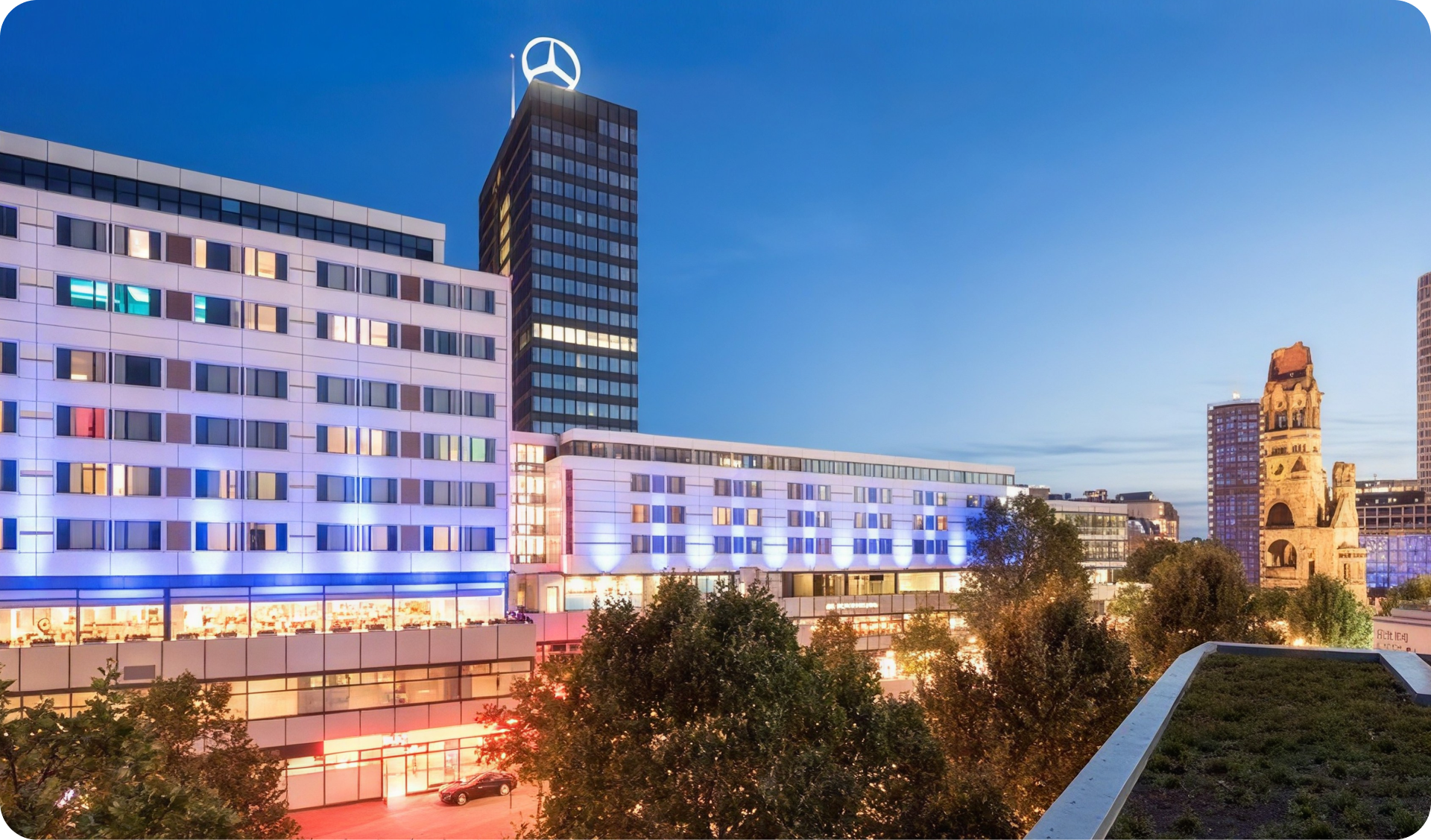
Hotel Palace Berlin sits in City West, close to Kurfürstendamm, Zoologischer Garten and the classic western side of the city. It is a practical choice for travellers attending the exhibition grounds or CityCube events who want a more polished hotel than many purely functional exhibition-area options.
At the hotel
The hotel offers 239 rooms and 39 suites, with a strong business-hotel feel: comfortable work areas, generous public spaces and an address that works well for both trade fair visitors and corporate guests staying in western Berlin.
Its events infrastructure is one of the main reasons to include it in this guide. The hotel has 18 conference rooms and around 2,600 square metres of event space, including rooms with daylight, larger conference layouts and private dinner settings. It suits meetings-heavy stays, association events, training sessions and corporate receptions.
NH Collection Berlin Mitte Friedrichstrasse: a convenient option near Mitte
Location
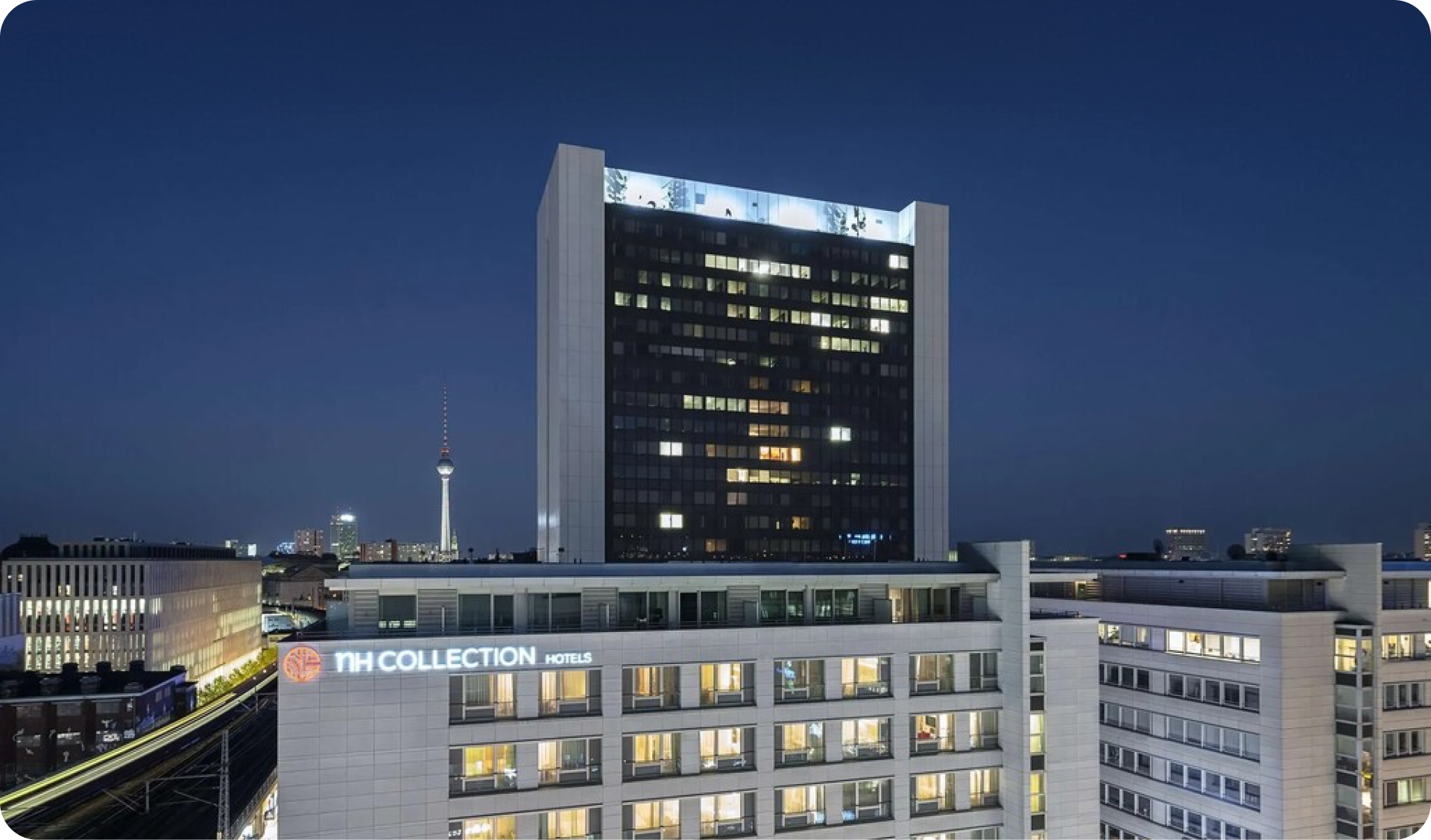
NH Collection Berlin Mitte Friedrichstrasse is hard to beat for convenience. It sits on Friedrichstrasse, close to the station, Unter den Linden, Museum Island, Brandenburg Gate and many central offices. For a corporate trip to Berlin with meetings across Mitte, the government district and the wider city centre, the location keeps the day simple.
At the hotel
The hotel has 268 rooms spread across eight floors, including suites and junior suites. Rooms are modern and work-friendly, with Wi-Fi, practical desks and the kind of central comfort that suits short business stays.
For meetings, the hotel offers 10 meeting rooms with capacity for groups of up to around 350 people. That makes it flexible enough for workshops, presentations, internal meetings and compact corporate events without pushing travellers out of the city centre.
Adina Apartment Hotel Berlin Mitte: a serviced apartment option for longer stays
Location
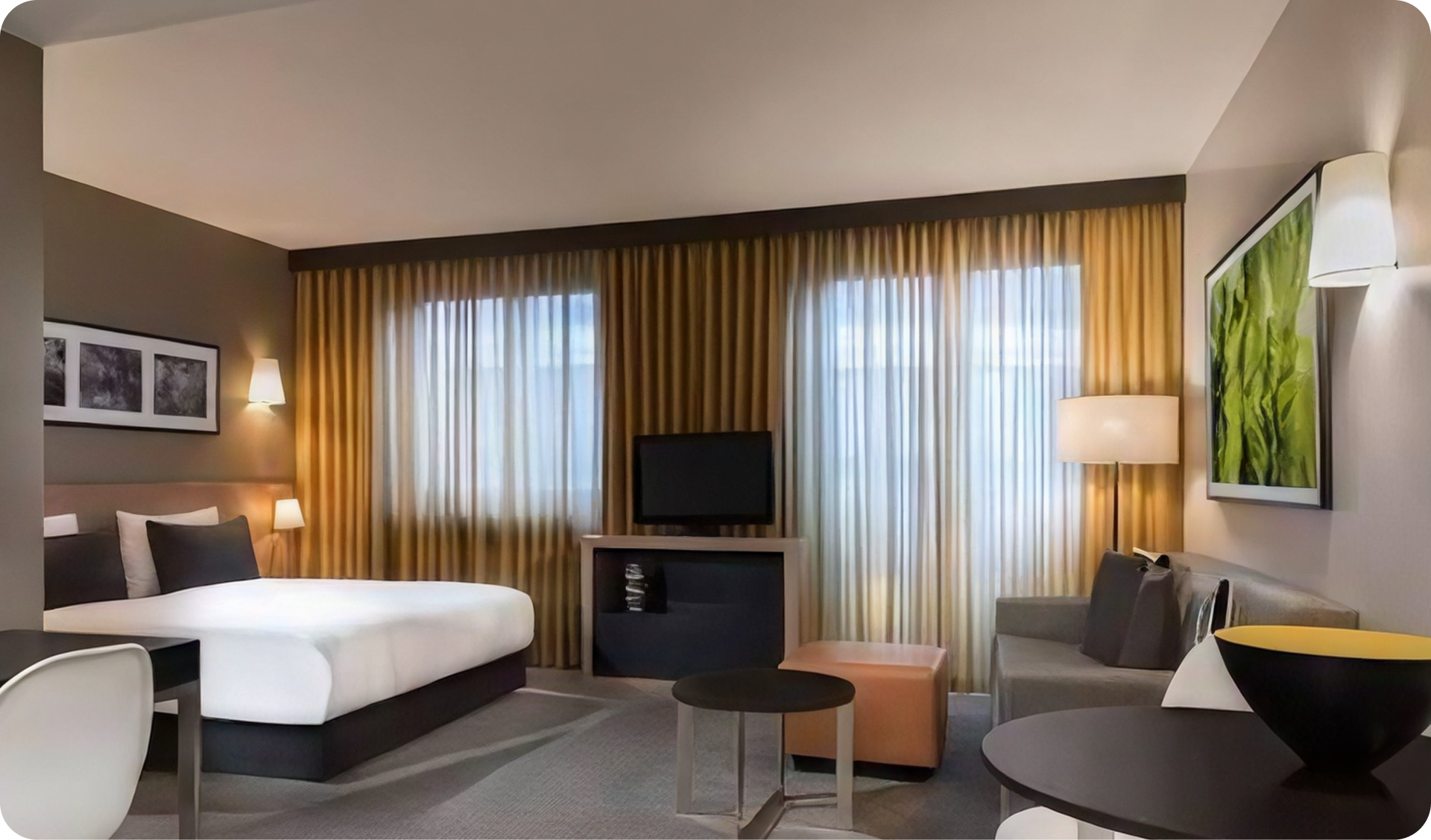
Adina Apartment Hotel Berlin Mitte is close to Charité, Berlin Hauptbahnhof, the government quarter and the northern edge of Mitte. It works well for longer assignments, project teams and travellers who want apartment-style comfort without losing access to central Berlin.
At the hotel
The property has 139 studios and apartments, including one-, two- and three-bedroom options. Each apartment includes a kitchen and more living space than a standard hotel room, which makes it useful for longer corporate travel Germany stays where routine matters: laundry, quiet evenings, simple meals and room to work.
Unlike many aparthotels, it also has genuine business facilities, including three meeting rooms for smaller sessions, interviews and project meetings. This makes it a stronger corporate choice than a purely residential serviced apartment.
Leonardo Hotel Berlin: a budget-friendly business option
Location
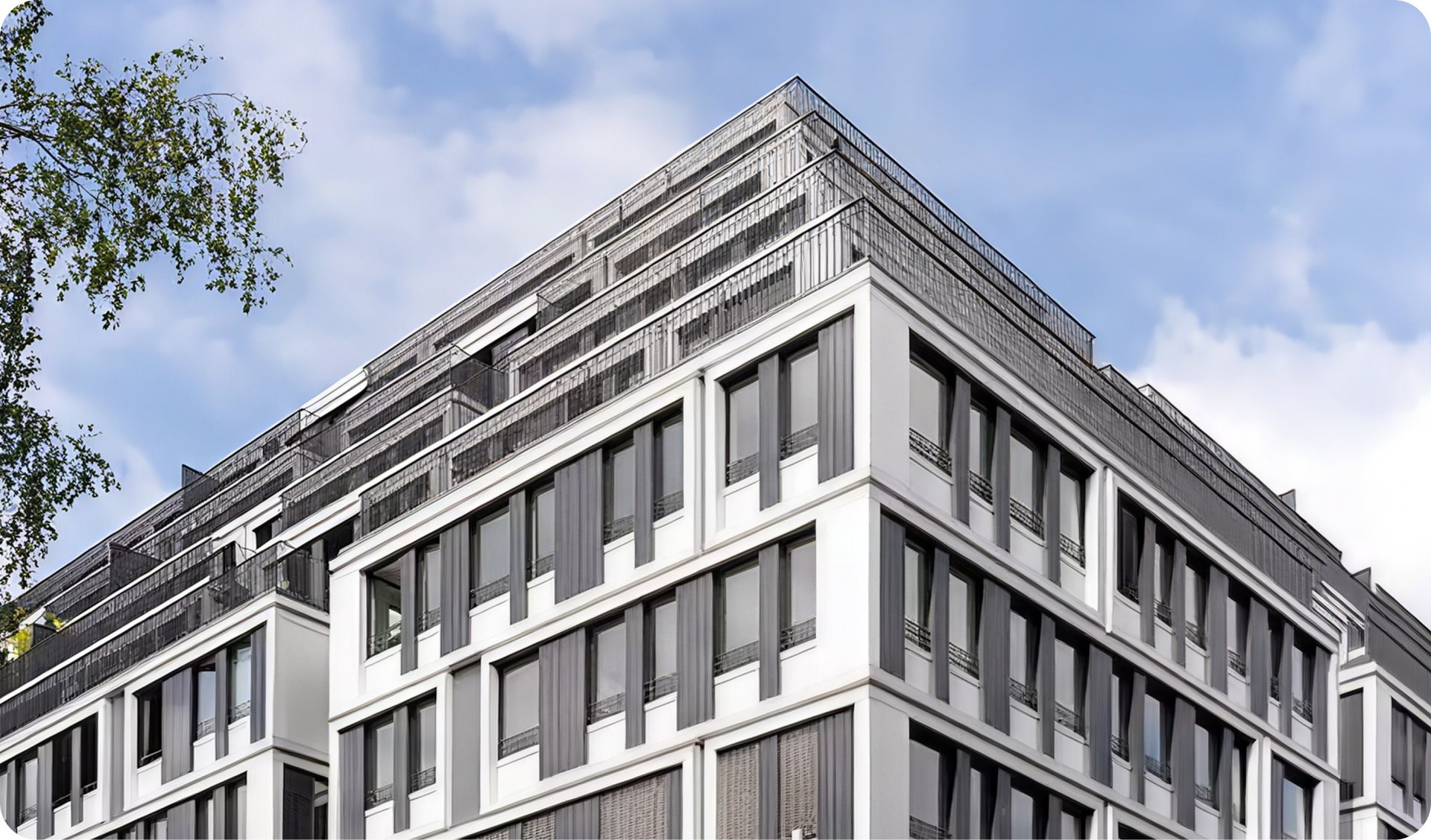
Leonardo Hotel Berlin is located in Charlottenburg, close to Bismarckstrasse U-Bahn station and within useful reach of City West, Kurfürstendamm and the western event area. It is not a luxury stay, but it gives cost-conscious travellers a proper hotel base in a well-connected western district.
At the hotel
The hotel has 274 rooms, with a straightforward business setup: work desks, Wi-Fi, breakfast, bar service and easy access to public transport. It is a sensible option for travellers who need value, reliable basics and a location that does not complicate the working day.
Business facilities include a conference room for up to 30 people with technical equipment and hotel event support. That makes it suitable for small meetings, interviews, team briefings or budget-controlled corporate stays.
Coworking and meeting spaces in Berlin
Coworking spaces for short business stays
Berlin has a deep coworking scene, so finding a desk for a day is rarely difficult. The useful question is not whether a space exists, but which neighbourhood fits your schedule. Mitte works well for central meetings, Kreuzberg and Friedrichshain suit start-up and creative appointments, while City West is better if your day revolves around Messe Berlin or Charlottenburg.
Spaces such as betahaus, Mindspace and other flexible-office providers offer day passes, hot desks, meeting rooms and event areas. For a short corporate stay, choose somewhere close to your next appointment rather than somewhere with the most impressive design.
Hotel meeting rooms and business lounges
For formal meetings, hotel spaces are often the safer choice. Berlin’s larger business hotels have boardrooms, private dining rooms, conference floors and lounges where service, privacy and technical support are easier to control.
This works especially well for client presentations, interviews, senior meetings or conversations where you need a quiet room rather than a lively shared workspace. If your hotel already has meeting rooms, check availability before looking elsewhere; it may save a transfer and keep the day tighter.
Startup hubs and creative spaces
Berlin’s start-up and creative economy has its own geography. Kreuzberg, Friedrichshain, Mitte and Prenzlauer Berg are full of smaller event spaces, founder communities, agency offices and converted industrial venues that feel less corporate and more local.
These spaces are a good fit for product launches, networking evenings, workshops, investor conversations and informal gatherings with technology, media or creative teams. They are not always the right choice for a conservative client meeting, but they show the side of Berlin that makes the city different from Germany’s more traditional business centres.
When to book a private meeting room instead of a café
Berlin has excellent cafés, but a café is not a meeting room. Book a private space if you need to discuss confidential details, share a screen, take a video call, record notes, host more than two or three people or keep to a strict agenda.
For informal catch-ups, a good café can work beautifully. For anything involving contracts, budgets, hiring, investor updates or sensitive client information, pay for the room. It is a small cost compared with a distracted conversation at the wrong table.
Walking route through Berlin
Berlin is best explored in layers: imperial avenues, Cold War scars, riverside paths, rebuilt squares and neighbourhoods that still feel slightly unfinished in the best possible way. For a business traveller, the most rewarding route is a central walk that starts with the city’s political symbols and ends somewhere relaxed enough for dinner or a drink.
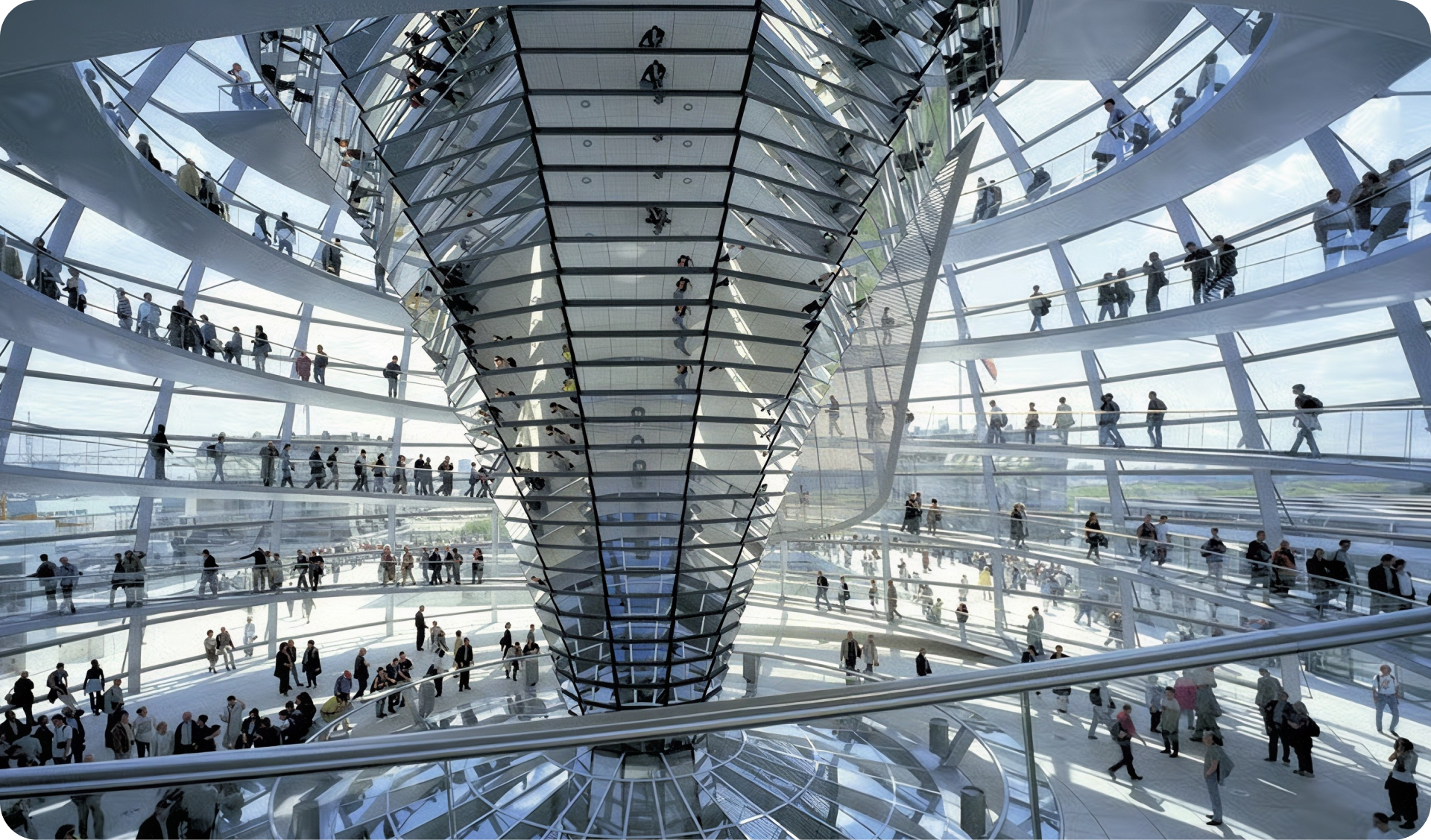
Begin at Brandenburg Gate, Berlin’s most recognisable landmark and a useful starting point if your meetings are around Mitte or the government quarter. From here, walk a few minutes to the Reichstag, home of the German parliament. Its glass dome says a lot about modern Berlin: historic, transparent, rebuilt and deliberately symbolic.
Continue south through the Memorial to the Murdered Jews of Europe, a quiet and sobering space of concrete stelae that changes completely as you move through it. From there, head towards Potsdamer Platz, once divided by the Berlin Wall and now one of the city’s main corporate and entertainment districts. The contrast between memory, architecture and office towers is very Berlin.
Next, follow the route towards Checkpoint Charlie. It is touristy, but still worth a short stop for first-time visitors because it marks one of the Cold War’s most famous crossing points.
Nearby, the Topography of Terror gives a deeper and more serious context to the city’s 20th-century history, with outdoor and indoor exhibitions on the former site of Nazi institutions.
If you have time and energy, continue towards Gendarmenmarkt, one of Berlin’s most elegant squares, framed by the German Cathedral, French Cathedral and Konzerthaus. It is a good place to slow the pace, especially before heading towards Unter den Linden and Museum Island, where the city becomes more classical: broad boulevards, museums, bridges and the River Spree.
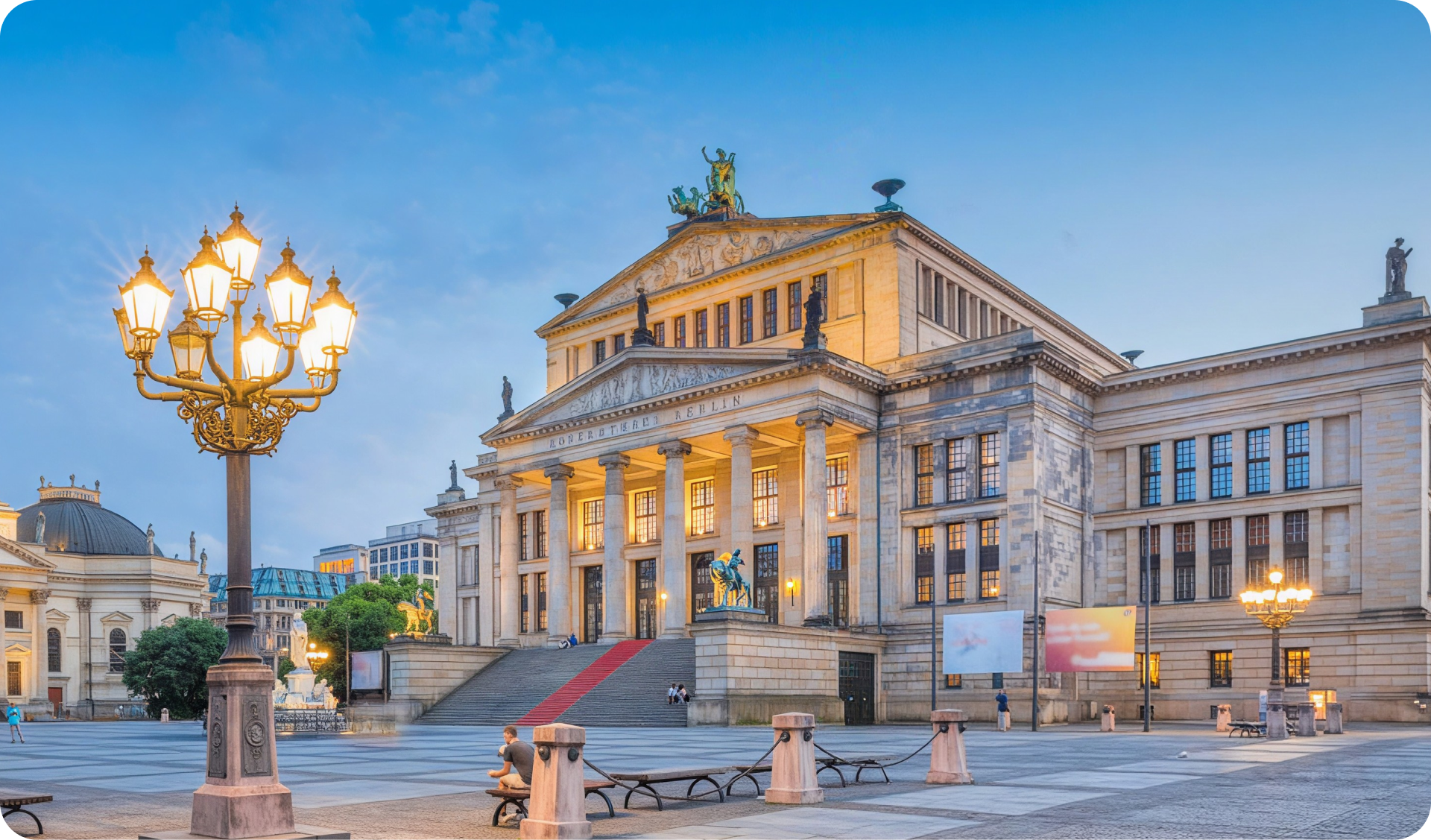
End the walk around Hackescher Markt or Monbijoupark. Both are easy places to shift from sightseeing into the evening, with restaurants, cafés, bars and good transport links nearby. If the working day has been long, stop here rather than trying to force in the East Side Gallery or Charlottenburg as well. Berlin rewards curiosity, but it punishes overplanning.
In winter, start earlier and dress properly: the wind around the government quarter and the Spree can be sharp. In summer, this route works beautifully in the late afternoon, when the light softens and the city begins to feel less like a capital and more like a place to stay a little longer.
Business-friendly lunch spots in Berlin
Berlin does not do business lunch in quite the same way as Paris, Milan or London. Some of the best conversations happen over a precise two-course menu, others over sharing plates with a view of the Zoo or a very Berlin table where the room matters almost as much as the food. Here are three reliable choices for different kinds of working lunches.
Borchardt
For a classic Berlin business lunch, Borchardt is hard to ignore. Set on Französische Strasse, close to Gendarmenmarkt and Friedrichstrasse, it has long been one of the city’s power restaurants: polished, central and lively without feeling theatrical.
The menu leans French-German, with schnitzel, steak, seafood and brasserie staples that make it easy to host mixed groups. It works especially well for meetings in Mitte, government-adjacent appointments, media contacts and clients who want somewhere with Berlin history rather than a neutral hotel restaurant.
Dress code: Smart casual. Reservations recommended.
FACIL
For a more refined lunch near Potsdamer Platz, FACIL is the polished choice. The two-Michelin-starred restaurant sits on the fifth floor of The Mandala Hotel, surrounded by glass, bamboo and a level of quiet that feels rare in central Berlin.
It suits senior client meetings, executive lunches and occasions where the restaurant needs to feel discreet rather than showy. The cuisine is elegant and precise, with a lighter touch than many traditional fine-dining rooms, and the weekday lunch format keeps it workable for a business schedule.
Dress code: Smart elegant. Reservations essential.
NENI Berlin
For a less formal lunch in City West, NENI Berlin is a useful option. It sits inside the 25hours Hotel Bikini Berlin, overlooking the Zoo, and serves a generous mix of Mediterranean, Middle Eastern, Persian and Austrian-inspired dishes designed for sharing.
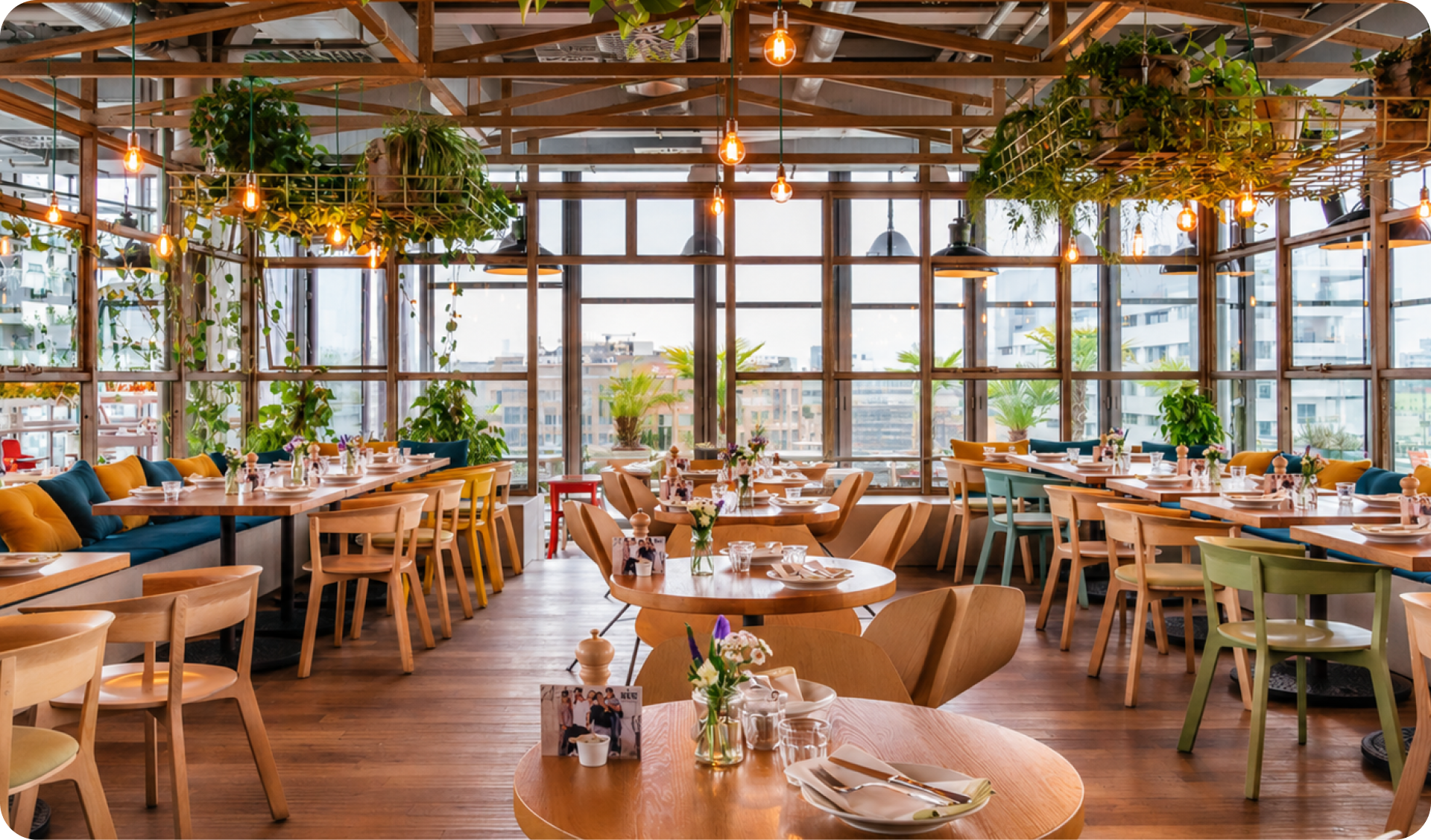
The atmosphere is energetic rather than formal, which makes it better for team lunches, creative clients, relaxed partner meetings or travellers attending events around City West, Charlottenburg or Messe Berlin. It is also a good choice when you need plenty of vegetarian-friendly options without making the meal feel complicated.
Dress code: Casual to smart casual. Booking ahead is useful for groups.
Local food to try during a corporate trip
Berlin’s food culture is practical, international and proudly unpretentious. You can eat extremely well here without turning every meal into a formal booking, and the city’s local dishes are often best treated as quick, characterful stops between meetings.
- Currywurst — Berlin’s most famous fast-food staple: sliced sausage with curry-spiced ketchup, usually served with chips. It is not elegant, but it is part of the city’s identity.
- Döner kebab — Berlin’s Turkish community helped shape one of the city’s defining street foods. A good döner is fast, filling and often better than a rushed airport sandwich.
- Schnitzel — not uniquely Berlin, but easy to find in the city’s brasseries, hotel restaurants and traditional German spots. It is a safe choice for a relaxed client lunch.
- Boulette — Berlin’s version of a meatball, usually served simply with mustard, potato salad or bread. It is local, straightforward and very Berlin in spirit.
- Eisbein — pork knuckle with sauerkraut and peas, more of a traditional sit-down dish than a workday lunch. Try it if you want old-school Berlin cooking.
- Königsberger Klopse — meatballs in a creamy caper sauce, often served with potatoes. It is a quieter classic and a good option in traditional restaurants.
- Berliner Pfannkuchen — the jam-filled doughnut many visitors simply call a Berliner. Best with coffee rather than after a heavy business lunch.
For a business trip, the trick is balance: save currywurst and döner for quick informal meals, book a proper restaurant when hosting clients and leave one evening free for something more local than a hotel dining room.
Where to relax after work
For easy things to do in Berlin after work, you do not need to plan an elaborate evening. Berlin is generous after office hours. You can keep the evening polished with a rooftop drink, turn it into a quiet cultural stop or follow the local habit of sitting outside with something cold and unhurried. The best choice depends on where your last meeting ends and how much energy you have left.
Reichstag dome
For a low-effort but memorable evening in Mitte, book a visit to the Reichstag dome. The glass roof above the German parliament gives wide views over the government district, Tiergarten, Brandenburg Gate and the city skyline, while the audio guide adds just enough context without turning the visit into a formal tour.
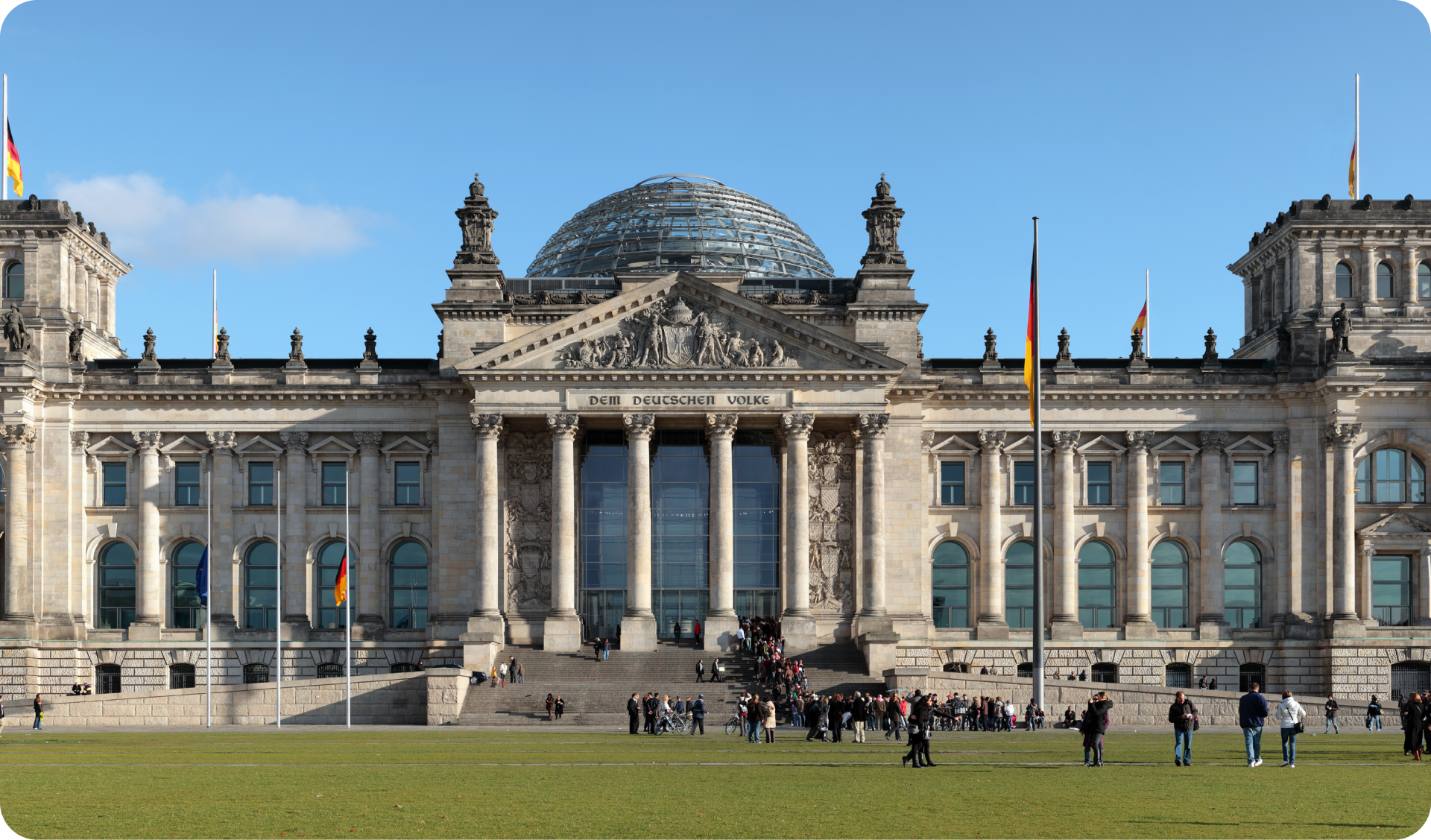
It works well after meetings near the government quarter, Unter den Linden, Potsdamer Platz or Brandenburg Gate. The visit is free, but advance registration is required, and you need to bring an official photo ID.
Dress code: Casual to smart casual. Advance registration essential.
Monkey Bar
For after-work drinks in City West, Monkey Bar is one of Berlin’s easiest recommendations. Set on the 10th floor of 25hours Hotel Bikini Berlin, it has panoramic views, an outdoor terrace and a direct line of sight over the Zoo side of the city.
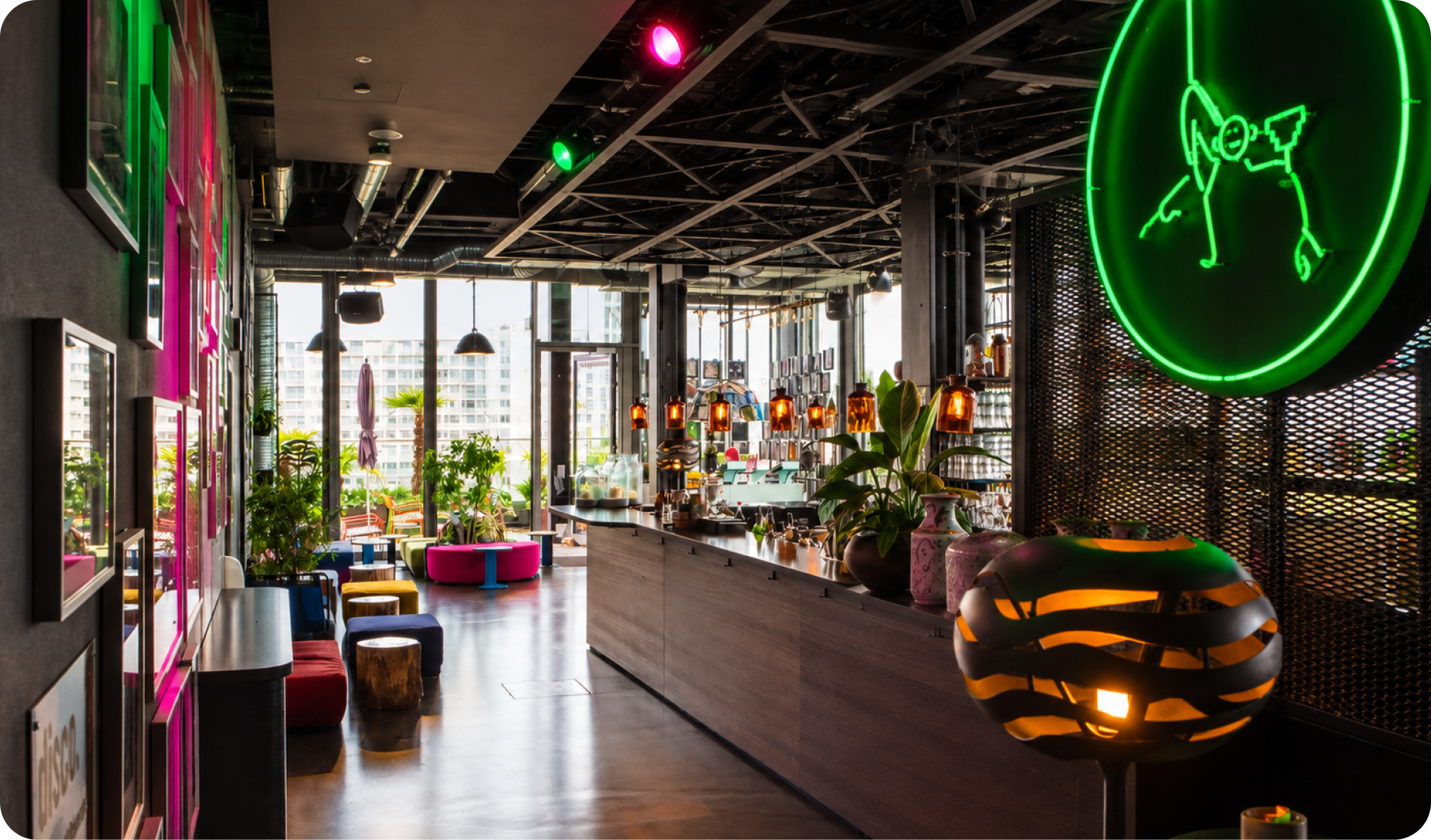
The mood is livelier than a classic hotel bar, but still polished enough for informal client drinks, a team wind-down or a relaxed evening after Messe Berlin. If you want dinner as well, NENI Berlin sits on the same floor.
Dress code: Smart casual. Arrive early if you want a table with a view.
Prater Garten
For something more local, head to Prater Garten in Prenzlauer Berg. It is one of Berlin’s classic beer gardens, with chestnut trees, long tables, simple food and the kind of atmosphere that works better after a full workday than another formal dining room.
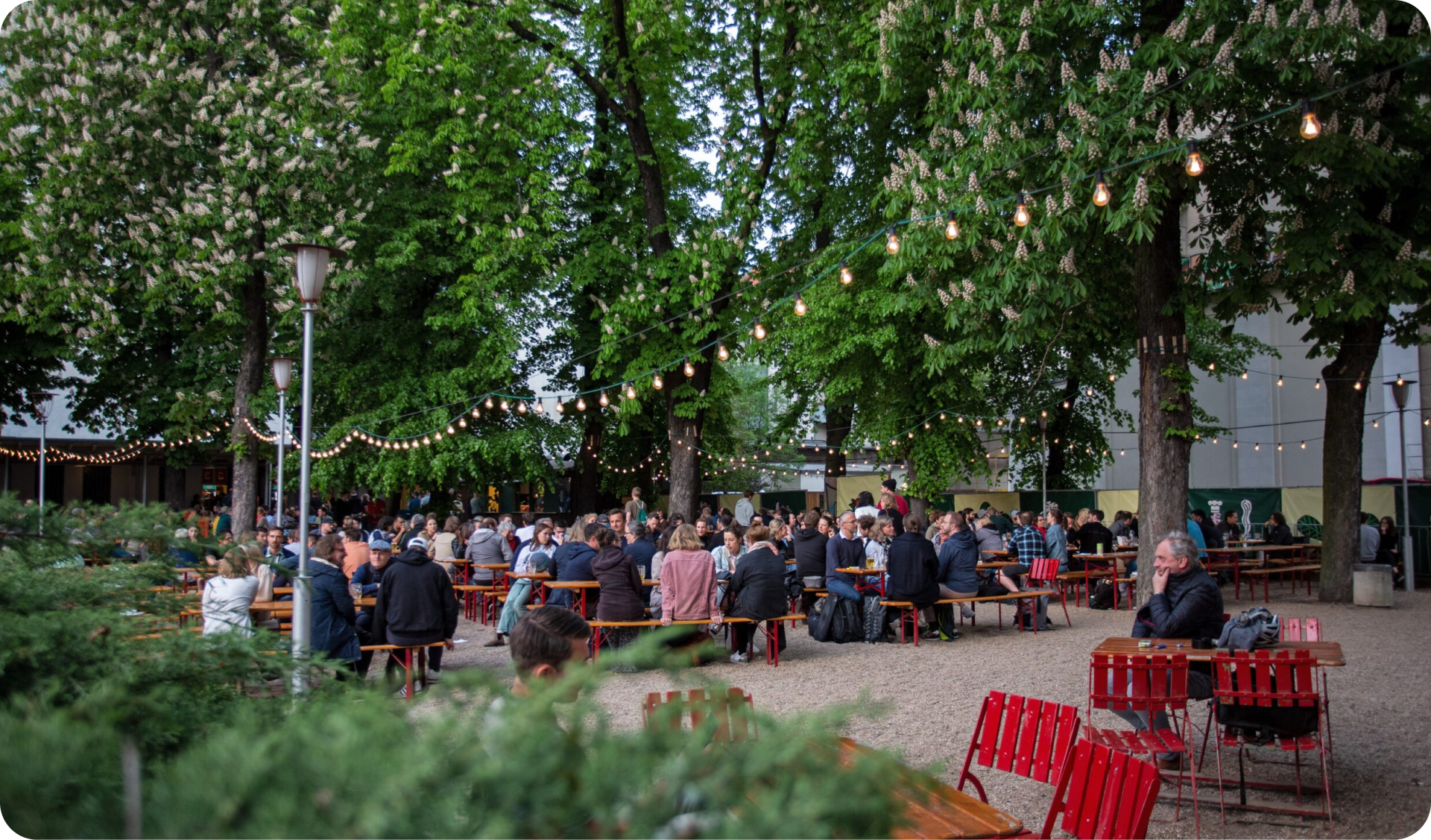
This is not the place for confidential client negotiations, but it is excellent for a relaxed team evening, an informal partner catch-up or a first taste of Berlin outside the business districts. It is weather-dependent, so check conditions before crossing town.
Dress code: Casual. Reservations are not available for the beer garden.
What to bring back for colleagues
Berlin is better for clever, design-minded gifts than polished luxury souvenirs. Think small-batch chocolate, sharp stationery, museum-shop finds, local spirits and the kind of practical object that feels more Berlin than branded.
- German chocolate — Ritter Sport is the easy airport-friendly classic, but Berlin also has excellent craft chocolate shops if you want something more refined. Choose boxed bars or pralines that will travel well.
- Ampelmann gifts — the little East German traffic-light figure has become one of Berlin’s most recognisable symbols. Keyrings, notebooks, mugs and small desk items make light, playful gifts for colleagues.
- Museum-shop stationery — Berlin’s museum shops are excellent for notebooks, postcards, art prints, design objects and architecture books. Museum Island, the Berlinische Galerie and Bauhaus-related shops are good places to look.
- Local coffee — Berlin has a strong specialty coffee scene, so a bag of beans from a local roaster is a useful gift for an office kitchen or coffee-loving colleague.
- German mustard, jam or honey — small jars from a market or department-store food hall are easy to pack and feel more local than generic sweets. Check luggage rules if you are travelling with hand baggage only.
- Craft beer or Berlin spirits — Berliner Weisse, German gin or herbal liqueurs can work well for close colleagues or partners, provided your company policy and customs rules allow alcohol.
- Design books and city guides — Berlin’s bookshops are strong on architecture, photography, history and design. A compact coffee-table book can be a polished gift for a senior colleague.
- Christmas market gifts — if you visit in winter, look for ornaments, wooden decorations, candles, spiced biscuits and small handmade items. They are seasonal, light and easy to share back at the office.
Before buying food or alcohol, check your destination country’s customs rules and airline baggage restrictions. Packaged chocolate, stationery and small design objects are the safest options if you want gifts that travel without fuss.
Practical tips for a smooth corporate trip to Berlin
Validate tickets and understand Berlin fare zones
Public transport is straightforward, but the ticket rules matter. Berlin uses fare zones, and journeys to or from BER require an ABC ticket. If you buy a paper ticket, validate it before boarding; an unvalidated ticket can still count as travelling without a valid fare.
Plan around trade fair dates and hotel demand
Large events at Messe Berlin, CityCube and major congress venues can quickly affect room availability and prices. If your trip overlaps with a trade fair, book flights, rail tickets and accommodation earlier than usual and check whether staying in City West or Charlottenburg would save time.
Keep meetings structured and arrive on time
Berlin may feel relaxed, but business meetings still run best with a clear agenda, prepared materials and punctual arrivals. Confirm timings in writing, keep presentations focused and send concise follow-up notes with decisions, owners and next steps.
Use corporate travel tools to manage flights, hotels, rail, transfers and expenses
A corporate trip to Berlin can involve flights, trains, hotel bookings, local transfers, event registrations and meal receipts. Using a corporate travel platform such as Tumodo helps keep the itinerary, approvals, spend limits and expense documents in one place, which makes the trip easier to control from booking to reporting.
A smooth corporate trip to Berlin depends on the small decisions: the right district, the right fare zone, the right meeting rhythm and a booking setup that keeps every part of the journey visible. With Tumodo, companies can manage flights, hotels, rail, transfers, approvals and expenses in one place, so travellers stay focused on the work rather than the admin.
FAQ
What should I know before a corporate trip to Berlin?
A corporate trip to Berlin works best when you plan around districts, not just addresses. Check your entry rules, book close to your meetings or a strong transport line and allow extra demand around major trade fairs and conferences.
Do I need a visa for a business trip to Berlin?
It depends on your nationality. Many travellers can enter Germany visa-free for short Schengen stays, while others need a Schengen business visa before departure. Check the current rules before booking, especially if your trip includes meetings, trade fairs or paid activity.
How do I get from Berlin Brandenburg Airport to the city centre?
The easiest option is usually the Airport Express or a regional train from BER to central stations such as Berlin Hauptbahnhof, Potsdamer Platz or Friedrichstrasse. Taxis, ride-hailing apps and private transfers are better for late arrivals, luggage-heavy trips or direct travel to a meeting.
What is the best area to stay in Berlin for business travel?
Mitte is the most convenient all-round choice for central meetings, government offices and culture. Potsdamer Platz works well for corporate stays, City West and Charlottenburg are better for Messe Berlin, while Friedrichshain-Kreuzberg suits start-ups, media and creative companies.
Is Berlin good for corporate events and conferences?
Yes. Berlin is one of Germany’s strongest event cities, with major venues such as Messe Berlin, CityCube Berlin and the Estrel Congress Center, plus a wide range of hotels, coworking spaces and creative venues for smaller business events.
How do business travellers get around Berlin?
Most business travellers use a mix of public transport, taxis, ride-hailing apps and occasional private transfers. The U-Bahn, S-Bahn, trams and buses cover most business areas, while taxis are practical for late evenings, luggage or door-to-door journeys.
Is public transport in Berlin convenient for business travellers?
Yes. Berlin public transport is extensive, relatively easy to use and often more predictable than travelling by car. For airport journeys, remember that BER is in fare zone C, so you need an ABC ticket when travelling between the airport and central Berlin.
What is the business etiquette in Berlin?
Berlin business etiquette is more relaxed than in some German cities, but punctuality, preparation and clarity still matter. Arrive on time, use a clear agenda, avoid vague promises and follow up in writing after important meetings.
What should I wear to business meetings in Berlin?
Dress depends on the sector. Government, finance, law and senior corporate meetings call for smart business attire, while start-ups and creative companies are usually more relaxed. For first meetings, it is better to look polished than too casual.
Where should I stay near Messe Berlin?
For Messe Berlin and CityCube events, City West, Charlottenburg and the area around Zoologischer Garten are practical choices. They offer business hotels, good transport links and easier access to the exhibition grounds than staying deep in the east of the city.
Is Berlin suitable for bleisure business trips?
Yes. Berlin is one of Europe’s easiest cities for adding leisure time to a work trip. Museums, neighbourhood restaurants, galleries, parks, bars and historic sites are simple to fit around meetings, especially if you stay in Mitte, City West or Kreuzberg.
What can I do in Berlin after work?
Good options include visiting the Reichstag dome, walking around Brandenburg Gate and Unter den Linden, having drinks at a hotel or rooftop bar, exploring Museum Island or spending a relaxed evening in Kreuzberg, Prenzlauer Berg or City West.